
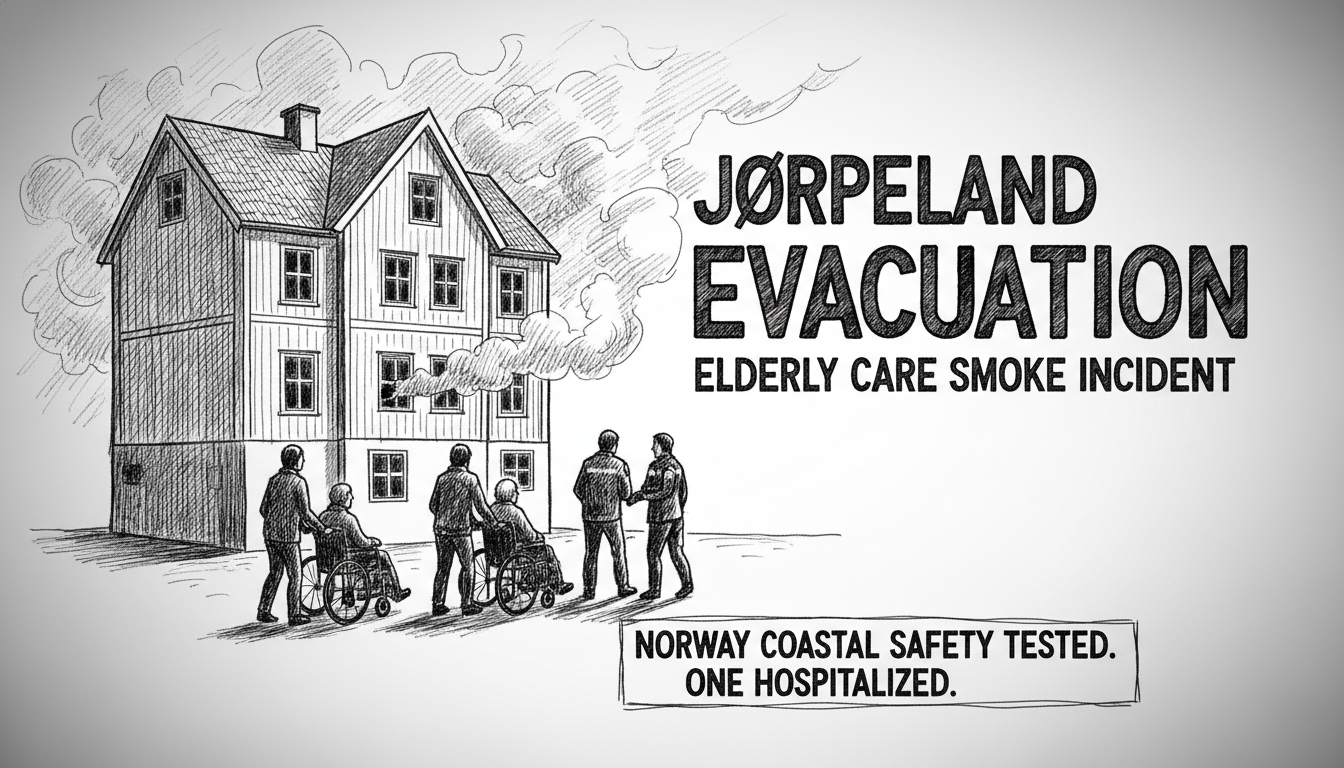
Emergency services responded to reports of smoke development at an elderly care facility in Jørpeland. Fire crews worked to evacuate residents from the building. Officials confirmed burnt food triggered the smoke alarm system. One resident required medical attention after inhaling smoke and was transported to a local medical clinic.
This incident highlights ongoing challenges in Norway's elderly care infrastructure. The Scandinavian nation maintains high standards for senior care facilities. Recent years have seen increased focus on emergency preparedness in care institutions. Norwegian municipalities oversee local care homes like the Jørpeland facility. Rogaland county, where Jørpeland is located, contains numerous care centers serving coastal communities.
Norwegian care facilities follow strict safety protocols. All institutions must maintain functioning smoke detection systems. Regular evacuation drills prepare staff for emergency situations. The quick response in Jørpeland demonstrates these protocols in action. Fire departments across Norway maintain rapid response capabilities for such incidents.
Elderly care represents a significant political issue in Norwegian politics news. The Storting frequently debates funding for municipal care services. Aging populations in Nordic countries increase pressure on care systems. Norway's oil industry revenues help fund social services. But distribution between urban and rural facilities remains challenging.
Local authorities will investigate the Jørpeland incident thoroughly. Such reviews typically examine response times and evacuation efficiency. They also assess whether proper procedures were followed. Norwegian regulatory bodies may require additional safety measures if deficiencies are found.
The incident's location in Jørpeland matters for local emergency planning. This Stavanger-region community exemplifies Norway's dispersed population pattern. Coastal towns often have smaller care facilities serving local residents. Their remote locations require self-sufficient emergency response capabilities.
This smoke incident, while minor, tests the system's resilience. Norway's decentralized governance model places responsibility on municipalities. They must maintain adequate emergency services for all public facilities. The Jørpeland response appears to have functioned as intended. But each incident provides learning opportunities for improvement.
Norwegian elderly care standards rank among Europe's highest. The country invests heavily in social welfare systems. Yet practical challenges persist in daily operations. Proper emergency response requires continuous training and equipment maintenance. The Jørpeland situation shows both the system's strengths and its constant need for vigilance.