
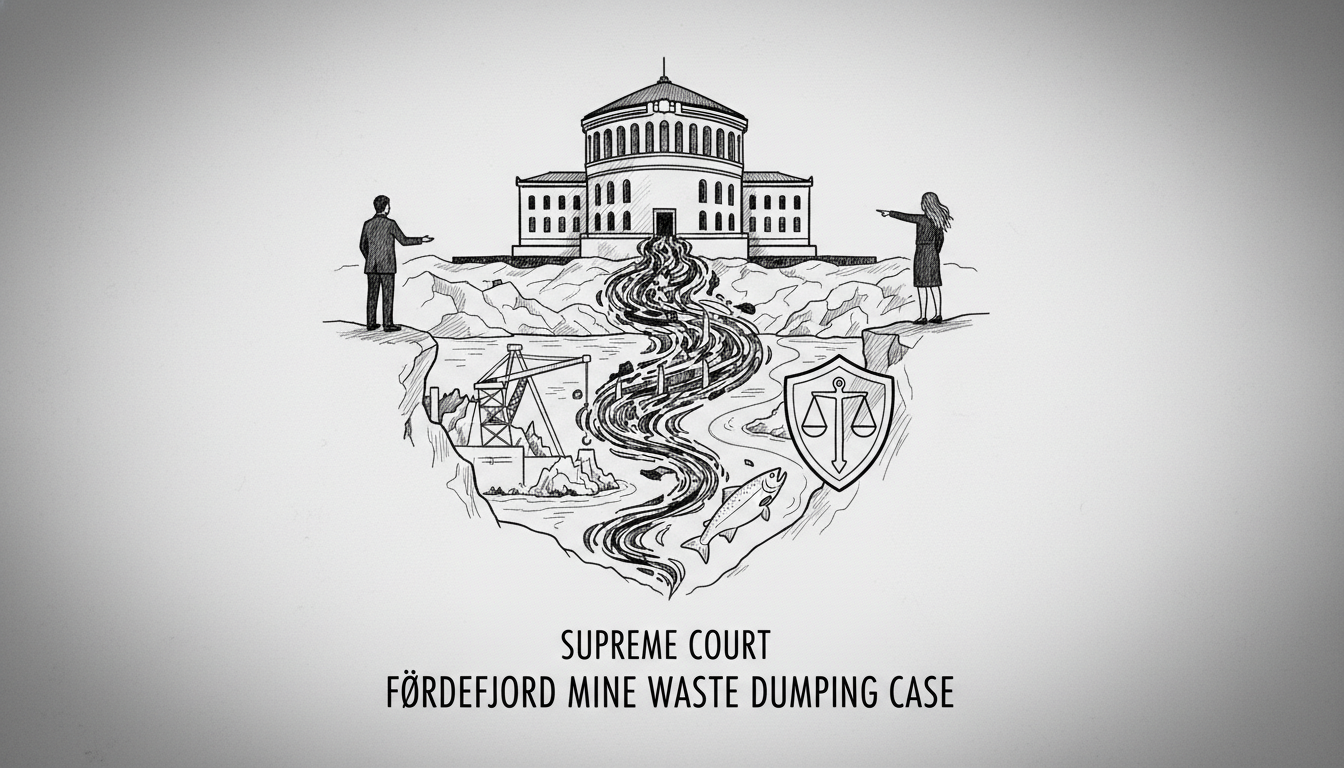
Norway's Supreme Court will now decide a landmark environmental case concerning the Førdefjord. The court's appeals committee has accepted the state's appeal of a lower court ruling. That ruling, from the Borgarting Court of Appeal last August, declared the dumping of mining waste into the fjord as illegal. The case centers on whether such dumping, referred to as 'deponi,' is lawful under Norwegian and European Union water regulations. The Supreme Court must determine if the state followed all legal requirements when it granted the original permits. This decision sets the stage for a definitive legal judgment with profound implications for Norway's environmental policy and its lucrative extractive industries.
The Førdefjord case is not an isolated dispute. It represents a critical tension point in Norwegian politics, pitting powerful economic interests against growing public and legal demands for environmental protection. The fjord, located in Vestland county, is at the heart of a planned large-scale mining operation. Proponents argue the project brings jobs and critical mineral access. Opponents, including environmental groups and local communities, warn of irreversible damage to a sensitive marine ecosystem. The state's decision to appeal the lower court's ban signals the government's continued support for the industrial activity, despite the legal setback.
This legal battle directly engages with Norway's complex relationship with its natural resources. The country has built immense wealth on oil and gas extraction from the North Sea and Norwegian Sea. Now, it seeks to expand its resource base to include minerals on land and in fjords. The legal framework, particularly the Water Framework Directive implemented in Norwegian law, is the primary tool for challenging these plans. A final Supreme Court ruling against the state would establish a powerful precedent. It could restrict similar waste disposal plans for other mines, potentially affecting projects across the Nordic region.
The outcome will have immediate consequences for the involved company and investors. More broadly, it will test the strength of Norway's environmental legislation against the executive branch's permitting authority. Members of the Storting from both the government and opposition sides will be watching closely. The ruling may force legislative changes or a reevaluation of how 'green growth' is balanced with the protection of vulnerable fjords. For international observers, this case is a clear example of the legal and societal conflicts emerging as economies pursue strategic minerals. Norway's Supreme Court now holds the responsibility of defining the legal limits of industrial activity in some of the world's most pristine natural landscapes. The decision will resonate far beyond the deep waters of the Førdefjord.