
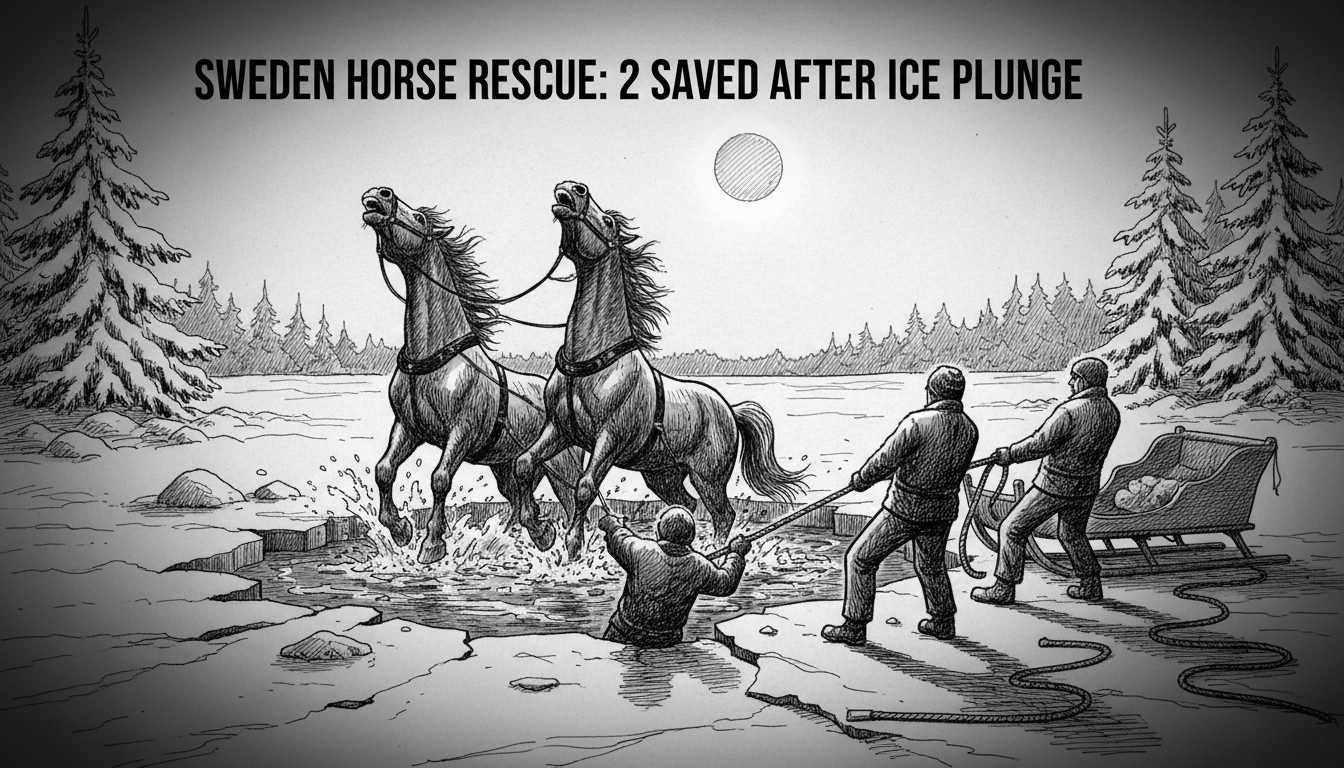
Swedish rescue services pulled two horses from a frozen lake in a dramatic two-hour operation in Klippan municipality. The horses had broken through the ice on Epiphany evening, leaving only their heads visible in the four-meter-deep water. A team of 25 responders cut a channel through the ice to guide the shivering animals 150 meters back to safety.
A Frigid Night Rescue
The call came in as darkness fell on January 6th. For the Gustavsson family, what should have been a quiet end to the holiday season turned into a nightmare. Their two horses had wandered onto the ice of a local lake. The ice, treacherously thin in spots, gave way. Henrik Persson, the operational chief for the Söderåsen Rescue Service, described the scene. “The horses were 100 to 150 meters out in the lake,” he said. “They had gone through the ice, and it was basically just their heads sticking up.”
The temperature hovered near freezing. Each minute in the frigid water increased the risk of hypothermia and exhaustion for the animals. The rescue service mobilized quickly, a testament to Sweden’s well-drilled emergency response protocols for such incidents. They faced a delicate challenge: how to reach the stranded horses without endangering more lives or causing further panic.
Cutting a Path to Safety
The solution was methodical and physically demanding. Rescuers did not attempt to walk on the unstable ice. Instead, they used saws to cut a narrow channel, or water lane, from the shore toward the horses. Step by step, they opened a path through the thick ice. “The rescue service sawed up the ice and made a water channel, through which the horses could be led in toward land,” Persson explained.
For nearly two hours, the team worked under spotlights. The goal was to create a safe corridor, then calmly encourage the horses to swim along it. It required patience and a steady presence to guide the frightened animals. The horses, believed to have been in the water for several hours, were tiring. Yet, their instinct to follow a lead and reach solid ground worked in the rescuers’ favor. Finally, wet and exhausted, both horses clambered onto the bank.
A Nation That Cares for Creatures
This rescue is not an isolated event in Sweden. It reflects a deep-seated cultural value placed on animal welfare. Sweden has some of Europe’s strictest animal protection laws, known as djurskyddslagstiftning. The concept of djurskydd (animal protection) is taught from a young age. Public expectation is clear: society will allocate significant resources to save an animal in distress.
“The public reaction to stories like this is always one of immense relief and support for the responders,” says Karin Lundström, a veterinary ethologist based in Uppsala. “There’s a strong consensus that animals feel fear and pain, and that we have a responsibility to act. A rescue operation of this scale, with 25 people, shows that commitment in action.”
From farm animals to household pets, Swedes generally view animals as sentient beings deserving of legal protection. This ethos is woven into the fabric of society, influencing everything from farming practices to the training of emergency services. Many fire and rescue brigades train specifically for animal rescue scenarios, including ice breaks and technical retrievals.
The Science of Survival in Cold Water
The horses’ survival for multiple hours in near-freezing water is remarkable, but experts note it comes with major risks. “The immediate danger is hypothermia, but also cardiac strain from the shock and the physical struggle,” explains Lundström. “Large animals like horses can retain body heat for a period, but exhaustion is a silent killer. They can simply become too weak to keep their heads above water.”
After rescue, the next critical phase is veterinary care. The animals must be warmed slowly to prevent circulatory shock. They are checked for internal injuries, muscle damage, and respiratory issues from inhaled water. The Gustavsson family’s horses were reported to be in relatively good condition afterward, a fortunate outcome that highlights the rescue's speed and efficiency.
This incident serves as a seasonal reminder of the dangers of winter landscapes. While frozen lakes and rivers are iconic parts of the Swedish winter, used for skating and ice fishing, their beauty masks risk. Authorities consistently warn about checking ice thickness, which can vary dramatically due to currents, springs, or snow cover.
A Family’s Relief and a Community’s Effort
The emotional core of the story lies with the Gustavsson family, particularly nine-year-old Ester. The day after the ordeal, she could finally breathe. “Now it feels really great,” she told local media, her relief palpable. For a child, the bond with a family horse is profound. The trauma of potentially losing them is matched only by the joy of their return.
Community response in Klippan has been one of pride in the rescue teams and empathy for the family. In small towns and rural areas across Sweden, animals are often part of the community fabric. Their well-being matters collectively. The successful rescue reinforces a sense of security, showing that the safety net functions when needed.
As the horses recover in their stable, their story resonates beyond the fields of Skåne. It underscores a Swedish principle: compassion has practical applications. It is seen in the allocation of personnel, the training of responders, and the collective sigh of relief when a life—human or animal—is brought to safety. The ice on the lake will eventually melt, but the memory of the night 25 people worked together to bring two creatures home will endure much longer. Does our treatment of animals in crisis ultimately reflect the character of our society?