
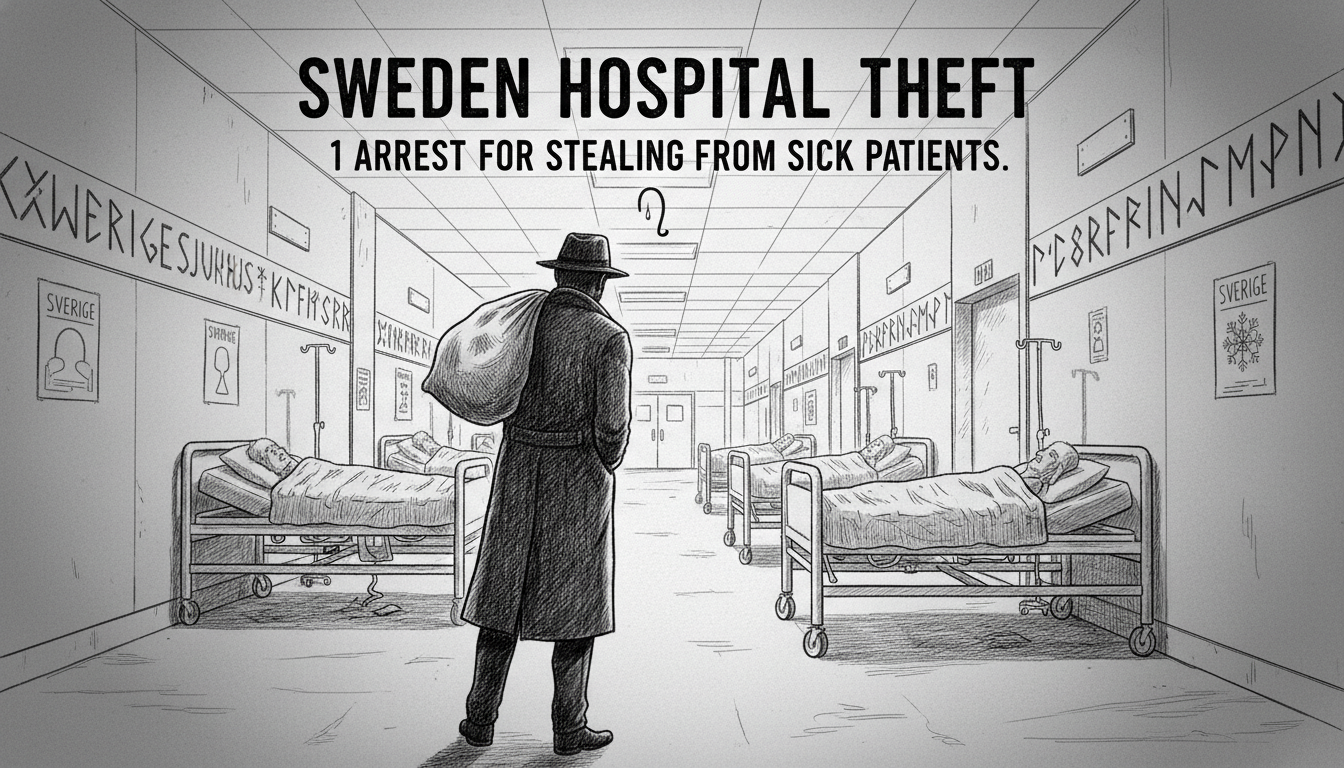
Swedish police have arrested one person suspected of aggravated theft and receiving stolen goods from a hospital in northeastern Stockholm. The suspect is accused of stealing from patients, some of whom were seriously ill at the time. This case has ignited a fierce debate about safety and trust in Sweden's cherished public healthcare system.
For many Swedes, the news felt like a violation of a sacred space. Hospitals are places of vulnerability and healing. The idea that someone would prey on patients there strikes at the core of societal trust. The suspect, according to police, had a direct connection to the hospital, adding a layer of betrayal to the alleged crimes.
A Breach of the Social Contract
In Sweden, healthcare is a fundamental right. The system, funded by high taxes, is built on principles of equality and accessibility. Public hospitals like the one in this case are designed to be open and welcoming. This openness is a point of pride but also presents a security challenge. Doors are not locked. Wards are not guarded. The implicit contract is that everyone respects the sanctity of the care environment.
"This isn't just theft; it's an exploitation of trust," says Lena Forsberg, a medical ethics researcher at Uppsala University. "Patients arrive in a state of physical and often emotional distress. Their guard is down. Their belongings might be the last thing on their mind. To target someone in that condition is particularly egregious."
Police have released few details about the specific items stolen or the exact number of victims. The legal classification of 'aggravated theft' suggests the crimes involved significant value, careful planning, or exploited the clear vulnerability of the victims. The simultaneous 'aggravated receiving' charge indicates police believe the suspect was also handling goods stolen by others.
The Constant Balance: Openness vs. Security
This incident is not isolated. Hospital thefts, particularly from staff locker rooms, make occasional headlines. Theft from patients, however, is rarer and more shocking. It forces a difficult conversation. How do you secure a facility that must remain accessible 24/7 to people in crisis?
Security consultant Mikael Lundgren, who has worked with healthcare regions, explains the dilemma. "You can install more cameras, hire guards, and lock doors," he says. "But each measure chips away at the open, humane environment Swedish healthcare aims for. A hospital shouldn't feel like a fortress. The goal is deterrence and swift response, not creating a prison for patients."
Many hospitals already have basic protocols. Patients are advised not to bring valuables. There are secure storage options for items like wallets and phones. Yet, in an emergency admission, a patient might arrive with a bag, a coat, and a phone. For a frail, elderly person being moved from a wheelchair to a bed, keeping track of a purse is not a priority.
A Neighborhood in Shock
The hospital is located in a northeastern suburb of Stockholm, part of the wider metropolitan area. These suburbs are diverse, vibrant communities. News of the arrest spread quickly through local Facebook groups and word of mouth, mixing concern with anger.
"My mother was in that hospital last month after a stroke," said Karin, a local resident who preferred not to give her last name. "She was confused, couldn't speak. The thought that someone could have taken her wedding ring while she lay there... it makes me feel sick. You trust the people in that building to care, not to steal."
This personal sense of violation is widespread. The hospital is a communal institution. A crime within it feels like an attack on the community's well-being. It raises uncomfortable questions about who has access to patient areas and how staff and contractors are vetted.
The Legal Road Ahead
The suspect has been arrested and held in custody, a step Swedish prosecutors take when they believe there is a risk of the person fleeing, obstructing the investigation, or continuing criminal activity. The next step will be a formal charging decision.
To prove 'grov stöld' (aggravated theft), prosecutors will need to demonstrate the theft was of a particularly ruthless or sophisticated nature. The known factor—that victims were hospitalized and seriously ill—directly speaks to the 'vulnerable victim' criterion that elevates a simple theft to an aggravated one. The penalty for aggravated theft can be up to six years in prison.
Legal expert Professor Anders Zetterström notes that the courts take a dim view of crimes that exploit clear power imbalances. "Stealing from a sick person in a hospital bed is seen as a profound breach of decency," Zetterström explains. "The sentencing guidelines reflect that societal condemnation. It's not about the monetary value of a stolen phone. It's about the violation of a person when they are most defenseless."
Can Trust Be Restored?
For hospital administrators, the immediate task is damage control and review. They must reassure current patients and the public while examining their own security protocols without creating an atmosphere of suspicion. It's a public relations and operational tightrope.
Some suggest practical, low-intrusion solutions. More prominent signage about securing valuables. Regular, visible patrols by hospital attendants in wards. Better education for patients and families upon admission. The key is to enhance awareness without inducing fear.
"The response must be measured," argues ethics researcher Lena Forsberg. "We cannot let the actions of one individual make us treat every patient, visitor, or staff member as a potential thief. The foundation of our system is trust. We must shore it up with smart precautions, not abandon it with heavy-handed security."
The case also touches on broader Swedish society trends. As the country navigates challenges, the idea of the 'folkhemmet' or 'people's home'—where society cares for all—is tested. A hospital theft feels like a betrayal of that very concept. It asks: is our shared home still safe for everyone, especially when they are at their weakest?
As the police investigation continues, the community is left to grapple with that question. The physical items may be recovered, but the sense of security is harder to restore. This story is more than a crime report. It's a stress test for the values at the heart of Swedish society. The arrest is a first step toward justice, but the conversation about how to protect the vulnerable in our most trusted institutions is just beginning. Will this incident force a shift in how open, public spaces are secured, or will the principle of accessibility ultimately prevail?