
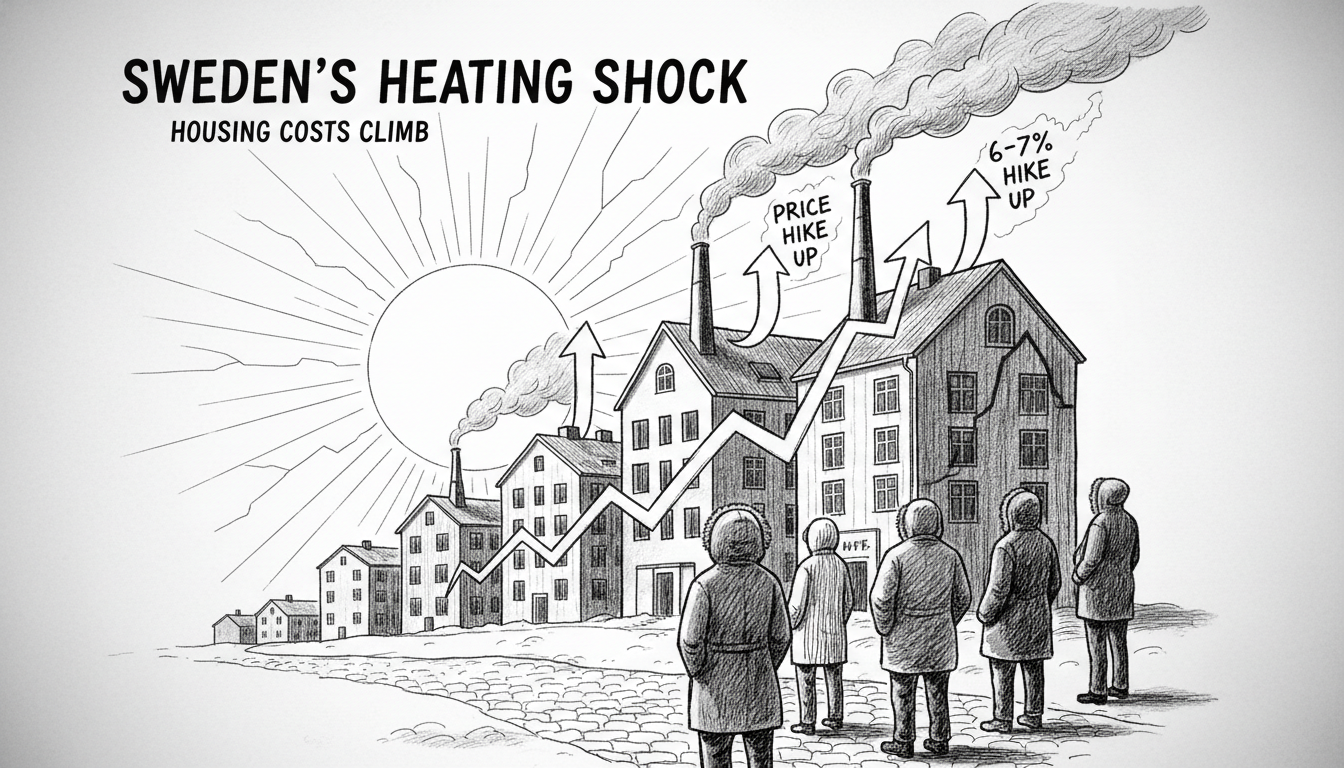
Swedish residents face another financial squeeze as district heating costs prepare to jump again. Prices will increase by at least 6-7 percent next year according to current forecasts. This comes as a particular blow since heating often represents the single largest housing expense for Swedish households.
Johan Nyhus, chief executive of housing association HSB, confirms the widespread impact. He states that at least half of their housing associations will need to raise fees specifically because of the district heating increases.
The situation creates a complex financial picture for Swedish homeowners. While interest rate pressures have eased, allowing many to anticipate lower borrowing costs next year, these savings risk being wiped out by rising heating expenses. Both individual homeowners and those in housing associations will feel the pinch.
Statistics from the Price Dialogue collaboration group, which includes heat providers and housing organizations, point to average price increases slightly above five percent next year. This rate clearly outpaces general inflation, meaning housing costs will consume a growing portion of household budgets.
District heating dominates Swedish residential heating, particularly in urban areas. The system circulates hot water through underground pipes to heat buildings. Most Swedish municipalities operate these systems, creating near-monopoly conditions that leave consumers with limited alternatives when prices rise.
This marks the third consecutive year of substantial district heating increases in Sweden. The pattern reflects broader European energy market volatility and Sweden's transition away from Russian energy imports. While necessary for energy security, these changes come at a direct cost to consumers.
The continuous rise in essential housing costs raises questions about affordability in Swedish cities. With housing already consuming a large percentage of disposable income, further increases could force difficult budgeting choices for many families. The situation highlights the challenge of balancing environmental transitions with household economic stability.
International residents in Sweden should note that district heating costs are typically included in monthly rent or association fees. Unlike in some countries where tenants control their heating systems and costs, Swedish residents have limited ability to reduce these mandatory expenses through conservation measures.
What comes next? Municipal heat providers face their own cost pressures from electricity prices and infrastructure investments. Without regulatory intervention or market changes, Swedish households should prepare for heating to remain a major and growing housing expense for the foreseeable future.