
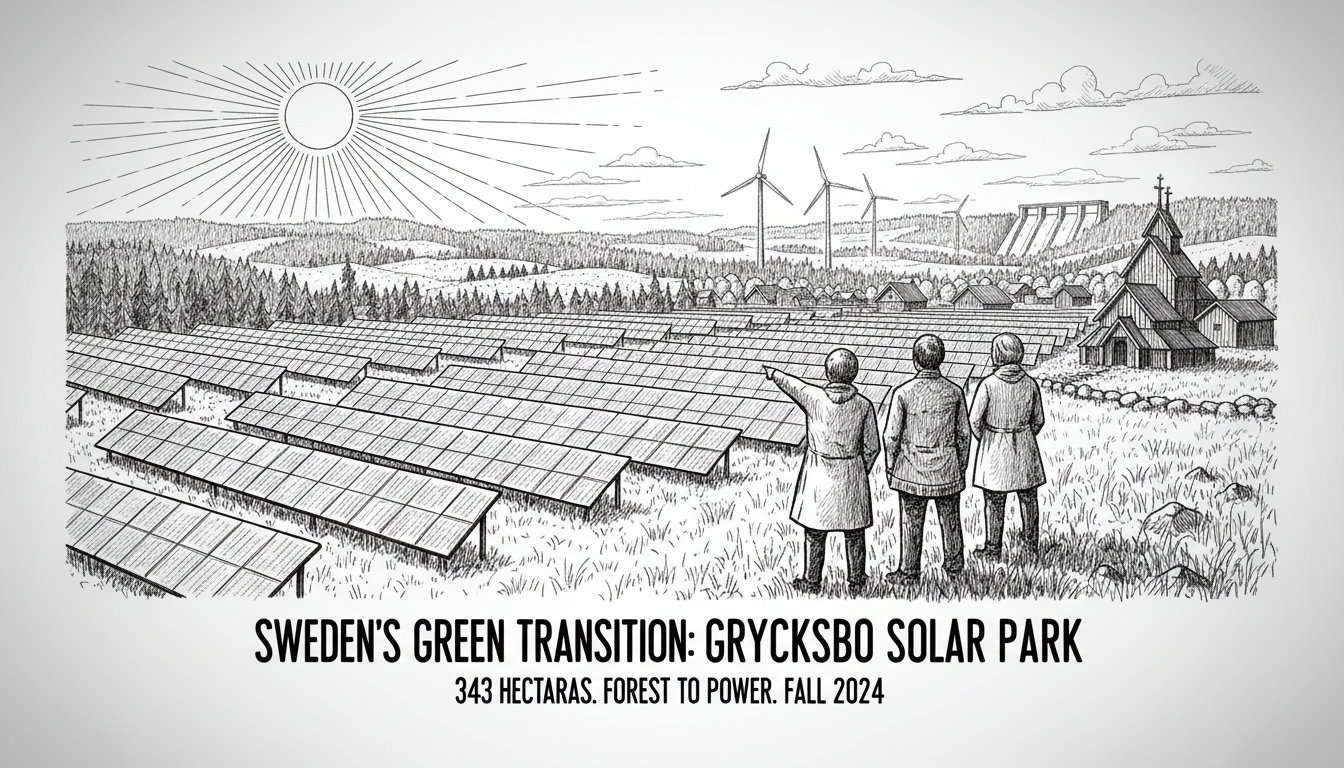
Walking through the pine forests of Grycksbo in Dalarna, you smell fresh needles and hear birdsong. Soon this landscape will transform dramatically. Sweden plans its largest solar park here, covering 343 hectares of forest land. That equals 480 football fields of solar panels stretching across the countryside.
The project represents a major step in Sweden's green energy transition. Currently owned by forestry company Stora Enso, this land was carefully studied for solar potential. Officials examined sunlight exposure and grid connectivity before deciding it was perfect for solar energy production.
Emil Thalin, involved in the project, acknowledges the environmental impact. He said in a statement that the development will affect local forests and wildlife. But he emphasized the land can be restored afterward. The solar park's lifespan spans 30 to 50 years. Then forestry operations could resume if desired.
This solar park breaks records for scale in Sweden. No existing facility matches its size. Yet its contribution to national energy needs remains modest. Sweden's electricity primarily comes from hydro and nuclear power. The Grycksbo park will produce approximately 240 gigawatt-hours annually.
Thalin uses a Swedish proverb to describe the project's significance. Many small streams can create big changes, he noted. This reflects Sweden's approach to renewable energy. Multiple smaller projects collectively drive the green transition forward.
Construction begins in the third quarter, with operations starting by late 2028. The timeline shows Sweden's methodical approach to infrastructure development. Projects move from planning to implementation with careful consideration.
For international observers, this project demonstrates Sweden's balanced energy strategy. The country maintains its nuclear and hydro power while expanding renewables. This solar park represents incremental progress rather than revolutionary change. It shows how nations can build green infrastructure within existing landscapes.
Swedish society trends increasingly favor such projects. Public support for renewable energy remains high across political parties. The Grycksbo development fits this cultural context. Swedes generally accept temporary landscape changes for long-term environmental benefits.
The project also highlights practical realities of green transitions. Even large-scale renewable projects provide limited energy initially. They form part of broader systems rather than standalone solutions. This honest assessment helps understand the scale required for meaningful change.