
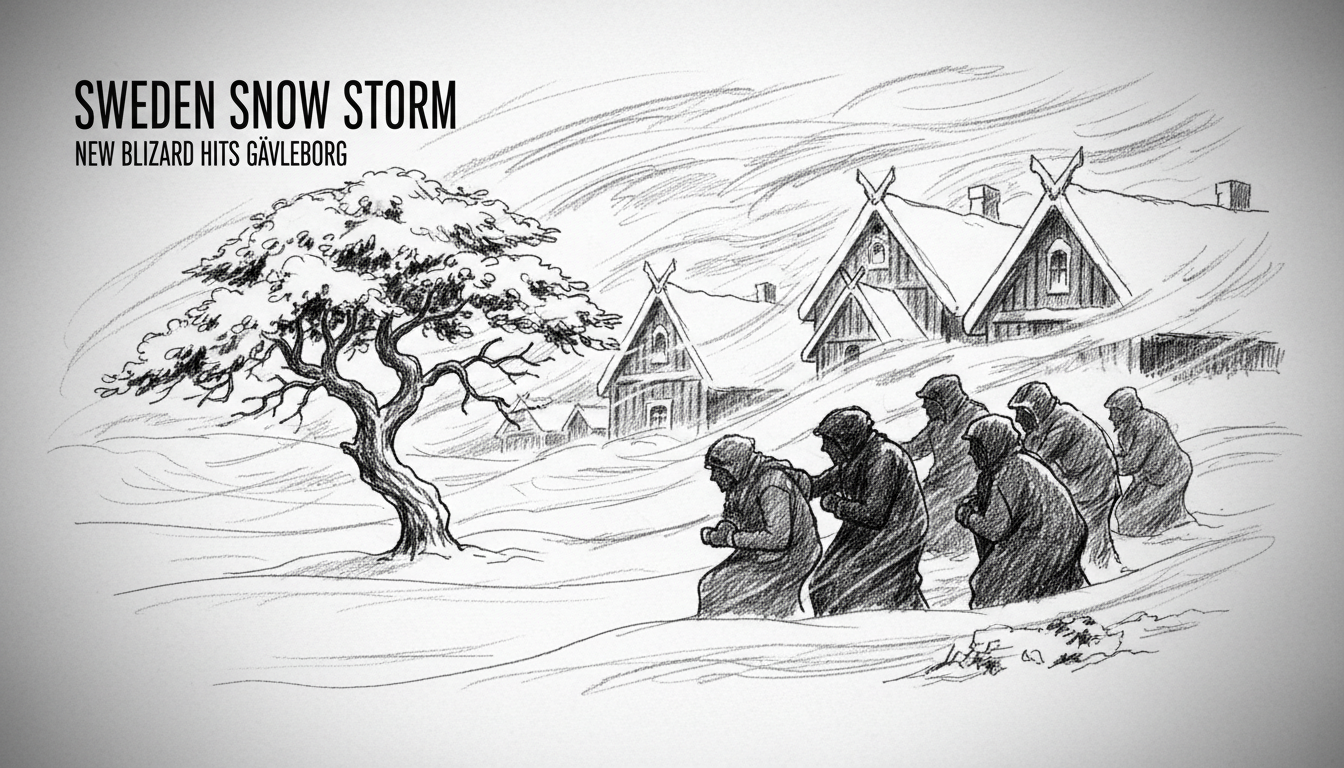
Sweden's snow storm crisis is intensifying as a new low-pressure system barrels toward the country. Meteorologists at the Swedish Meteorological and Hydrological Institute (SMHI) warn of another 10 to 30 centimeters of snow for the already-buried county of Gävleborg. This comes just days after Storm Anna left over 70,000 households without power, some for more than a week. “It’s coming more,” says SMHI meteorologist Max Schildt, describing the relentless weather pattern.
In the coastal city of Gävle, residents are bracing for what feels like a siege. Snowbanks tower over cars, and the sound of snowblowers is a constant hum. Local grocery stores report runs on essentials like milk, candles, and batteries. “We just got our power back after five days,” says Karin Lundström, a resident of a suburb outside the city. “Now we’re told to prepare for another round. You start to feel a bit trapped in your own home.”
This is not just an inconvenience. It’s a severe test of Sweden’s famed winter preparedness. The consecutive storms, named Johannes and Anna, have exposed vulnerabilities in infrastructure, particularly in rural areas. Energy companies are scrambling, facing criticism for restoration times that left families in the cold during the darkest period of the year.
A County Under Snow
Gävleborg County, stretching along the Baltic Sea coast, is no stranger to harsh winters. Its geography makes it a magnet for snowfall from systems moving across the Baltic. But this season is different. The sheer volume and persistence of the snow have overwhelmed standard response plans. Roads are impassable, train lines are repeatedly blocked, and the weight of the snow threatens roofs and power lines.
Max Schildt from SMHI explains the meteorological pattern. “This is a bit of a leftover from the low-pressure system Anna that affected southern Sweden with large amounts of snow last week,” he says. The new system moving in from Wednesday is poised to compound the problems, dumping fresh snow on top of unstable snowpack.
For communities here, winter is a cultural touchstone—a time for skiing, cozy fika (coffee breaks), and embracing the cold. But that cultural resilience is being pushed to its limit. The romantic notion of a white winter clashes with the reality of frozen pipes, isolation, and anxiety over heat and light.
The Human Cost of a Power Outage
The statistic—70,000 households without electricity—tells only part of the story. The human impact is measured in cold nights, spoiled food, and the struggle to stay warm. In villages across Västernorrland and Gävleborg, people relied on fireplaces and generators. For the elderly and vulnerable, it was a dangerous situation.
Martin Höhler, CEO of E.ON Energidistribution, acknowledged the severity in a statement. “This is one of the worst storms of the last 20 years and it has meant great strain for both people and infrastructure,” he wrote. “Many customers have been without electricity for over a week, in the middle of winter, which is a very difficult situation.”
His statement highlights a growing tension in Sweden: the expectation of reliable public services versus the increasing frequency of extreme weather events. Energy companies face public scrutiny over whether infrastructure investments have kept pace with climate change, which scientists say can intensify winter precipitation in this region.
Between Storms: A Race to Recover
The brief pause between Storm Anna and the incoming system has become a critical window. Utility crews work around the clock, often in treacherous conditions, to repair downed lines. Municipal workers clear primary roads, knowing secondary routes may remain blocked for days. It’s a race against the next fall of snow.
Local authorities are using emergency alert systems to urge citizens to prepare. The advice is practical and essential: ensure you have a working flashlight, a battery-powered radio, extra food and water, and a way to heat your home without electricity. For many Swedes, this preparedness is second nature, but the extended duration of recent outages has been a wake-up call.
“We are used to handling snow,” says Lars Pettersson, a farmer in Hälsingland, part of Gävleborg County. “But this is a different level. It’s not just about shoveling your driveway. It’s about ensuring your livestock have water that isn’t frozen and that you can get out if there’s a medical emergency. The isolation is the hardest part.”
Looking Ahead: Resilience in Question
As Sweden faces this new snow storm, broader questions emerge. Is the infrastructure built for a 20th-century climate sufficient for the 21st? How can remote communities be better supported during prolonged crises? The Swedish model of society is built on trust and functioning systems—severe weather puts that model to the test.
Experts in crisis management emphasize that while individual preparedness is crucial, systemic resilience is paramount. This includes hardening the power grid, improving communication during outages, and ensuring coordinated responses between national agencies and local municipalities.
The snow will eventually melt. Spring will come to Gävleborg’s forests and coastline. But the experience of this winter, marked by the one-two punch of Johannes and Anna and the ominous warning of “more to come,” will likely linger in policy debates and community planning meetings. For now, the immediate focus is on the basics: staying warm, staying safe, and watching the sky as another blanket of white descends upon Sweden.