
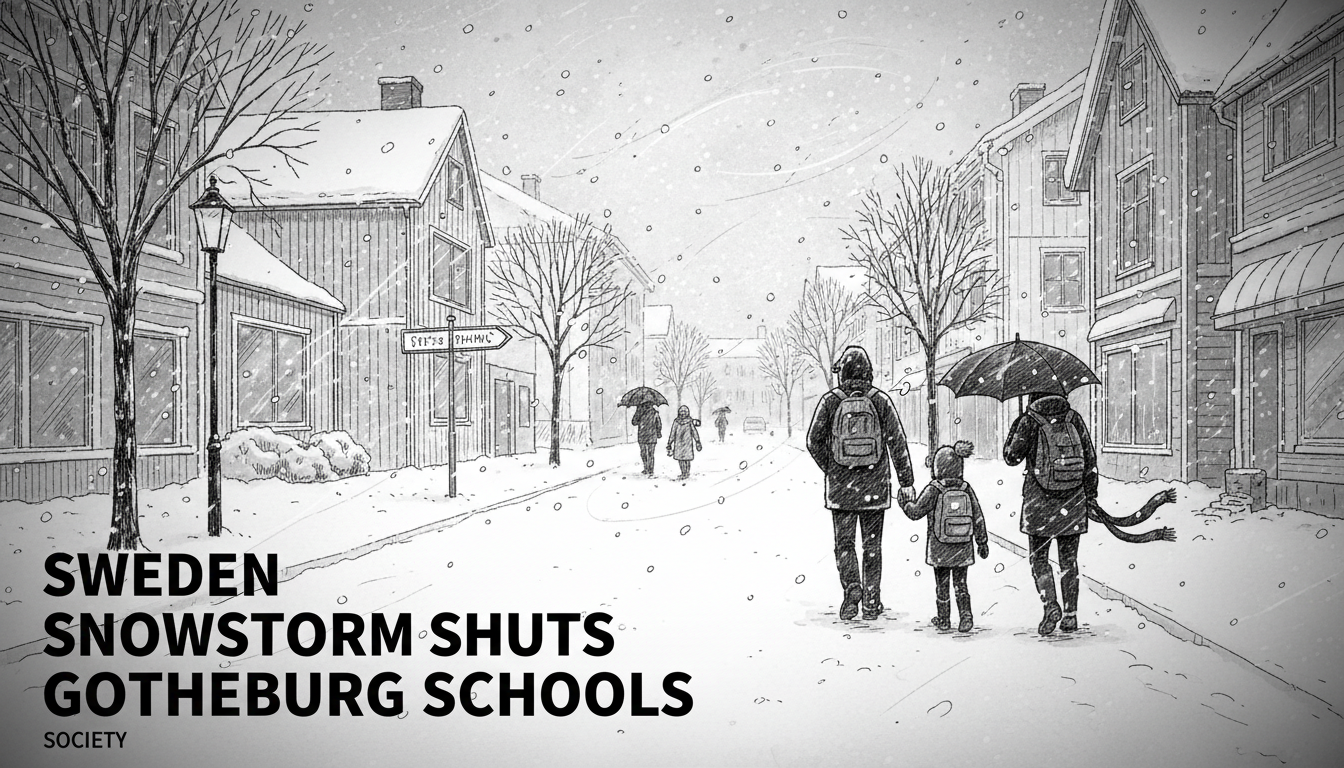
Sweden's second city, Gothenburg, has closed all its municipal upper secondary schools today. A heavy snowstorm that struck western Sweden on Wednesday has made travel dangerous and prompted authorities to prioritize safety over schedules. The decision affects thousands of students across the city's gymnasieskolor, halting all on-site teaching for the day.
"The general direction is that we have no teaching on site due to the weather situation," said Bo Drysén, head of education for the central upper secondary school area in Gothenburg. He noted there could be exceptions, and any affected students would be contacted directly by their school leadership. For most, Thursday became an unexpected winter break, a sudden pause dictated by nature in a country usually well-prepared for snow.
A City Slowed by Snow
The scene in Gothenburg on Thursday morning was one of hushed disruption. Major arteries like Kungsportsavenyn were quieter than usual, with public transport running reduced services. Parents who are able are working from home, while others navigate slippery sidewalks and delayed buses. The closure, while disruptive, reflects a deeply ingrained Swedish principle: safety first. It's better to keep students and staff off treacherous roads and pathways than to risk accidents for the sake of a normal school day.
This isn't Sweden's first snowstorm, nor will it be its last. The country has a long history of managing harsh winters, particularly in the northern regions. However, when significant snowfall hits a densely populated coastal city like Gothenburg, the impact is immediate and widespread. Infrastructure, from trams to garbage collection, feels the strain. School closures are a standard tool in the municipal crisis kit, a clear signal that conditions are severe enough to warrant staying put.
The Science Behind the Storm
While Sweden is no stranger to snow, climate scientists are observing changes in winter weather patterns. Professor Erik Kjellström, a climate researcher at the Swedish Meteorological and Hydrological Institute (SMHI), explains that a warming climate can paradoxically lead to more intense snowfall events in certain regions. "Warmer air holds more moisture," he notes. "When that moisture-laden air meets cold conditions, it can result in heavier precipitation, including snow." This doesn't necessarily mean more snow over an entire season, but it can mean more dramatic, concentrated dumps that challenge urban infrastructure.
This context is important for understanding municipal preparedness. Cities like Gothenburg plan for historical weather patterns. When storms exceed those expectations, systems are tested. The decision to close schools is a proactive one, aimed at preventing chaos. It keeps hundreds of buses off the roads, reduces foot traffic, and allows municipal snowplows and emergency services to work more effectively. It's a trade-off—a day of lost education for a day of managed risk and efficient cleanup.
A Day of Digital Detours and Winter Traditions
For students, the closure has mixed reviews. For some, it's a welcome surprise, a chance for an extra day of sleep or to hit the local slopes in parks like Slottsskogen with a sled. For others, particularly students in their final year preparing for exams, it's an annoyance that disrupts their study rhythm. Many schools have contingency plans, shifting briefly to digital platforms if possible. Yet, as one teacher from Hvitfeldtska gymnasiet mentioned, "It's never quite the same. The spontaneity of classroom discussion is hard to replicate online, especially on such short notice."
The storm also highlights a cultural aspect of Swedish society: trust in official decisions. When authorities announce a school closure, parents generally accept it as necessary. There's little second-guessing or public outcry about lost learning time. This social trust allows for swift action without lengthy debate. It's a pragmatic approach born from long experience with a climate that can be both beautiful and formidable.
Looking Ahead: Preparedness in a Changing Climate
The Gothenburg snowstorm of this week will soon be a memory. The snow will melt, schools will reopen, and the rhythm of city life will resume. But it serves as a small, real-time case study in climate adaptation. Municipal planners are increasingly factoring the potential for more extreme weather events into their long-term strategies. This includes everything from road salt supplies and snowplow capacity to the digital infrastructure needed for remote learning during disruptions.
For now, the focus in neighborhoods from Majorna to Örgryte is on safety and patience. The closure is a reminder that despite Sweden's advanced society, nature still holds the final card. It forces a collective pause, a day where the usual hustle is replaced by the quiet crunch of snow underfoot and the simple priority of staying warm and safe. As the city's workers clear the streets, there's an unspoken understanding that sometimes, the best lesson a student can learn is that community safety comes before the curriculum. Will this winter bring more such interruptions? Only the weather knows for sure.