
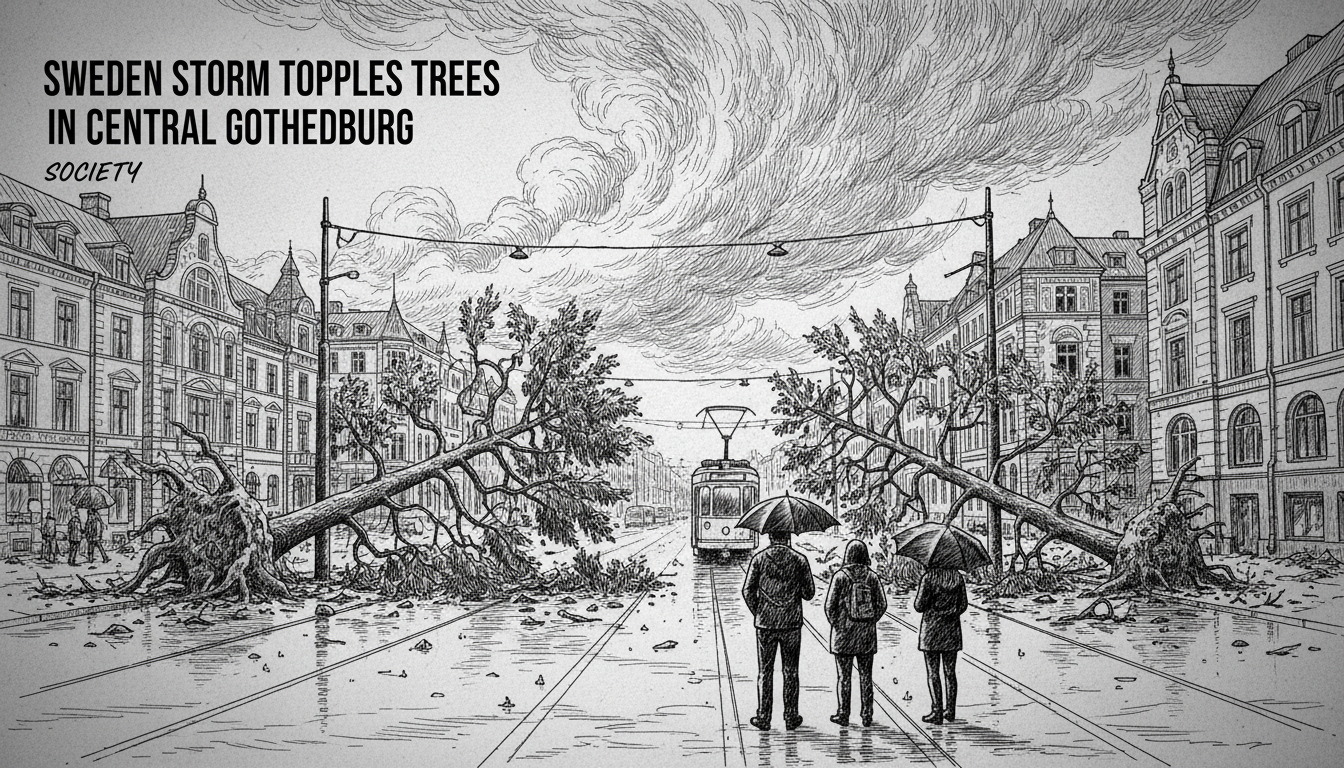
Sweden storm warnings became reality in central Gothenburg today as strong winds toppled trees across the city. The morning commute turned chaotic as branches blocked roads and tram lines. Residents woke to the sound of howling winds and cracking wood, a familiar yet disruptive autumn ritual on Sweden's exposed west coast.
I saw it happen from my window on Vasagatan," said Elias Berg, a student living in the city center. "One minute the tree was there, the next it was across the bike lane. The wind just grabbed it. It's a reminder that nature still calls the shots, even here." His sentiment echoes across Västsverige, where coastal communities regularly brace for Atlantic weather systems.
The Science Behind the Storm
The Swedish Meteorological and Hydrological Institute (SMHI) had issued warnings for the region. Meteorologists tracked a deep low-pressure system moving in from the North Atlantic. These systems gain strength over the ocean before hitting Sweden's west coast. Wind speeds in exposed coastal areas can exceed 25 meters per second during such events. That's about 56 miles per hour.
"We see this pattern every autumn and winter," explained a meteorologist from SMHI. "The key is preparation. When we issue a class one warning for wind, it means there is a real risk of fallen trees and disrupted infrastructure. People should avoid wooded areas and be cautious on the roads." The institute's warnings are color-coded: yellow for potential danger, orange for significant impact, and red for extreme danger. Today's event triggered orange-level alerts for parts of Västsverige.
Urban Trees: A Balancing Act
The sight of a fallen tree in a city like Gothenburg sparks a complex debate. The city is proud of its green spaces and tree-lined avenues. Areas like Haga and Linnéstaden are famous for their leafy character. Yet every storm tests the resilience of the urban forest. City planners and arborists walk a fine line between maintaining green beauty and ensuring public safety.
"We conduct regular risk assessments on trees in public spaces," said a representative from Gothenburg's Parks and Gardens Department. "Factors like species, age, root health, and previous damage are all considered. A storm like this shows where vulnerabilities might exist." Some species common in Swedish cities, like birch and certain maples, have shallower root systems. They are more susceptible to being uprooted in waterlogged soil combined with strong gusts.
The Ripple Effect of Fallen Timber
A single fallen tree can paralyze a neighborhood. This morning, reports came in from across the city. A large beech blocked a key road near Järntorget. Branches tangled in overhead power lines near Majorna, causing localized outages. Tram services on several lines, including the popular number 11, faced delays as crews cleared debris from the tracks.
The economic impact is immediate. Delivery trucks get stuck. People are late for work. Public transportation schedules collapse. While today's storm isn't a historic catastrophe, it contributes to an annual cost. Damages from severe weather events in Sweden routinely reach into the millions of kronor each year. This includes municipal cleanup costs, insurance claims, and lost productivity.
Living with the Wind: A West Coast Reality
For Gothenburgers, this is part of life. The city's identity is intertwined with the sea and the weather it brings. The annual Göteborgsvarvet half-marathon has seen its share of windy conditions. The famous Liseberg amusement park sometimes closes outdoor rides during warnings. There's a local stoicism, a preparedness born of experience.
"You learn to check SMHI's app like you check the time," said Karin Lundström, a café owner in the Haga district. She had to secure the outdoor furniture last night. "We batten down the hatches. You make sure the patio umbrellas are inside, that loose flower pots are secured. It's just practical." This collective awareness is a form of cultural adaptation. It reflects a society that has learned to respect, rather than fight, its natural environment.
Climate Change and Future Storms
While autumn storms are normal, scientists are studying the potential influence of a changing climate. Warmer sea surface temperatures in the North Atlantic can potentially fuel more intense low-pressure systems. This doesn't necessarily mean more storms, but it could increase the probability of severe ones. Research is ongoing, but the question lingers in the background of every severe weather warning.
"Our models are constantly being refined," the SMHI meteorologist noted. "The goal is to provide earlier, more accurate warnings so society can adapt. Whether for an individual securing their garden or a city mobilizing its emergency services, good information is the best defense." This points to a future where weather preparedness becomes even more embedded in Swedish society and urban planning.
After the Winds Calm
By afternoon, the worst of the wind had passed. Cleanup crews in high-visibility vests were already at work across the city. Chainsaws buzzed, cutting fallen trunks into manageable pieces. The rhythmic beeping of reversing trucks filled the air as debris was loaded and hauled away. The cycle is familiar: disruption, response, and return to normalcy.
For visitors or new residents, a day like this is a crash course in Swedish weather culture. It's a demonstration of a well-rehearsed response. It also offers a moment of reflection. In a nation often associated with orderly design and social planning, the storm is a brute reminder of uncontrollable forces. The trees lying across Gothenburg's streets today are more than just logistical problems. They are symbols of a delicate balance between the cultivated urban life Swedes cherish and the powerful natural world that surrounds them. As the cleanup continues, one wonders what the next low-pressure system brewing over the Atlantic will bring.