
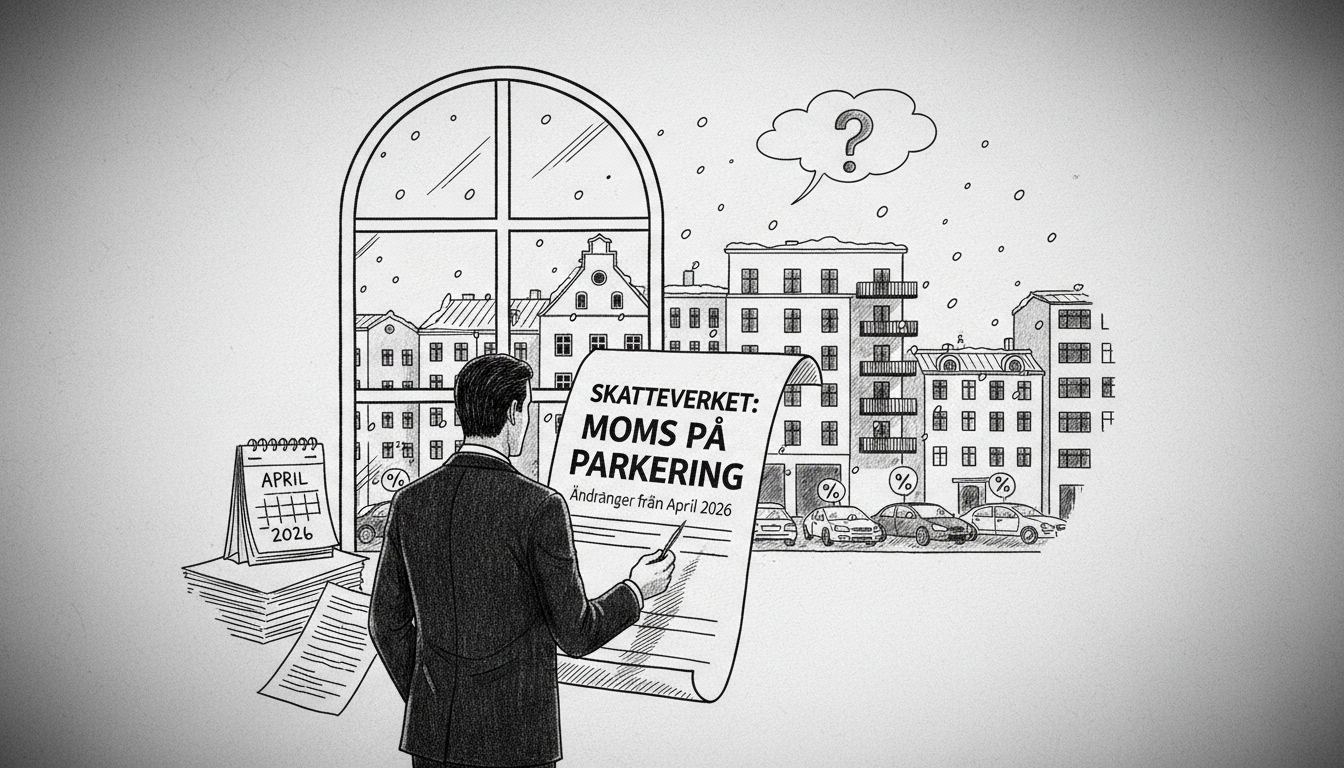
Sweden's Tax Agency has reversed its position on parking space taxation. The change means parking spaces rented with homes could become 25% more expensive starting April 1, 2026.
Previously, the agency considered parking spaces tax-exempt when rented alongside homes or business premises. The new interpretation means VAT will now apply to these parking rentals.
This policy shift creates immediate administrative challenges for property owners. They must review all rental agreements and communicate changes to tenants.
Ann Ireholm, a tax lawyer at Sweden's public housing association, explained the practical implications. Property owners need to examine contracts and notify parking space renters about the coming changes, she said in a statement.
Some rental agreements lack clauses addressing changed conditions. In these cases, property owners and tenants may need to renegotiate terms.
When contacted about the changes, several property owners in Södermanland County said they couldn't yet determine the impact on tenants.
Lars Larenius, CEO of Kustbostäder in Oxelösund, highlighted the complexity. We must consider each rental agreement's specific wording to ensure we handle this correctly from a contractual perspective, he stated. This will also become a discussion point in upcoming rent negotiations.
The tax agency's reinterpretation appears driven by revenue needs rather than legal clarity. This creates genuine uncertainty for both property owners and residents who face unexpected cost increases.
Are there any exceptions to the new VAT rules?
A few narrow exceptions exist. Parking may remain tax-free if it's directly connected to the home, cannot be declined for lower rent, and cannot be rented to commercial operations.
The timing during economic uncertainty makes this change particularly challenging for Swedish households already facing housing cost pressures.