
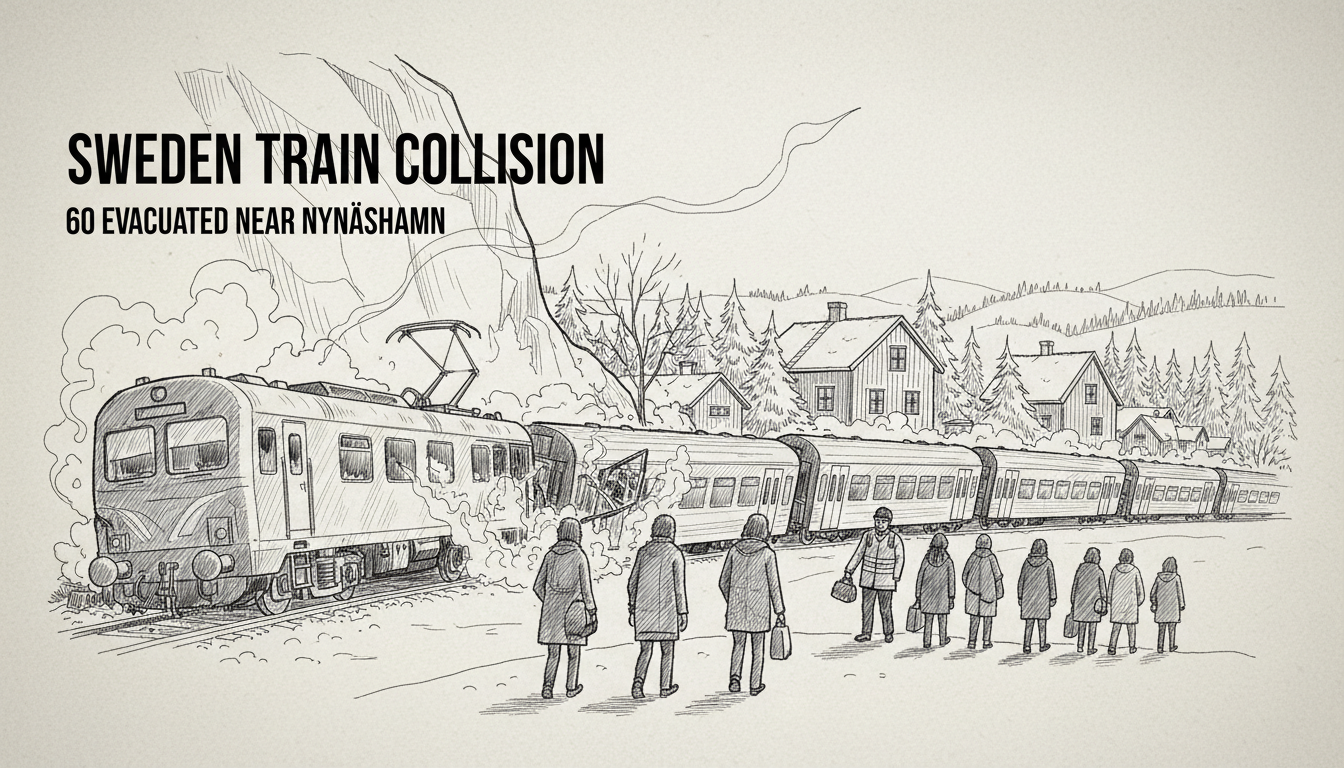
Sweden train services faced major disruptions after a commuter train collided with a fallen tree north of Nynäshamn, forcing the evacuation of approximately 60 passengers. The incident on Tuesday evening halted services on the crucial Pendeltåg Line 43, with disruptions expected to last through Wednesday afternoon, highlighting the vulnerability of the nation's transport network to extreme winter weather.
It was a scene of sudden shock and confusion in the dark Swedish winter. A Pendeltåg train, carrying commuters home from Stockholm, struck a large tree that had fallen across the tracks between Segersäng and Ösmo stations. The impact caused an electrical fault, plunging the carriage into darkness and bringing the train to an abrupt halt. For the 60 people on board, a routine journey turned into an unexpected winter ordeal, requiring evacuation in the cold night.
A Night of Disruption and Delays
Emergency services and rail staff worked quickly to ensure all passengers were safely evacuated from the stranded train. While no serious injuries were reported, the incident caused significant knock-on effects across the Stockholm region's rail network. Line 43, which connects Stockholm with the coastal town of Nynäshamn, was completely suspended. Commuters on Wednesday morning faced a chaotic start to their day as replacement bus services were hastily organized for the affected stretch.
“The power is back, but the track needs to be inspected,” said Stina Petrini, communications manager at SJ Stockholmståg, in a statement on Tuesday evening. This inspection process is a critical safety protocol but one that inevitably extends travel misery for thousands. The disruptions were estimated to last until 4:00 PM on Wednesday, affecting the entire southern corridor of the commuter network.
A Wider Network Under Strain
The collision near Nynäshamn was not an isolated event. The heavy snowfall impacting Stockholm County on Wednesday exacerbated existing problems. Other commuter lines also experienced severe disruptions. On Line 41, running between Märsta and Södertälje centrum, every other train was cancelled. Furthermore, all commuter trains with a start or end station at Upplands Väsby were completely suspended, creating a domino effect of fewer departures across a wide swath of the network.
This incident underscores a recurring seasonal challenge. Sweden's extensive railway network, spanning approximately 13,000 kilometers, is a point of national pride and a backbone of daily life. The Pendeltåg system alone carries hundreds of thousands of passengers daily in the Stockholm region, making it essential for work, education, and social life. When it falters, the entire metropolitan area feels the strain. Delays ripple outwards, affecting connections to buses, trams, and even ferries, disrupting the meticulously planned rhythm of Swedish society.
The Human Cost of Winter Travel
Beyond the official statements and service updates, stories of frustration emerge from platforms and social media. For residents in suburbs like Segersäng and Ösmo, or those commuting to and from Nynäshamn, the train is not a convenience but a necessity. The replacement bus services, often crowded and slower, add hours to the daily commute. Parents are late picking up children from daycare. Workers face difficult explanations with employers. The social contract of reliable public transport, so central to the Swedish model, is temporarily broken.
“You plan your life around the train schedule here,” says Erik Lundström, a teacher who commutes from Nynäshamn to Stockholm. “When it stops like this, everything else stops too. It’s more than an inconvenience; it’s a real stress on a normal weekday.” His sentiment is echoed by many for whom the Pendeltåg is the most reliable and sustainable link to the capital.
Expert Perspective on a Growing Challenge
Transport analysts point to a confluence of factors behind such incidents. While Sweden is adept at handling snow, the increasing frequency and intensity of extreme weather events present a growing challenge. Heavy, wet snow followed by strong winds, as seen this week, is a perfect recipe for bringing down trees and branches onto infrastructure.
“The railway network is constantly battling nature, especially in the autumn and winter,” explains transport infrastructure analyst, Lena Forsberg. “Preventative vegetation management along the tracks is crucial, but it’s a massive and ongoing task. Climate change is introducing more volatile weather patterns, which means the systems we have in place are being tested more often and more severely.”
This incident will likely renew discussions about investment in infrastructure resilience. This includes not only more robust clearing and inspection routines but also potential technological solutions for earlier detection of obstacles on the tracks. The financial cost of such disruptions is immense, calculated in lost productivity and emergency service deployment, not to mention the erosion of public trust in the transport system.
Looking Ahead: Resilience in the Swedish Winter
As services slowly return to normal on the Nynäshamn line, the questions linger. The Swedish Transport Administration (Trafikverket) and operators like SJ face the perennial task of balancing safety, reliability, and cost. For the average Swede, the incident is a stark reminder of the fragility of even the most advanced societies in the face of nature's power. It reinforces a cultural relationship with winter that is both pragmatic and respectful—a season of beauty that demands constant vigilance.
The sight of a train stopped by a fallen tree is a powerful metaphor. It speaks to the ongoing struggle between human order and natural chaos, a theme deeply embedded in the Swedish experience. As the country continues to champion a green transition with rail travel at its heart, ensuring this network can withstand the very winters that define the landscape becomes not just a logistical task, but a fundamental priority. Will future winters see more such disruptions, or can Sweden leverage its engineering prowess to build a truly all-weather railway? The journey home for thousands depends on the answer.