
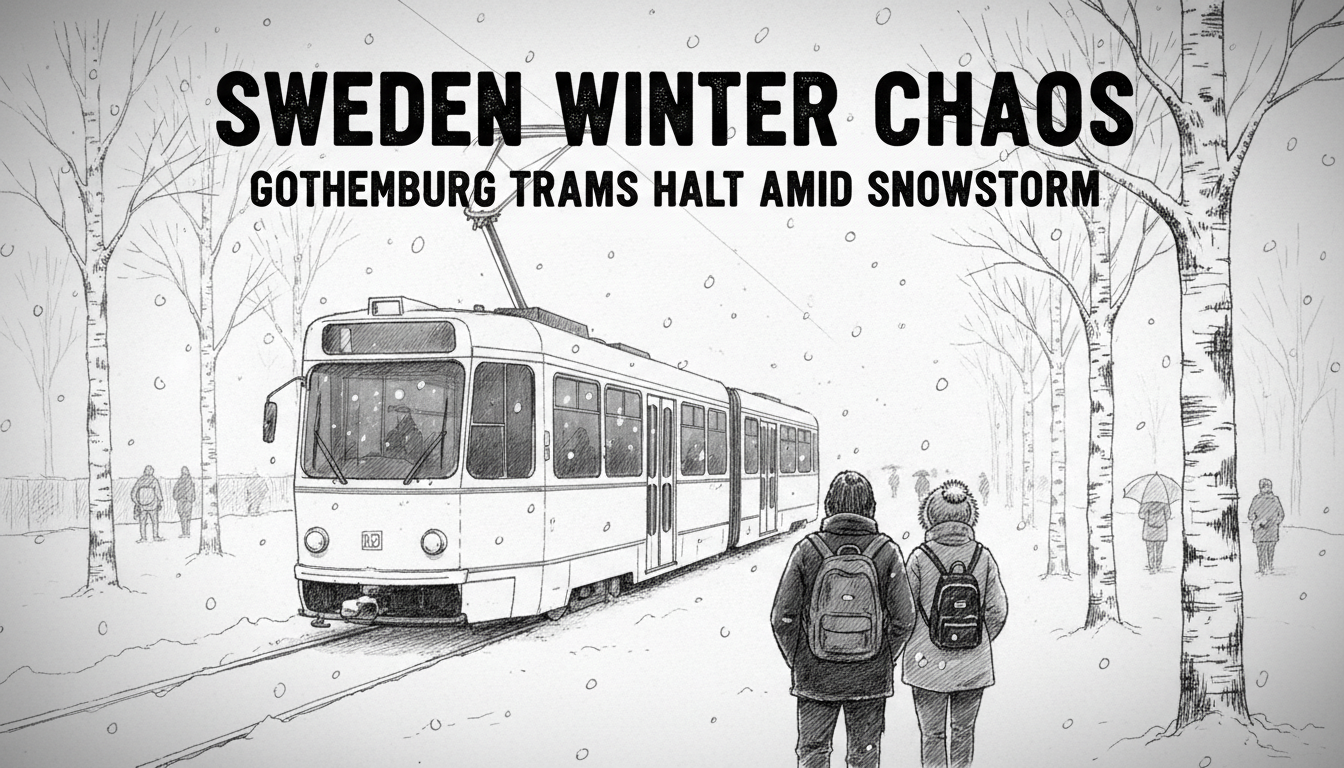
Sweden's winter weather paralyzed Gothenburg's extensive tram network, stranding thousands of commuters and testing the limits of the city's public transport system. For Marita Lindvall, a veteran tram driver, the night shift transformed into a grueling battle against deep snow and immobilized infrastructure. “It has been tough,” Lindvall stated, summarizing a crisis that left major arteries of Scandinavia's second-largest city at a standstill.
The disruption began as a severe snowstorm swept across Sweden’s west coast, dumping heavy snow on Gothenburg. The city’s 12 tram lines, which form the backbone of its public transport, gradually seized up. Västtrafik, the regional transport authority responsible for approximately 400,000 daily trips, was forced to cancel most services. Drivers on the few operational lines navigated alternative routes, improvising paths through the accumulating snow. This event was not an isolated incident but a recurring stress test for a system vital to the metropolitan region.
A City Reliant on Rails
Gothenburg operates one of the most extensive tram networks in Scandinavia, a system both a point of pride and a significant vulnerability during winter. The city’s coastal location makes it particularly susceptible to heavy, wet snowfall that can quickly overwhelm standard clearance operations. When trams stop, the impact is immediate and widespread. Unlike bus routes that can sometimes be diverted, fixed rails are unforgiving. Snow and ice on the electrical conduits, points, and tracks can bring the entire network to a halt, creating a domino effect of urban paralysis.
“The dependency on trams in Gothenburg is absolute for daily mobility,” explains transportation analyst Sven Almer. “A disruption of this scale exposes a critical fragility. While winter preparedness plans exist, their efficacy is ultimately measured during events like this.” The crisis prompts urgent questions about infrastructure investment and adaptation strategies in an era where extreme weather events are becoming more frequent. City planners have long debated the merits of investing in heated tracks or more aggressive, pre-emptive clearance protocols, but such measures require significant capital expenditure.
The Human Toll of Systemic Failure
Behind the statistics of cancelled trips are thousands of individual stories of disruption. Commuters faced extended, cold waits at stops with uncertain information. Workers in essential services struggled to reach their posts. The economic cost, in lost productivity and commercial delay, runs high. For the operators like Marita Lindvall and her colleagues, the pressure is intense. They become the front-line faces of a system in distress, tasked with maintaining safety and making on-the-spot decisions without clear paths forward.
Västtrafik’s communication channels were flooded with inquiries, highlighting another key aspect of modern crisis management: real-time passenger information. Experts stress that during such events, clear, consistent, and frequent updates are as crucial as the physical clearance work. Uncertainty compounds frustration and can lead to dangerous decisions, such as people choosing to walk long distances in treacherous conditions. The authority’s response, including the deployment of replacement buses where possible, is now under scrutiny by local politicians and the public alike.
Historical Context and Future Preparedness
Gothenburg has faced similar snow-induced transport crises before, each one yielding reports and promises of improved resilience. The pattern raises questions about the implementation of lessons learned. Is the issue one of funding, technical capability, or the sheer scale of the challenge? Comparative analysis with other Nordic cities reveals varied approaches. Some systems prioritize more robust snow removal fleets, while others invest in infrastructure hardening.
The Swedish Meteorological and Hydrological Institute (SMHI) issues advanced warnings for storms like this one, theoretically allowing for pre-emptive action. The gap between warning and effective mobilization remains a critical operational focus. “Preparedness is not just about having equipment,” notes crisis management researcher Elin Forsberg. “It’s about integrated response plans that coordinate transport authorities, municipal street services, and emergency operators. The goal is to maintain a minimum level of service for essential workers and the vulnerable.”
Policy Implications and Infrastructure Debate
This incident will inevitably echo in the corridors of local and regional government. The Gothenburg City Council and the Västra Götaland Regional Council, which oversees Västtrafik, will face demands for reviews and accountability. Opposition politicians are likely to critique the ruling coalition’s priorities regarding infrastructure maintenance. The debate often centers on the allocation of funds: should more be invested in making the existing tram network weather-resilient, or in creating redundant systems like a more weather-proof bus fleet?
Furthermore, the event intersects with broader national discussions on climate adaptation. Sweden’s climate policy framework mandates that society must adapt to a changing climate, which includes more frequent extreme weather events. Transportation infrastructure is a core component of this adaptation. The national government has allocated funds for climate adaptation projects, and cities compete for these resources. Gothenburg’s latest struggle provides a potent case study for why such investments are not merely theoretical but essential for basic urban functionality.
A Look Ahead
For Marita Lindvall and her passengers, the immediate future holds a return to normal schedules as the snow clears. However, the systemic questions linger. The storm has revealed the fine line between a functioning city and gridlock. As Gothenburg continues to grow, the pressure on its iconic tram network will only increase. The challenge for policymakers is to honor the system’s heritage while ensuring it can withstand the winters of the future. This requires moving from reactive solutions to proactive, engineered resilience. The cost of inaction, as witnessed by thousands of stranded citizens, is measured in more than just inconvenience—it is a tax on the city’s economic vitality and social cohesion. The coming months will show if this latest crisis becomes a catalyst for change or merely another entry in a long log of winter disruptions.