
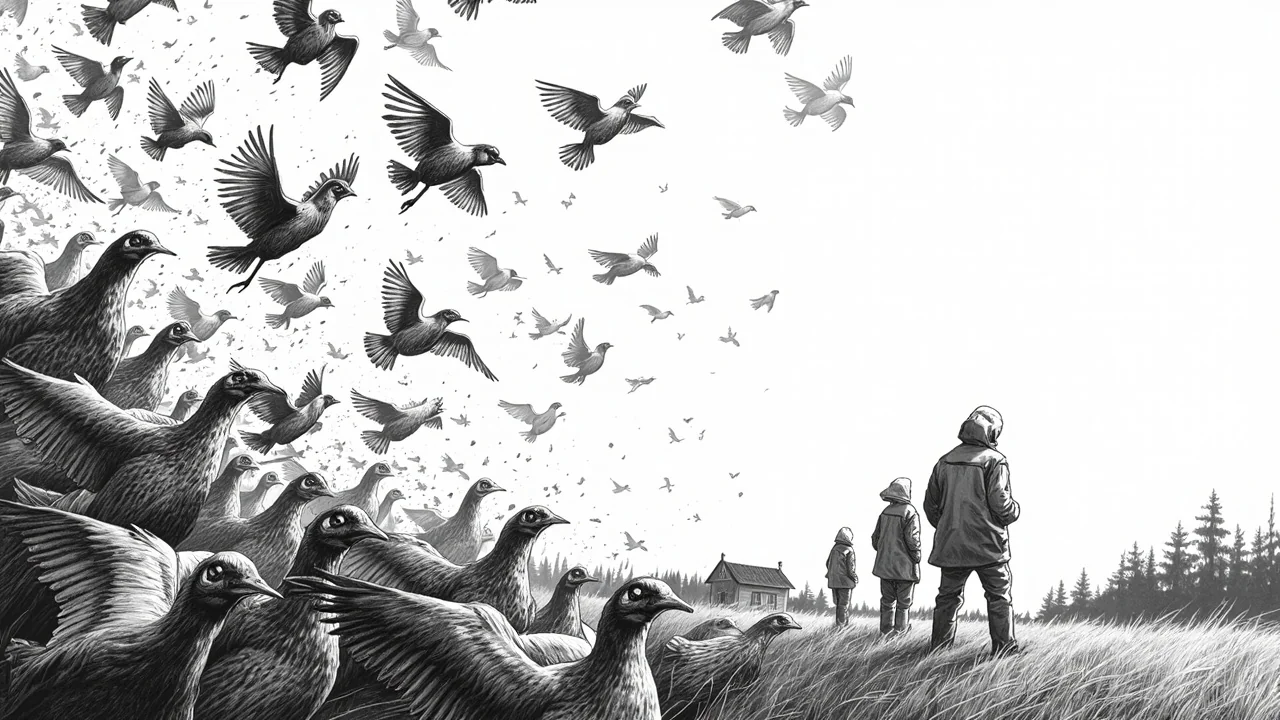
Sweden's bird flu season has reached a record-breaking and disturbing peak. The evidence is visible across the country. Buzzards sit apathetically in suburban gardens. A curlew crashed in central Malmö. Dead cranes dot the wetlands. And a white-fronted goose spins helplessly in circles, its head tilted at a sickening angle.
This is the stark reality of the highly pathogenic avian influenza, or H5N1, currently sweeping through wild and domestic bird populations. The virus is not just killing birds; it's attacking their nervous systems, leading to bizarre neurological symptoms before death. For ornithologists and veterinarians, this season is unprecedented in its scale and severity.
“We have never seen such a massive increase in bird virus as at the start of this season,” said Karl Ståhl, Sweden's state epizootologist at the National Veterinary Institute (SVA). “There have been an enormous number of cases in Europe, and also in Sweden.”
A Disturbing Neurological Symptom
The footage of the disoriented goose, filmed by ornithologist Kenneth Bengtsson at the Spillepeng bird sanctuary, is a chilling case study. The bird paddles in endless, dizzying circles, unable to navigate or control its movements. It’s a sight that has become tragically familiar to those on the front lines.
“It’s a typical symptom,” Bengtsson explained. “They become unsteady and swim in circles.” Karl Ståhl confirms the grim cause. “The virus reaches the brain so that they get a behavioral impact,” he said. This neurological invasion explains the apathetic buzzards and the crashing curlew—the virus hijacks the very organ that guides flight, foraging, and survival.
For bird lovers and experts, this adds a layer of distress to an already severe ecological crisis. The birds are not just dying; they are suffering a profound degradation of their fundamental functions. At Spillepeng, a key rescue center in Skåne, the protocol is heartbreakingly strict. “I cannot take care of the sick birds at my facility because the risk of infection is great and the mortality is high,” Bengtsson said. “They unfortunately have to be euthanized and destroyed.”
An Unprecedented Scale of Infection
The outbreak has moved far beyond isolated incidents in wild populations. Southern Sweden, particularly the region of Skåne, has been heavily impacted. Numerous commercial poultry farms have been hit, leading to mandatory culls to prevent further spread. The virus is highly contagious, and some species are extremely sensitive, Ståhl notes.
The ripple effects touch multiple aspects of Swedish society and culture. Birdwatching is a popular pastime, deeply woven into the national appreciation for nature and allemansrätten—the right of public access. The silence in normally vibrant wetlands is palpable. The annual spectacle of migrating cranes, a cherished sign of the changing seasons, has been marred by reports of dead birds.
Local municipalities are grappling with the logistics of collecting and safely disposing of carcasses from public parks and waterways. In cities like Stockholm, Malmö, and Gothenburg, where residents coexist closely with urban birdlife, the sight of a sick bird raises public alarm and difficult questions about intervention.
The Human Connection and Cultural Impact
This crisis strikes at the heart of Sweden's relationship with its natural world. Birds are omnipresent in Swedish folklore, from the majestic sea eagle to the humble sparrow. They signal the arrival of spring and the departure of autumn. Their current plight feels like a disruption in the natural order.
Kenneth Bengtsson’s role has shifted from rescuer and rehabilitator to documentarian and early-warning sentinel. He often sends samples to the SVA, which confirm the presence of avian influenza. His films are not just records of disease; they are urgent dispatches from a failing ecosystem. The dead peregrine falcons found in Malmö and Ystad he mentions are particularly symbolic—these powerful predators at the top of the avian food chain are not immune.
“A pilgrim falcon was found dead in Malmö and one in Ystad,” Bengtsson said, highlighting that no bird is safe. The loss of such species has cascading effects on local biodiversity, a concern for conservationists across the Nordic region.
Navigating the Response and Looking Ahead
The Swedish response follows established EU and national guidelines focused on containment: monitoring, culling infected flocks, and restricting movement in zones around outbreaks. However, the sheer scale of the wild bird infection makes containment nearly impossible. The virus is now endemic in the environment, carried by migratory birds along their flyways.
This presents a grim long-term outlook. Experts like Ståhl suggest we may need to adjust our expectations and learn to live with the virus as a persistent threat to bird populations. The focus is shifting to protecting the poultry industry through stringent biosecurity while acknowledging that wild birds will continue to suffer significant losses.
For the average Swede, recommendations remain clear: do not touch sick or dead birds. Report them to local authorities or the Swedish Board of Agriculture. The risk to humans is currently assessed as very low, but viruses can evolve, and caution is paramount.
The cultural loss, however, is immediate. The spring forests around Stockholm may be quieter. The lakes in Dalarna might see fewer diving ducks. The question now is not just how to stop the virus, but how the Swedish landscape and its people will adapt to its lasting presence. Will the spinning goose become a rare tragedy, or a common omen of a permanently altered natural world? The answer depends on the unpredictable path of the virus and our capacity to manage a crisis that has literally gotten into the heads of its victims.