
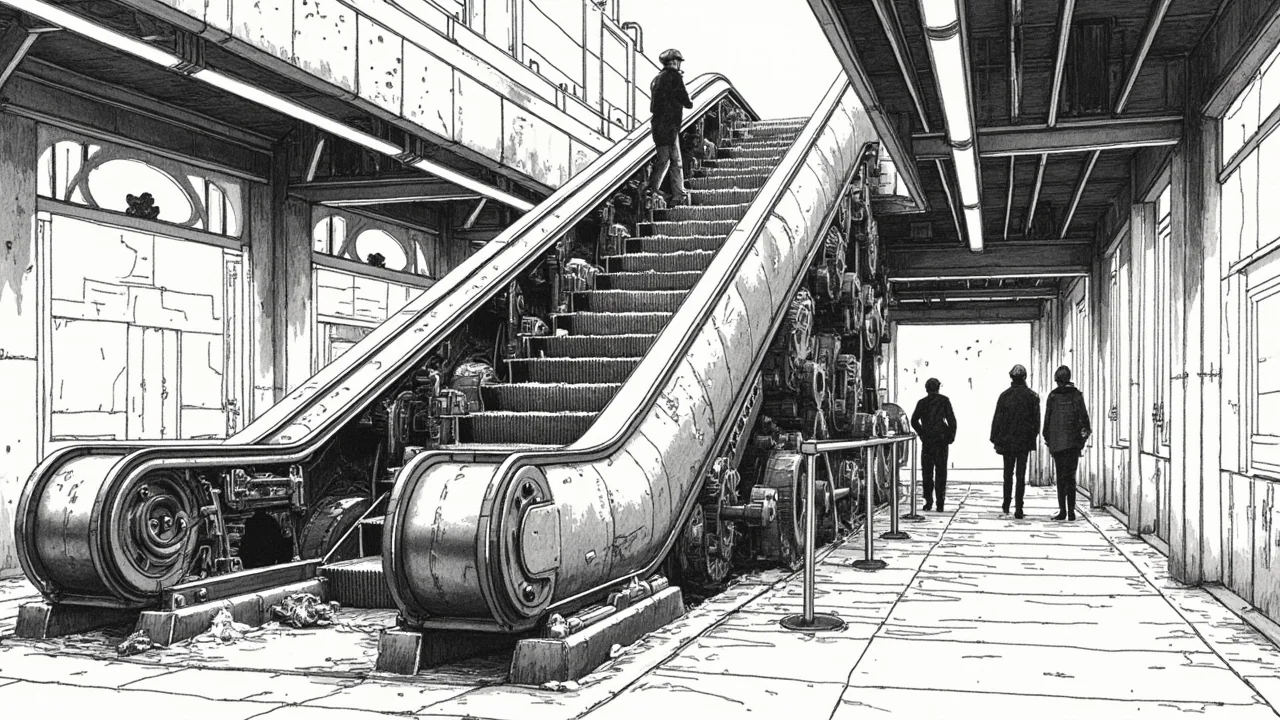
Stockholm commuters know the drill: approach the escalator, see the yellow tape, sigh, and trudge up the stairs. The Globen station escalator has been out since January 26, joining nearly one in ten SL escalators sitting broken across the city. What started as routine maintenance has become a 2.6 million kronor repair bill and a symbol of Sweden's crumbling transit infrastructure. Source: Trafikverket Bransch.
The billion kronor problem
The Globen escalator dates from 1989, making it a relic from Sweden's infrastructure boom. But it's not alone. According to Dagens Nyheter, 71 escalators across SL's system need complete replacement, with costs projected in the billions of kronor. That's not maintenance money, that's rebuild-the-system money.
SL (Storstockholms Lokaltrafik) has been playing whack-a-mole with breakdowns. Grit in the mechanisms and emergency stop buttons account for most failures, but the real issue runs deeper. Supply chain problems make finding replacement parts nearly impossible for equipment installed when Sweden was still debating EU membership.
The Trafikförvaltningen has launched what they call a "thorough replacement program," but thorough doesn't mean fast. Three escalators at Zinkensdamm started replacement in January, with completion planned "before summer." That's six months minimum for three units.
When infrastructure ages out
This isn't just about escalators. Sweden built much of its modern transit infrastructure during the 1980s boom, and that equipment is hitting end-of-life simultaneously. The Globen escalator's 2.6 million kronor repair bill for a 35-year-old machine raises an uncomfortable question: how much more money gets thrown at equipment that should be scrapped?
Maintenance contractors must respond within 15 minutes to breakdowns at priority stations like T-Centralen, but response time means nothing when the parts don't exist. Sweden's engineering prowess built these systems to last decades, but nobody planned for the replacement cycle.
The human cost shows in daily commuter frustration. Accessibility suffers when elevators also break down, as happened three times at Globen in February alone. For wheelchair users or parents with strollers, a broken escalator isn't an inconvenience, it's a barrier.
The replacement reality
SL promises the Globen escalator will restart March 8, pending two separate inspections. But even if it works perfectly, it's still a 1989 machine with 1989 parts in a 2026 system. The repair buys time, not solutions.
Expect more stations to face extended closures as SL prioritizes full replacements over expensive repairs. The billion-kronor price tag isn't optional anymore, it's inevitable. Swedish commuters better get used to taking the stairs.
Read more: Stockholm Spent Millions Planning Trams That Never Came.
Read more: Gothenburg Assault Exposes Sweden's Bystander Problem.