
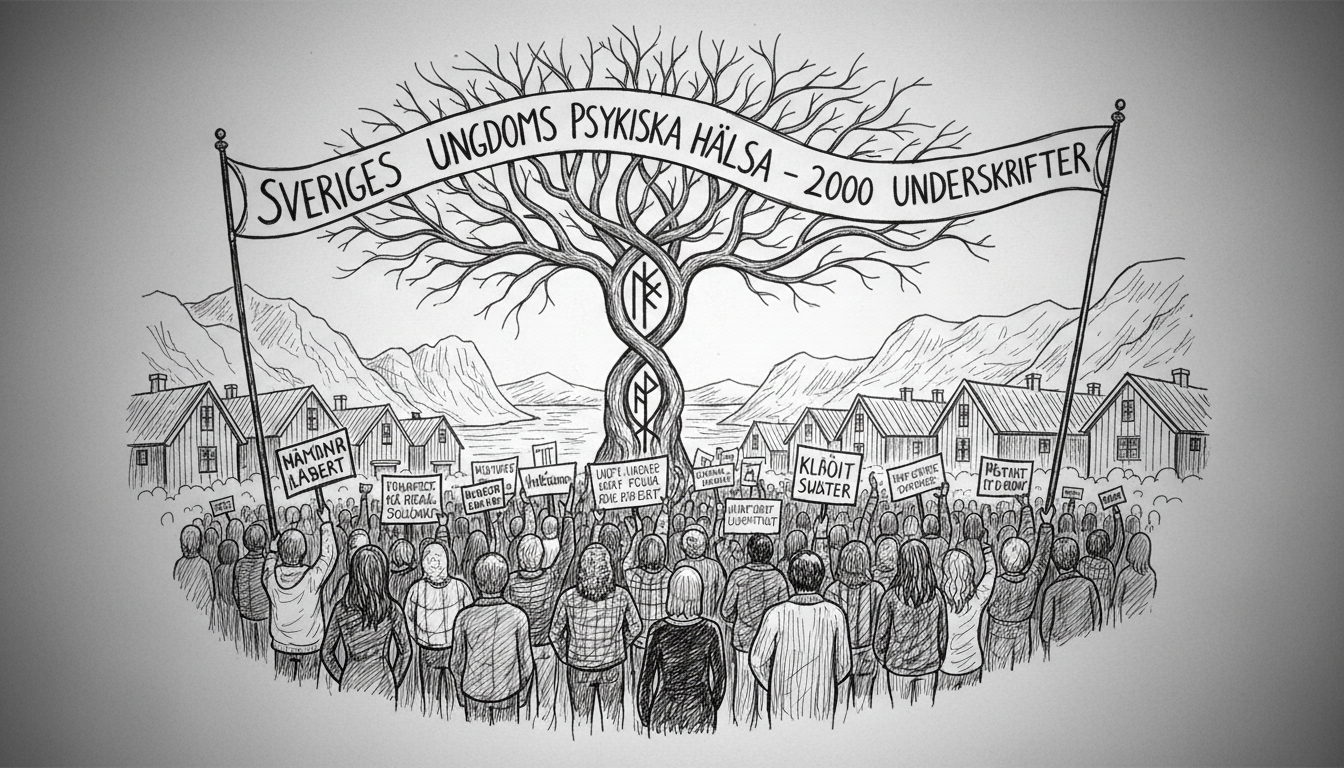
Sweden's regional healthcare authorities are restructuring youth mental health services, sparking debate over accessibility and specialized care. Region Skåne's proposal to integrate the 'Unga Vuxna' clinic for 16-29 year olds into general youth clinics has drawn a 2,000-signature petition and political opposition in Lund. The final Riksdag-level decision for this government policy shift is scheduled for February, with potential implementation starting June 2026.
Cecilia Leijonhufvud, a student who organized the petition, voiced a common fear among service users. "People are afraid they are hiding a closure decision within an expansion through the youth clinic system," she said. Her campaign highlights public concern that the unique focus of Unga Vuxna Lund could be diluted. This specialized clinic currently offers targeted support for young adults navigating university pressure and early career challenges.
A Regional Decision with National Implications
The proposal originated from an internal review within Region Skåne's healthcare administration. It has already passed votes in two key regional committees. Lisa Flinth (L), Chair of the Primary Care Committee in Region Skåne, defends the plan. "We believe positive effects can arise between the activities," Flinth stated, referencing potential administrative efficiencies. The regional government argues that merging services under the established 'ungdomsmottagningar' framework will streamline access. Critics counter that specialized knowledge for the 18-29 age bracket may be lost in a system traditionally focused on teenagers.
This local decision reflects broader national debates on Swedish mental health care structure. Sweden's 21 regions hold significant autonomy over healthcare delivery, leading to a patchwork of services. The Swedish government has repeatedly emphasized improving youth mental health in its public health objectives. National statistics show approximately 25% of young adults report mental health issues, creating pressure on all regional systems. Waiting times in Skåne have, at times, exceeded national guidelines set by the Health and Social Care Inspectorate (IVO).
Political Skepticism and Policy Scrutiny
Opposition politicians in both Lund Municipality and the Region Skåne council are questioning the move. Their skepticism centers on whether integration truly represents an improvement or a cost-saving measure disguised as reform. The political debate in the regional council chambers mirrors a classic Swedish policy conflict: efficiency versus specialization. The February vote will test the ruling regional coalition's ability to implement its healthcare vision.
The process exemplifies how Swedish government policy is often tested at the regional level before potential national adoption. Success or failure in Skåne could inform future Riksdag decisions on youth mental health funding models. The national parliament has previously debated centralizing standards for youth care to reduce regional inequality. This case in Lund provides a concrete example of the challenges involved in such standardization efforts.
The Clash Between Efficiency and Specialized Care
Proponents of the merger, primarily within the regional administration, point to logistical benefits. Combining resources could reduce duplicate administrative functions and create a single entry point for young people. Theoretically, this makes the system less confusing for someone seeking help. A unified clinic could offer a broader range of services under one roof, from sexual health to psychological counseling. The model aligns with a persistent drive within Swedish public management to consolidate and integrate services for perceived coherence.
Mental health experts, however, frequently stress the importance of age-specific interventions. The needs of a 29-year-old facing workplace burnout differ markedly from those of a 16-year-old dealing with school anxiety. Unga Vuxna Lund was created specifically to address that gap for young adults. The concern is that their unique peer-support methods and therapeutic approaches may not survive a merger into a generalized structure. The risk, as petition signers fear, is that the most vulnerable users fall through the cracks during a bureaucratic reorganization.
The Road to a Final Decision in Stockholm
The decision-making pathway now moves toward a critical final vote in February. If approved, a multi-year transition will begin, aiming for full integration by June 2026. This lengthy timeline is characteristic of Swedish public sector changes, allowing for planning and staff retraining. The regional government must now prepare detailed implementation plans to address the concerns raised by the petition and opposition politicians. These plans will likely be scrutinized in further committee hearings before the final council vote.
The outcome will be closely watched by other regions considering similar consolidations. It also tests the Swedish government's broader agenda of improving mental healthcare accessibility, a frequent topic in Riksdag debates. The case underscores the tension between regional autonomy and the national desire for equitable service standards across Sweden. The final policy enacted in Skåne may well influence future healthcare legislation debated in the Riksdag building in Stockholm.
Analysis: A Microcosm of Swedish Healthcare Challenges
This specific case in Lund serves as a microcosm of larger challenges facing Swedish healthcare. System reform constantly balances the goals of cost-effectiveness, accessibility, and quality. The Swedish model, with its strong regional governance, allows for local experimentation but can also lead to fragmentation. The passionate response from young adults in Lund, evidenced by the large petition, demonstrates a highly engaged user group wary of losing a valued service.
The ultimate measure of success will be clinical outcomes and access times post-integration. Will more young adults in Skåne receive faster, effective care? Or will a specialized, high-touch service be absorbed into a more generic, potentially overstretched system? The regional government's ability to transparently monitor and report on these metrics will be crucial. Public trust in such reforms depends on clear evidence that change benefits patients, not just administrative balance sheets.
As Sweden continues to grapple with rising demand for youth mental health services, the choices made in Skåne will resonate. They highlight the difficult trade-offs inherent in managing a cherished but expensive public welfare system. The coming years will reveal whether this integration model becomes a blueprint for other regions or a cautionary tale about the value of niche, community-focused care in the Swedish health landscape.