
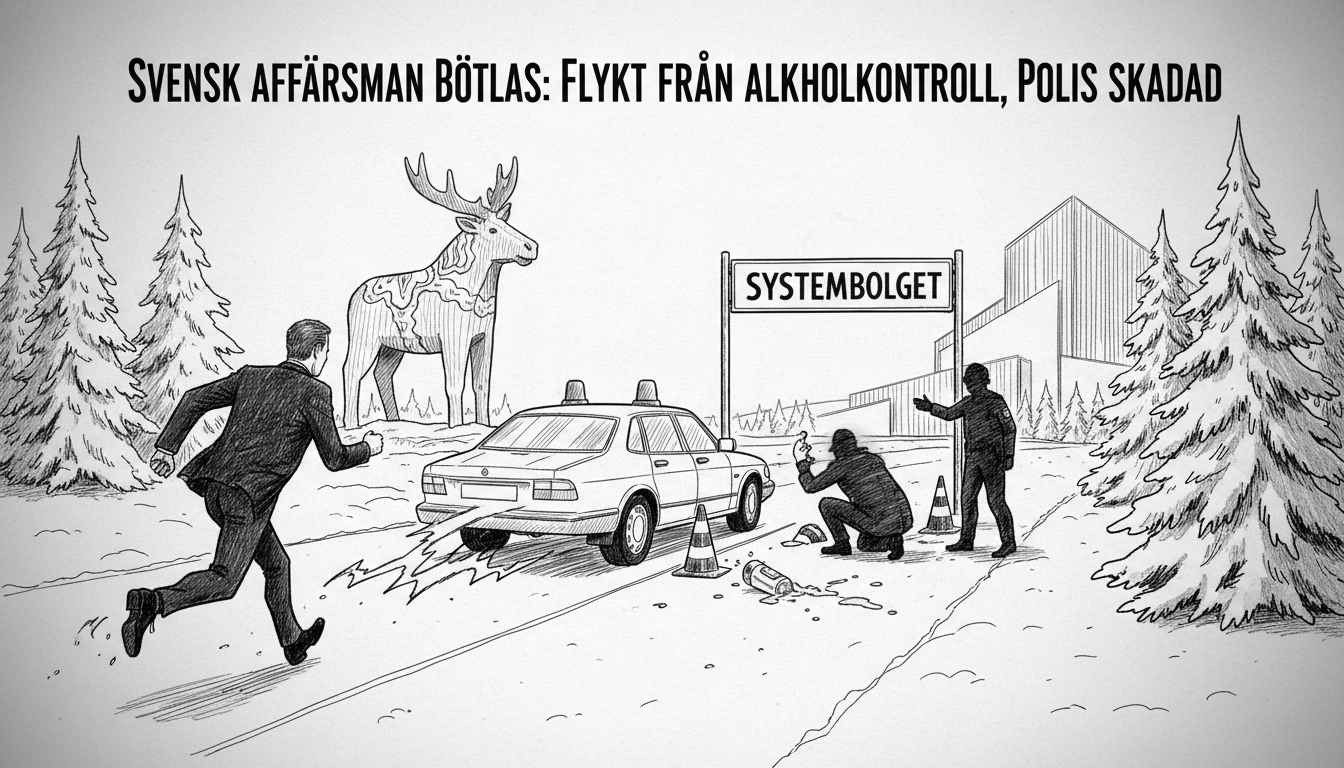
A Swedish businessman in his seventies must pay over 40,000 kronor after fleeing an alcohol control checkpoint at Systembolaget in Munkebäck. The man attempted to avoid providing a breath sample during the routine check. His reckless escape resulted in injuries to one police officer and nearly caused an accident involving a father with a young child.
The incident occurred during standard alcohol controls that Swedish police conduct near liquor stores. These checks aim to prevent drunk driving and ensure road safety. The businessman's deliberate evasion shows the challenges authorities face in enforcing Sweden's strict alcohol policies.
Sweden maintains unique alcohol regulations through the Systembolaget monopoly system. All alcohol sales above 3.5% alcohol by volume must occur through state-run stores. This system reflects Sweden's historical approach to controlling alcohol consumption for public health reasons. The government established this model to reduce alcohol-related harm across society.
Police regularly conduct sobriety checks near these stores, especially during evenings and weekends. Drivers leaving Systembolaget locations often face random breathalyzer tests. This particular incident in Gothenburg's Munkebäck district demonstrates how these controls sometimes encounter resistance.
The injured officer received medical attention following the encounter. Authorities charged the businessman with multiple offenses including fleeing police and causing bodily harm. The 40,000 kronor fine represents a substantial penalty for such violations in Sweden's legal system.
This case highlights ongoing tensions between individual freedoms and Sweden's alcohol control measures. Some citizens question the extensive monitoring, while health officials defend the approach as necessary for public safety. Similar incidents have occurred previously in other Swedish cities, though injuries to officers remain relatively uncommon.
International readers should understand that Sweden's alcohol policies differ markedly from many other countries. The combination of retail monopoly and frequent police controls creates a unique regulatory environment. Foreign residents and visitors must adapt to these strict regulations when living in or visiting Sweden.
The legal consequences for fleeing alcohol controls can extend beyond financial penalties. Swedish courts may impose driving bans or even prison sentences for serious cases involving injury or repeated offenses. This particular outcome shows how Swedish authorities treat attempts to evade alcohol testing as serious matters.
What does this mean for road safety in Sweden? The incident underscores the continued need for alcohol controls despite their occasional unpopularity. Sweden maintains some of Europe's lowest rates of alcohol-related traffic accidents, which supporters attribute to these strict enforcement measures.