
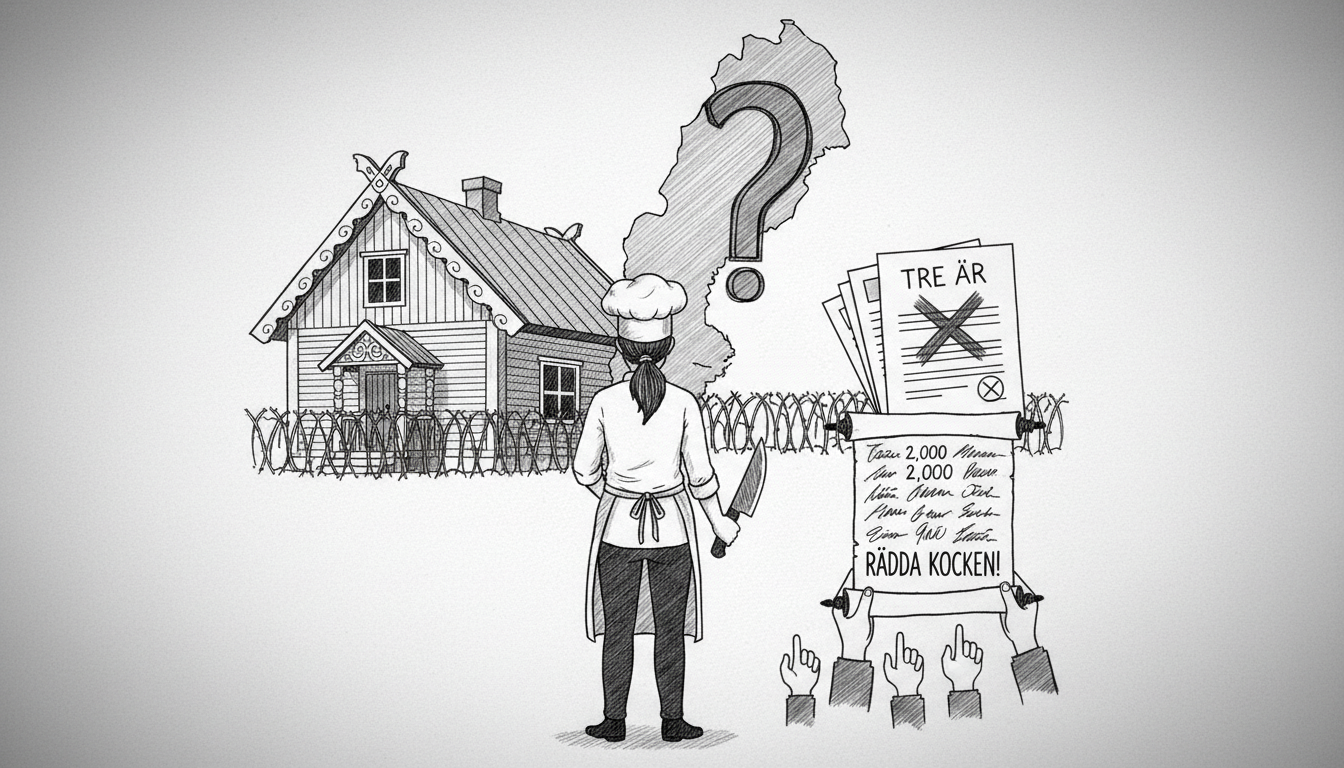
A Swedish kitchen chef faces deportation after authorities questioned her employment status. Hanifa Akkou worked at her son's restaurant for three years but now risks removal from Sweden with her husband.
The Swedish Migration Agency confirmed she received adequate pay for proper living standards. But officials doubt she performed actual work duties. They classified her position as sham employment.
Authorities noted she failed to digitally clock in through employee records. She also lacked occupational injury insurance for a brief period.
Her son Ibrahim Idrees expressed frustration about the allegations. "We have photos and social media videos showing our actual work," he said in a statement. "The accusation feels unjust when we have visual proof of her contributions."
Hanifa Akkou defended her work at the restaurant. "I work here and contribute significantly to developing and expanding the business," she said. "This situation feels deeply unfair."
The family has appealed the decision but awaits a final ruling that could force Akkou to leave Sweden.
"I cannot imagine life without them," said Ibrahim with visible emotion. More than 2,000 people signed a petition hoping to influence the Migration Agency's final decision.
This case highlights Sweden's strict approach to employment-based residency permits. Authorities increasingly scrutinize family business arrangements for potential immigration violations.
The situation demonstrates how technical administrative oversights can threaten long-term residency status, even when workers receive proper compensation.