
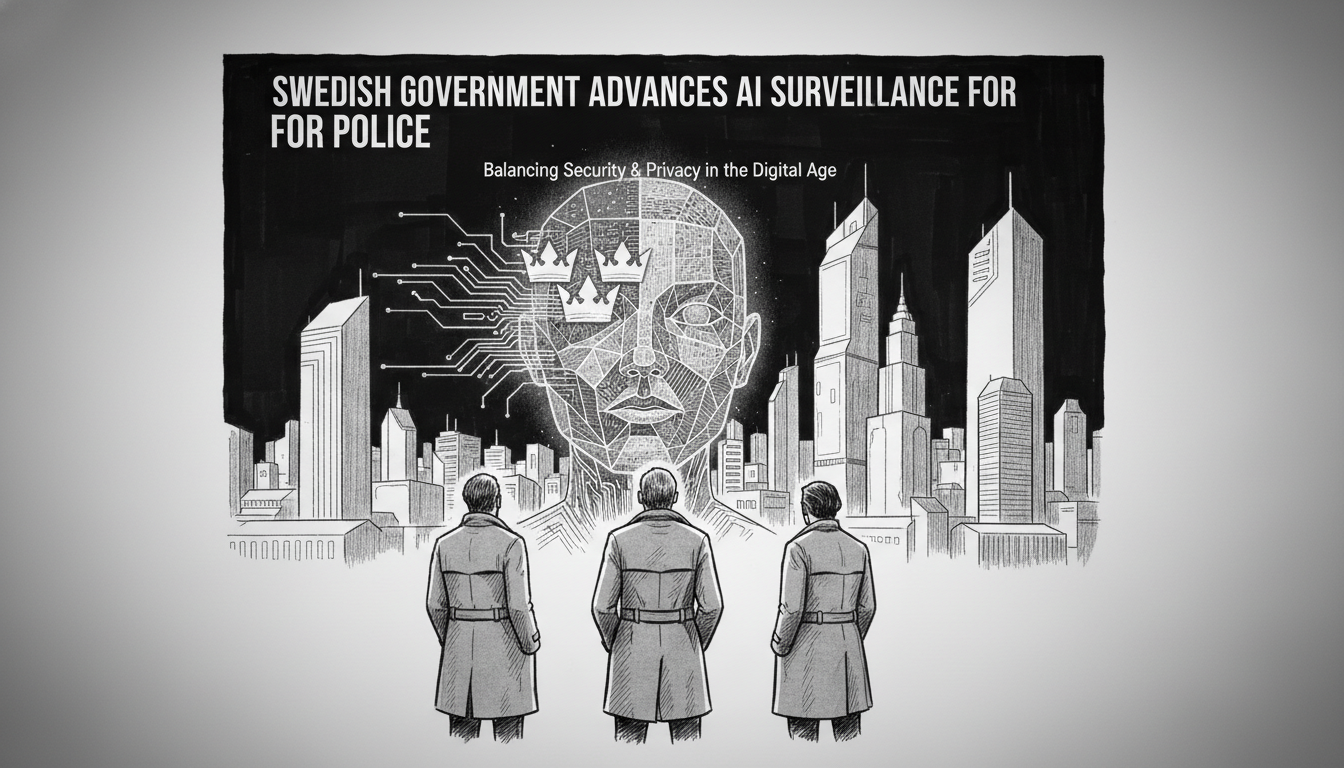
The Swedish government is proceeding with legislation enabling police to use artificial intelligence for real-time facial recognition. This proposal now moves to the Council on Legislation for review before parliamentary consideration. Justice Minister Gunnar Strömmer will present the detailed framework during a press conference at 13:00 from Rosenbad, the government headquarters.
The legislation specifically authorizes AI-powered cameras to identify individuals in public spaces. Police departments could deploy this technology to locate crime victims and investigate serious offenses. The Riksdag will debate the measure following the council's assessment, with voting expected during the Third Quarter session.
This initiative represents Sweden's most substantial expansion of surveillance capabilities in over a decade. Previous debates about camera monitoring focused primarily on traffic enforcement and limited public area coverage. The current proposal marks a fundamental shift toward predictive policing and automated identification systems.
Sweden's approach to privacy protection has historically balanced personal freedoms with public security needs. The Data Protection Authority previously blocked similar initiatives over proportionality concerns. This new framework attempts to address those objections through strict usage limitations and judicial oversight requirements.
International observers note Sweden joins several European nations developing AI surveillance systems. The European Parliament recently approved comprehensive AI regulation, creating potential jurisdictional overlaps. Swedish officials claim their proposal aligns with emerging EU standards while addressing specific national security priorities.
Civil liberties organizations have expressed immediate concerns about the potential for mission creep. Previous government technology initiatives sometimes expanded beyond their original stated purposes. The legislation must demonstrate clear safeguards against unauthorized data retention and function creep to gain opposition support.
Police authorities argue advanced tools have become necessary to combat organized crime and terrorism. Sweden's national police commissioner previously noted technological limitations hampered several major investigations. The new system would automatically cross-reference faces against existing databases of missing persons and wanted individuals.
The government's majority coalition appears united behind this initiative, though some center-right partners previously expressed privacy reservations. The Social Democratic opposition will likely demand additional oversight mechanisms before supporting the measure. Final Riksdag decisions will require careful negotiation across party lines.
Implementation would proceed gradually following parliamentary approval. Initial deployment would focus on major transportation hubs and high-crime areas in Stockholm, Gothenburg, and Malmö. Local police districts would require specific authorization for each surveillance location and purpose.
This development reflects broader global trends in law enforcement technology adoption. Swedish policymakers face the challenge of maintaining their nation's strong privacy traditions while addressing evolving security threats. The coming parliamentary debate will determine where Sweden draws this crucial balance.