
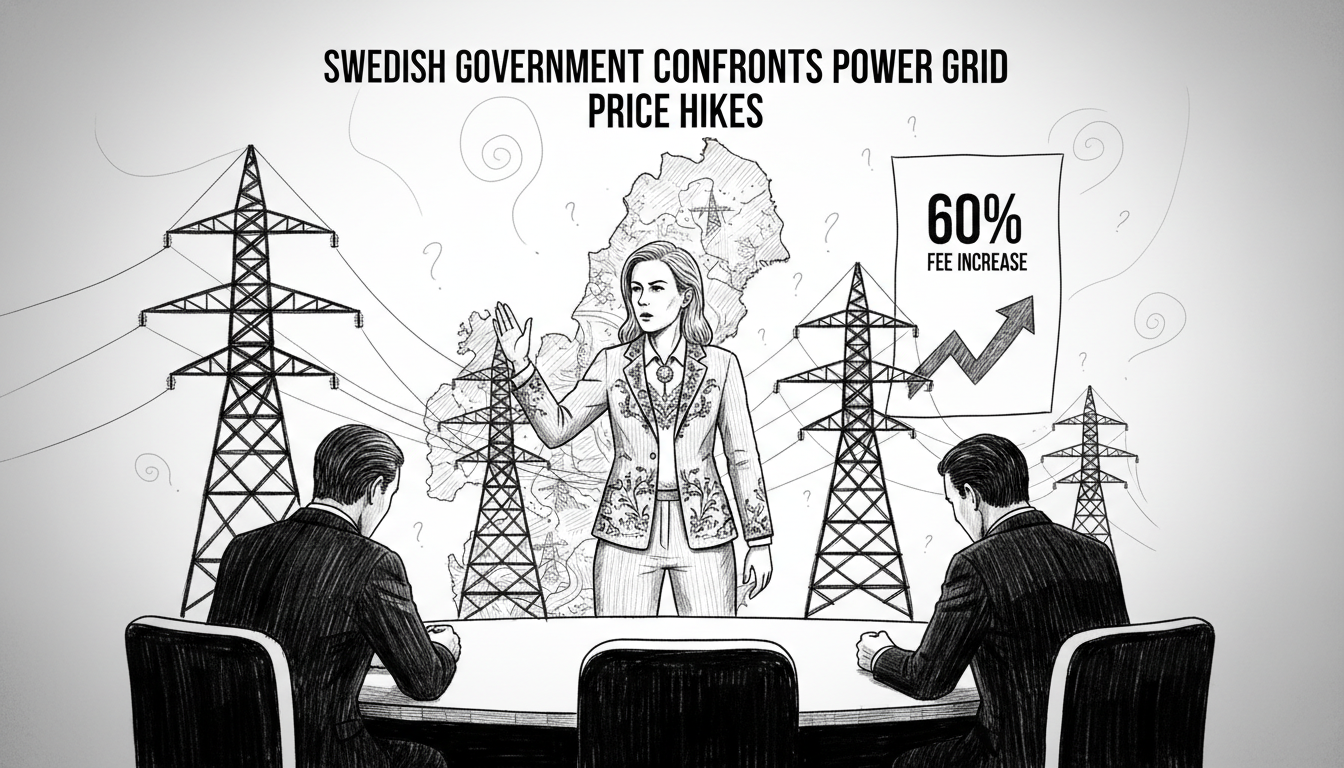
Energy Minister Ebba Busch has summoned representatives from Sweden's power grid companies to emergency meetings following announced price increases. The Swedish government intervention comes after Vattenfall and Ellevio revealed substantial network fee hikes affecting households across the nation.
Minister Busch confirmed the meetings through official channels, stating she will conduct multiple sessions with grid operators and relevant stakeholders. She has also requested the Energy Market Inspectorate to present a comprehensive situation report at the government offices in Rosenbad. These developments represent a significant escalation in the Swedish government's response to energy affordability concerns.
The controversy centers on Vattenfall's decision to increase monthly network fees by 14 percent starting next quarter. This translates to approximately 130 kronor monthly for electrically heated single-family homes and 35 kronor for apartments. These increases occur within a regulated monopoly system where consumers cannot choose alternative providers.
Swedish Parliament members have expressed growing concern about cumulative price increases in the energy sector. Power grid companies have raised fees by nearly 60 percent over the past decade, far outpacing inflation and wage growth. The current Riksdag decisions on energy policy emphasize affordability while maintaining grid reliability.
Stockholm politics observers note this confrontation reflects broader tensions between market regulation and consumer protection. The government policy Sweden currently implements seeks to balance infrastructure investment needs against household budget pressures. Minister Busch's intervention demonstrates the administration's willingness to directly engage with regulated monopolies when public interest concerns arise.
The Energy Market Inspectorate's upcoming report will likely influence future Riksdag decisions on energy market regulation. Previous government policy Sweden implementations have focused on long-term infrastructure planning, but current pressures require more immediate responses. The Swedish Parliament energy committee has scheduled hearings to examine the regulatory framework governing network fees.
This situation highlights the challenges facing European energy markets transitioning toward renewable sources while maintaining affordability. Sweden's electricity grid requires substantial investment to support the country's green transition, yet consumers increasingly resist bearing these costs through higher fees. The Swedish government must navigate between necessary infrastructure spending and protecting household budgets during economic uncertainty.
What broader implications might these price increases have for Sweden's industrial competitiveness and green transition goals? Energy-intensive industries already face challenges from high electricity costs, and additional network fee increases could further strain manufacturing sectors. The government's response will signal its approach to managing the energy transition's economic impacts.
The outcome of these meetings could shape energy policy through the next electoral cycle. Minister Busch's handling of this situation will test the government's ability to deliver on both climate commitments and affordability promises. All stakeholders await the Energy Market Inspectorate's assessment and the subsequent government actions.