
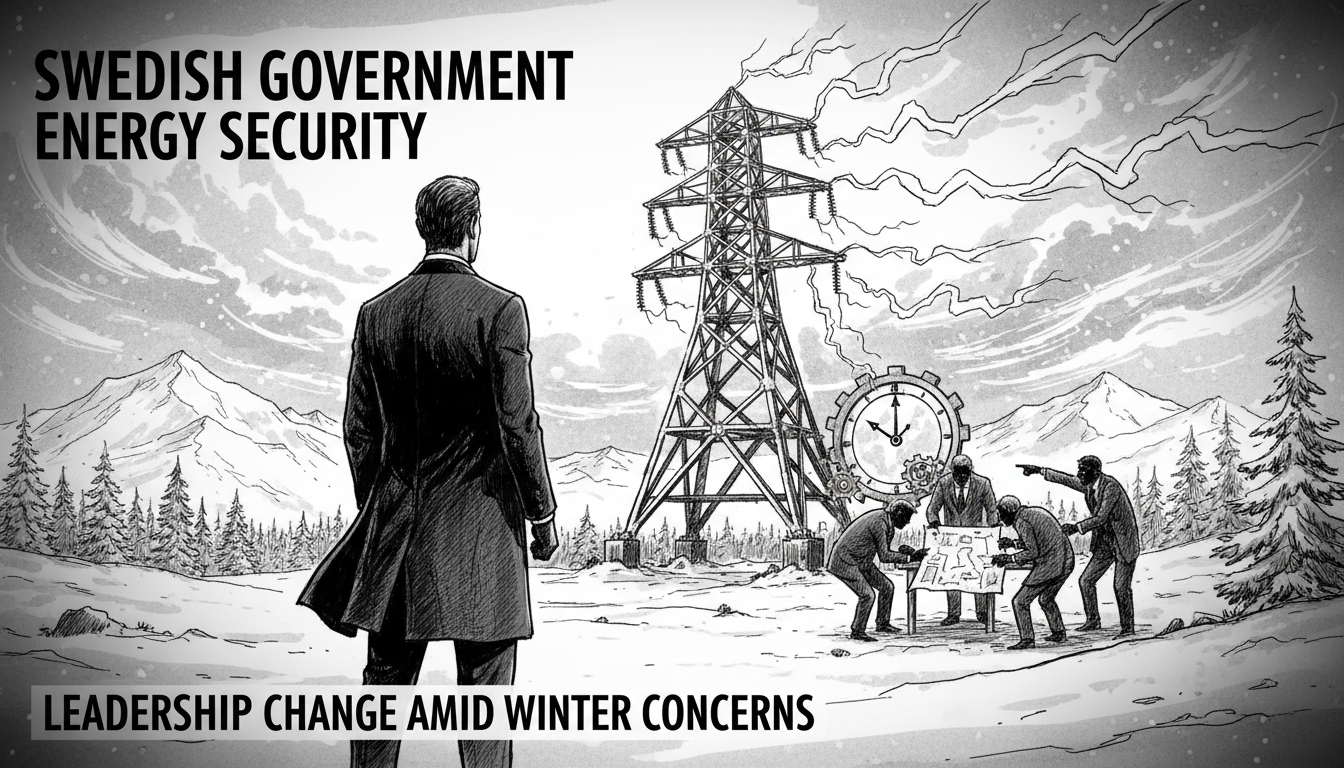
The Swedish government has removed Per Eckemark from his position as director general of Svenska kraftnät, the national power grid operator. This decision follows substantial frustration within government circles regarding the agency's management of strategic electricity reserves. Energy Minister Ebba Busch's office expressed particular dissatisfaction with the lack of concrete implementation plans for ensuring winter power reliability.
Internal email correspondence reveals deep concerns within the Swedish government about energy preparedness. State Secretary Maja Lundbäck explicitly noted the absence of a clear timeline for implementing necessary measures. She further criticized the power grid operator for failing to provide adequate assessments of electricity supply security given the current geopolitical situation. These communications highlight significant tensions between political leadership and agency management.
The Riksdag's Industry Committee Chairman Tobias Andersson confirmed the seriousness of the situation. He stated that Sweden risks facing electricity shortages when winter arrives without proper preparedness measures. The parliamentary oversight body has been monitoring the strategic reserve procurement process closely. Andersson acknowledged that political pressure likely contributed to the leadership change at the power grid operator.
Eckemark will be reassigned to work within the Government Offices in what insiders describe as a transitional role for senior officials. The government announcement indicated he will contribute to Sweden's competitiveness and strength in his new position. This relocation pattern for agency heads is well-established within Stockholm politics, though such moves typically signal significant policy disagreements.
The timing of this leadership change coincides with Svenska kraftnät initiating a new procurement process for strategic power reserves. This development suggests the Swedish government is pushing for more aggressive action on energy security. The original procurement had been abruptly terminated, raising concerns about winter preparedness among policymakers and industry observers alike.
Sweden's electricity reserve system serves as a critical backup during extreme cold weather when demand spikes. The strategic reserve functions as an insurance policy against power shortages that could affect households and industry. This system became particularly important following recent European energy market disruptions and changing security dynamics.
Eckemark responded to the criticism by requesting a meeting to address the political leadership's concerns. He acknowledged that the provided materials might not have fully met government expectations. This exchange represents a classic tension in Swedish administration between independent agencies and political oversight from Rosenbad.
The Swedish Parliament has increasingly focused on energy security matters in recent sessions. Riksdag decisions have emphasized the need for reliable power supplies throughout all seasons. This case demonstrates how parliamentary committees exercise oversight over government agencies through both formal hearings and informal pressure.
Government policy in Sweden typically balances agency independence with ministerial responsibility. This situation shows how that balance can shift when perceived urgent national interests are at stake. The Energy Ministry appears to be taking a more direct role in operational matters than usual, signaling the high priority of energy security.
What remains unclear is how quickly the new procurement process can deliver results before winter demand increases. The government faces pressure to demonstrate concrete progress on this critical infrastructure issue. International observers will watch how Sweden manages this energy security challenge given its importance for both national stability and European market dynamics.