
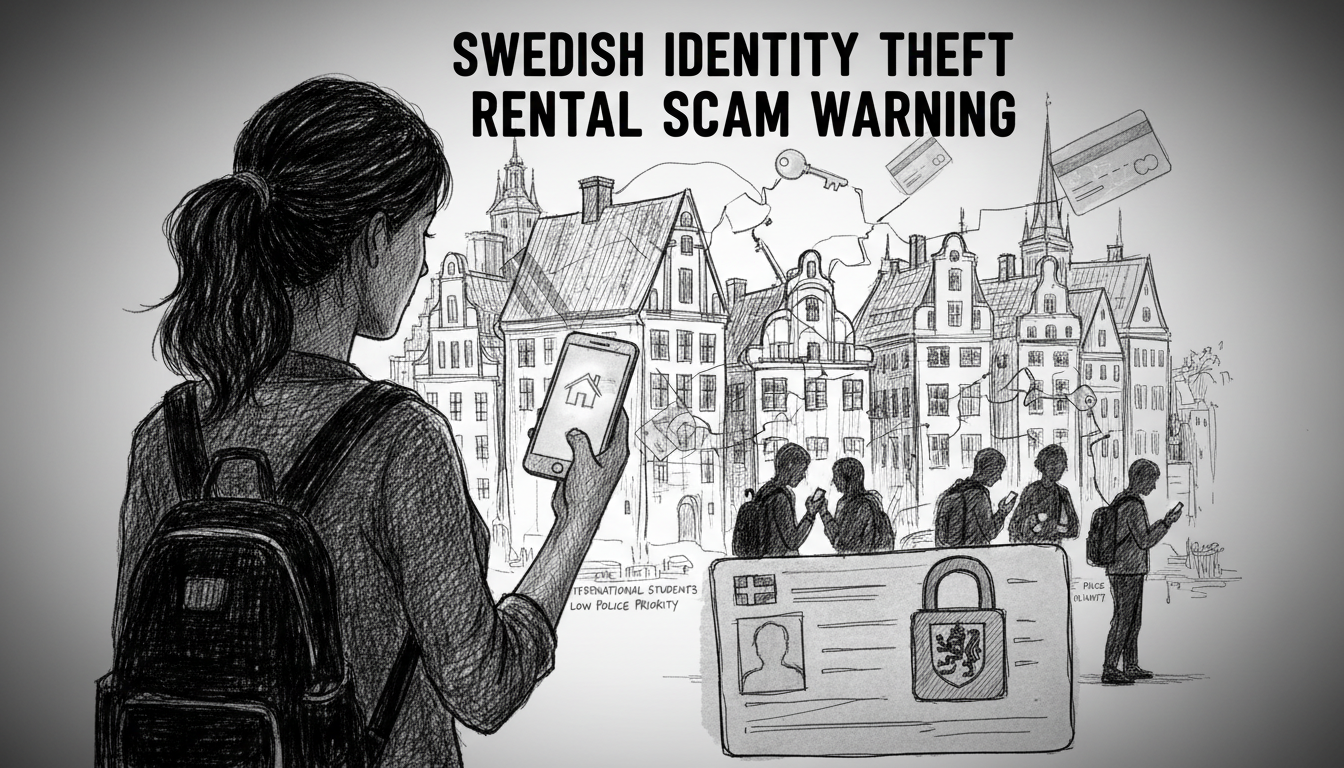
Stockholm resident Zuzannah Gun Lidekrans is living a digital nightmare. Her identity is being used to scam desperate international students out of thousands of kronor. This story reveals a dark side of Sweden's popular student cities and the challenges of digital life.
Zuzannah has been contacted by around 15 people since last year. They are from across Europe and Sweden. Some have even deposited money into what they believed was her bank account. The fraudsters use her stolen passport details to pose as a legitimate landlord.
'I think the dark figure is large,' Zuzannah said in a statement. She refers to the many unreported cases. The scammers offer apartments that do not exist. They request advance rent and security deposits.
One victim was Mariana Zamora in Mexico. She thought she found a nice apartment on Brahegatan 8 in central Jönköping. She planned to study at Jönköping University. 'I googled the address and found it on the map, so I believed the apartment was real,' Mariana explained. The scammers sent a passport copy, a property certificate, and a video. Everything was fake.
Zuzannah suspects her passport was copied during a trip to Spain. She has filed three police reports, the most recent in the third quarter. Her case is not unique. Police receive about 250,000 fraud reports annually.
Jan Olsson, a police commissioner, explained the reality. 'It is impossible to investigate all cases, you have to make a priority. Her case will be closed, but it is always important to report to clear your name and show you are innocent.'
This scam connects to broader Swedish society trends. Sweden is a top destination for international students. Cities like Stockholm, Lund, Uppsala, and Jönköping attract thousands each year. The housing shortage is severe. This creates a perfect environment for fraud. Desperate students, often unfamiliar with Swedish rental laws, are easy targets.
The Swedish rental market operates largely online. Platforms like Blocket Bostad are essential. This digital reliance increases risk. Scammers create sophisticated, fake profiles. They use stolen documents to appear credible.
From a cultural perspective, this crime exploits Swedish trust. The society operates on a high level of mutual trust and digital efficiency. Scammers weaponize this perception. They mimic the straightforward, legitimate process a Swede would expect.
For international readers, this is a critical warning. Never transfer money for a Swedish apartment without a physical viewing or verified contract. Use official university housing services. Be extremely wary of deals that seem too good. Always verify the landlord's identity through the national population register, if possible.
The police's limited resources for investigating such fraud is a clear systemic issue. While violent crime gets attention, digital financial crimes affecting foreigners often fall through the cracks. This impacts Sweden's reputation as a safe, organized study destination. It shows a gap between the country's international image and the on-the-ground reality for some newcomers.
The human cost is significant. Students lose life savings. They arrive in Sweden to find no home. Their academic dreams can shatter before they begin. For people like Zuzannah, the violation is personal. Her name is now associated with crime in online student forums across the globe.
This case is more than a police report. It is a story about the vulnerabilities in a connected, mobile world. It highlights the clash between Sweden's open, international appeal and the practical challenges of safeguarding that system. As the autumn semester approaches, students worldwide should exercise extreme caution. The charming apartment in Jönköping or Södermalm, Stockholm, might just be a digital ghost.