
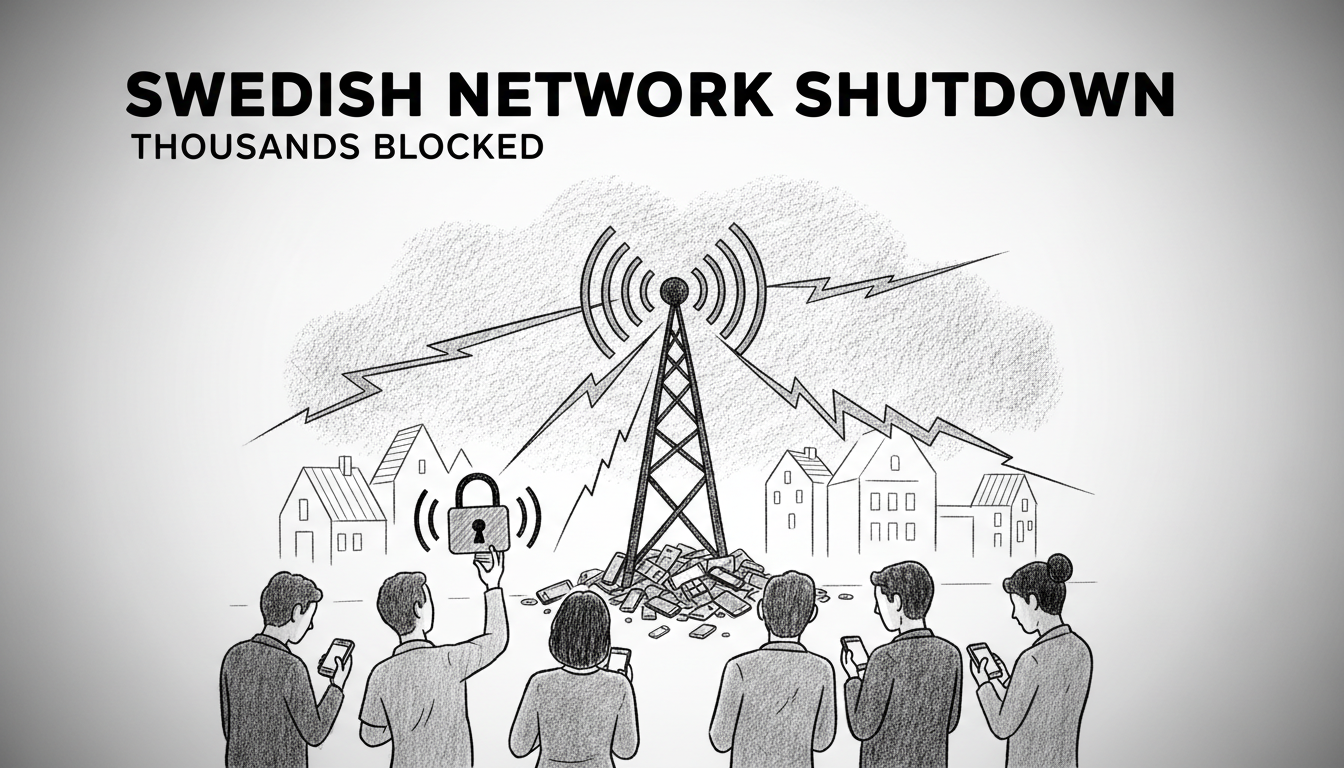
The Swedish government faces mounting criticism over a telecommunications policy decision that will render tens of thousands of mobile phones inoperable. Major operators Tele2, Telenor and Tre will disconnect their 2G and 3G networks starting December 1, with certain 4G devices also facing network blocking due to emergency call limitations. This Riksdag-mandated transition creates immediate consumer protection concerns while advancing national infrastructure modernization.
Post- och telestyrelsen (PTS) officials confirmed the network blocks will occur in two phases. Devices with severe security vulnerabilities face immediate blocking, while remaining affected models will lose connectivity in February when emergency roaming arrangements expire. Jonas Wessel, PTS resource allocation director, defended the timing in a statement. 'We made this decision so customers won't experience false security where they can call friends but not reach emergency services,' Wessel explained.
The policy implementation reveals coordination gaps between Stockholm politics and consumer reality. Karin Danielsson from Gothenburg represents thousands of affected Swedes who purchased replacement devices only to discover their new phones will soon become obsolete. 'I followed advice and bought a new 4G phone,' Danielsson stated. 'Now I learn it will be blocked because it cannot reliably call emergency services. Should it just be thrown away? This wastes money and harms the environment.'
Swedish Parliament telecommunications policy typically follows extensive stakeholder consultation, making this compressed timeline notable. The government districts around Rosenbad have historically managed technology transitions with longer adaptation periods. Current Riksdag decisions prioritize network security over gradual phase-outs, creating collateral damage for consumers who purchased compliant-but-outdated devices.
Telecom industry responsibility remains a central question. PTS requires operators to immediately identify affected models and notify customers. Wessel expressed frustration about recent retail sales of doomed devices. 'The electronics industry should know about this decision, inform customers and remove these phones from shelves,' he said. Telia customers avoid immediate impact since the company maintains its 2G network through 2027, creating market asymmetry.
The bureaucratic process highlights tension between technological progress and consumer protection. Older 4G models using 2G or 3G networks for voice calls cannot connect to emergency services via 4G alone. Security concerns necessitate complete network blocking rather than limited functionality. PTS acknowledges the inconvenience while maintaining public safety justifies the disruption.
This telecommunications transition reflects broader European infrastructure upgrades, though Sweden's approach proves particularly abrupt. The exact number of affected devices remains classified, but officials confirm tens of thousands of phones will become electronic waste. Affected customers should contact their operators immediately regarding compensation or replacement options.