
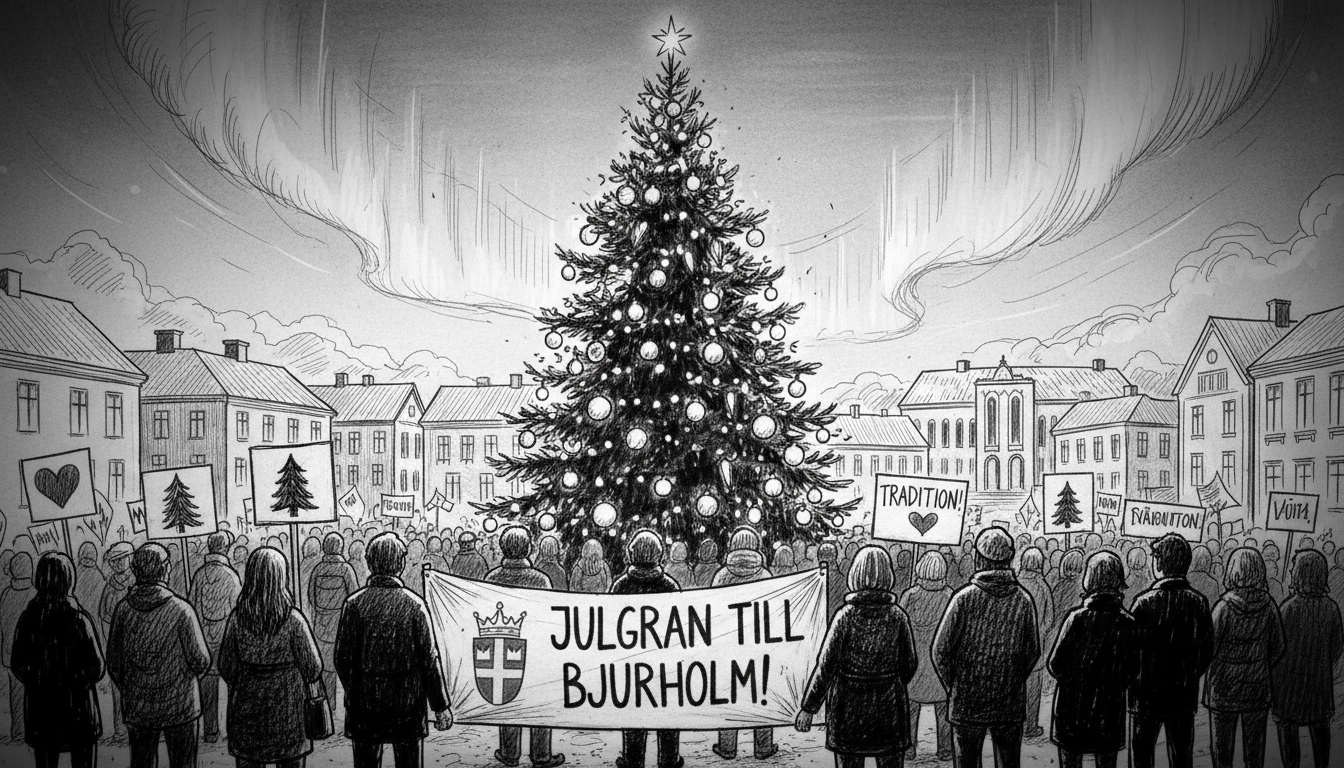
A northern Swedish municipality faced substantial public backlash after attempting to replace traditional Christmas decorations with modern lighting installations. Bjurholm's local government initially decided to boycott the community Christmas tree as part of what officials described as creating a more inclusive winter environment. The municipality invested in alternative light displays across larger public spaces instead of the traditional centerpiece tree.
Municipal Manager Jimmy Johansson defended the original decision in a public statement. He said the approach reflected their ambition to create a modern winter environment that more residents could enjoy throughout the town center. The plan aligned with broader efforts to update municipal holiday decorations across several Swedish communities.
Local residents reacted with immediate disapproval to the absence of their traditional Christmas tree. Marielle Jakobsson expressed strong opposition to the policy change and organized a petition demanding restoration of the holiday tradition. Numerous community members offered to donate Christmas trees to the municipality as protests gained momentum.
Facing mounting public pressure, municipal authorities reversed their decision within days of the controversy emerging. Johansson acknowledged the strong emotional connection residents maintain with Christmas traditions. He confirmed that workers will erect a Christmas tree in the town center before Advent begins.
The municipal manager emphasized their responsiveness to citizen feedback in his revised statement. He noted that when officials recognized substantial public desire for the traditional tree, they moved quickly to accommodate these preferences despite the short timeline. This responsiveness demonstrates how local Swedish governments must balance modernization efforts with cultural traditions.
This conflict reflects broader tensions in Swedish municipal governance between progressive policies and traditional values. Local governments frequently face challenges when implementing cultural changes that affect deeply rooted community traditions. The rapid policy reversal in Bjurholm shows how public opinion continues to shape local government decisions across Sweden.
Similar controversies have occurred in other Swedish municipalities attempting to update holiday traditions. The pattern reveals how cultural symbols maintain strong emotional significance despite changing societal values. Swedish local governments must carefully navigate these sensitive issues while maintaining public trust and community cohesion.
The situation in Bjurholm illustrates the practical limits of municipal authority when confronting established cultural practices. Even well-intentioned policy changes can face substantial resistance when they alter familiar traditions. Swedish municipalities must therefore conduct thorough community consultation before implementing cultural policy shifts.