
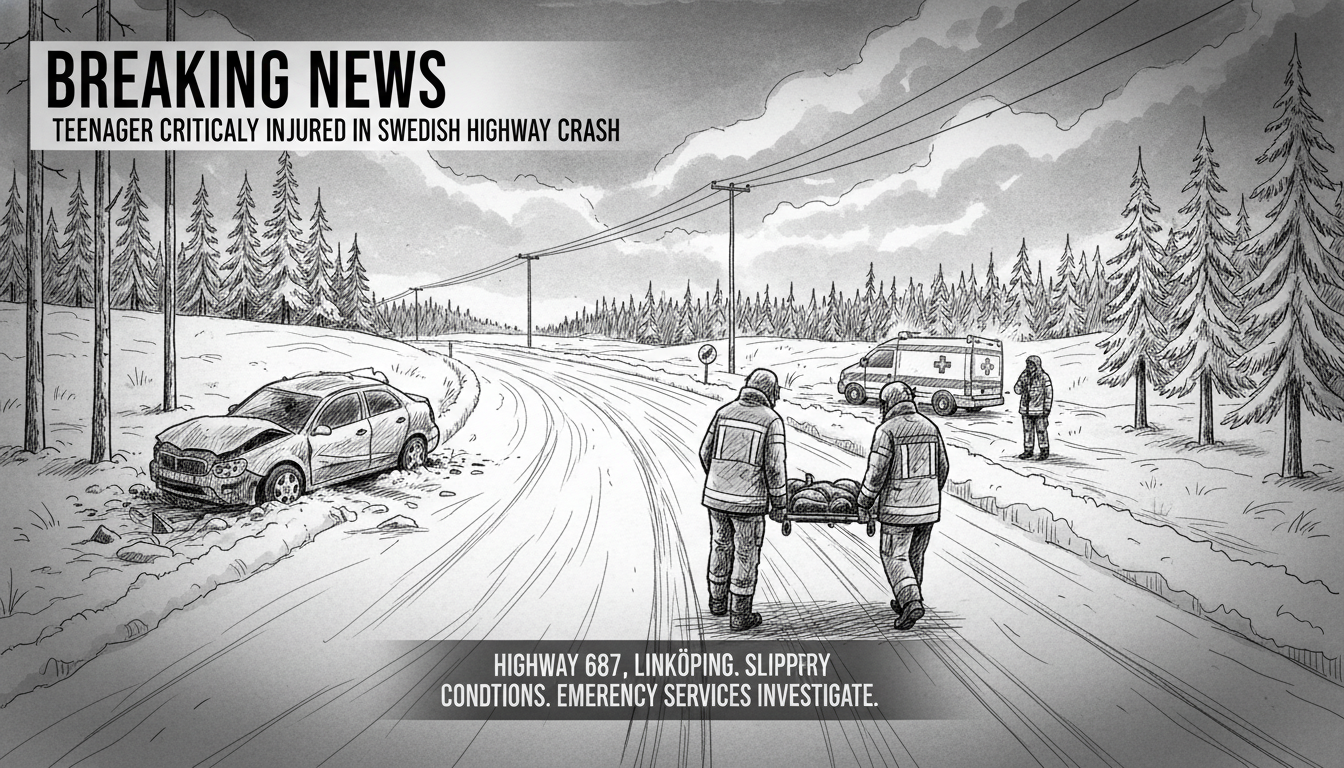
Emergency services received a distress call about a traffic accident on Highway 687 near Brokind, south of Linköping, at 6:50 PM on Saturday evening. A car carrying four people had rolled off the road. Rescue services in Eastern Götaland reported extremely slippery conditions on the roadway at the time of the incident.
All four occupants were transported to hospital for treatment. According to a medical bulletin from the regional healthcare authority, a 15-year-old boy sustained serious injuries and is currently receiving care in the intensive care unit. A woman in her twenties emerged from the accident unharmed and has been discharged from medical care.
Authorities are awaiting further updates about the condition of the two other individuals involved in the crash. The investigation into the exact cause of the accident continues as officials examine the scene and vehicle damage.
This incident highlights the ongoing challenges of winter road safety in southern Sweden. The region experiences frequent temperature fluctuations during this season, creating dangerous black ice conditions that catch many drivers unprepared. Highway 687 serves as an important connector route between smaller communities and the larger Linköping urban area, carrying significant daily traffic despite its rural character.
Swedish road safety authorities have repeatedly warned drivers about the particular dangers of early evening driving during winter months. Visibility decreases rapidly while temperatures drop, creating perfect conditions for ice formation on road surfaces. Many local drivers become complacent about familiar routes, potentially contributing to accidents like this one.
Road maintenance crews typically treat major highways as priority routes during winter conditions. Secondary roads like Highway 687 often receive less frequent attention, creating potential safety gaps in the network. This accident raises questions about whether current winter maintenance protocols adequately protect all road users across the transportation system.
The serious nature of the teenage boy's injuries underscores how quickly routine travel can turn tragic during Scandinavian winters. Intensive care admissions for traffic accidents typically indicate life-threatening conditions requiring specialized medical intervention. The psychological impact on all involved, including emergency responders, should not be underestimated in these situations.
International readers should note that Swedish emergency response systems operate with high efficiency, but remote locations can still present challenges for rapid intervention. The country's healthcare system provides comprehensive coverage for all accident victims regardless of nationality or insurance status, though visitors should always carry appropriate documentation.
What happens next in this case? Police will complete their technical investigation of the accident scene. Medical professionals will continue treating the injured while authorities determine whether road conditions, vehicle issues, or driver error played the primary role in this serious crash. The outcomes could influence winter road maintenance policies throughout the region.