
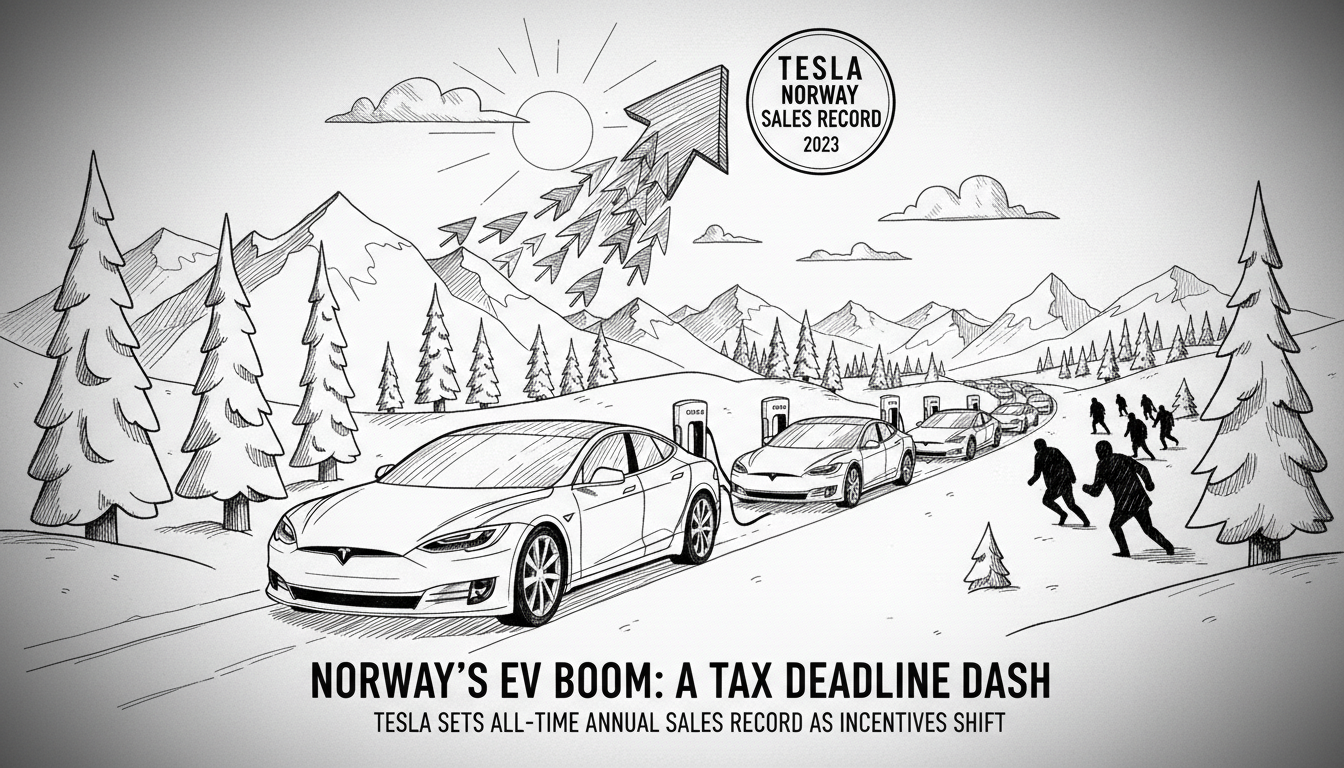
Tesla has achieved an unprecedented milestone in the Norwegian automotive market. The electric vehicle manufacturer has sold more cars in a single year than any other automaker in the country's history. This record was set with one full month remaining in the calendar year, according to official registration data released this week.
The surge is directly linked to an impending policy shift. Norwegian buyers are rushing to purchase electric vehicles before a value-added tax change takes effect at the start of the new year. The current favorable tax regime for EVs is expected to be adjusted, making purchases more expensive for consumers. This has created a powerful incentive for immediate action.
For context, Norway's parliament, the Storting, has long championed aggressive electric vehicle adoption through substantial tax incentives. These policies have made Norway a global leader in EV penetration per capita. The potential recalibration of these incentives represents a significant moment for the country's green transition strategy. It tests the market's reliance on government support versus organic consumer demand.
This sales phenomenon has major implications for Norway's energy and climate goals. The nation, a major oil and gas producer from fields like Johan Sverdrup in the North Sea, paradoxically leads the world in phasing out fossil fuel vehicles. The record Tesla sales demonstrate the policy's effectiveness in shifting consumer behavior. They also highlight the delicate balance between using oil wealth to fund a green transition and maintaining economic stability.
What happens after the tax change will be closely watched. A sharp decline in EV sales could pressure the government to reconsider its fiscal approach. Sustained demand would signal a mature market less dependent on subsidies. The outcome will influence policy debates in the Storting building in Oslo and similar discussions across Europe.
The record also underscores Tesla's dominant position in a key European market. Norway serves as a critical proving ground for EV technology and consumer acceptance. Success here often predicts broader trends across the Nordic region and the European Union. Other automakers are now forced to respond with more competitive electric models.
This situation reveals a core tension in Norwegian policy. The country funds its generous welfare state and green subsidies with revenues from its sovereign wealth fund, which is built on oil and gas profits. The government must carefully manage this transition to avoid economic shock. The coming months will show if Norwegian consumers remain committed to electric mobility when the direct financial advantage diminishes.