
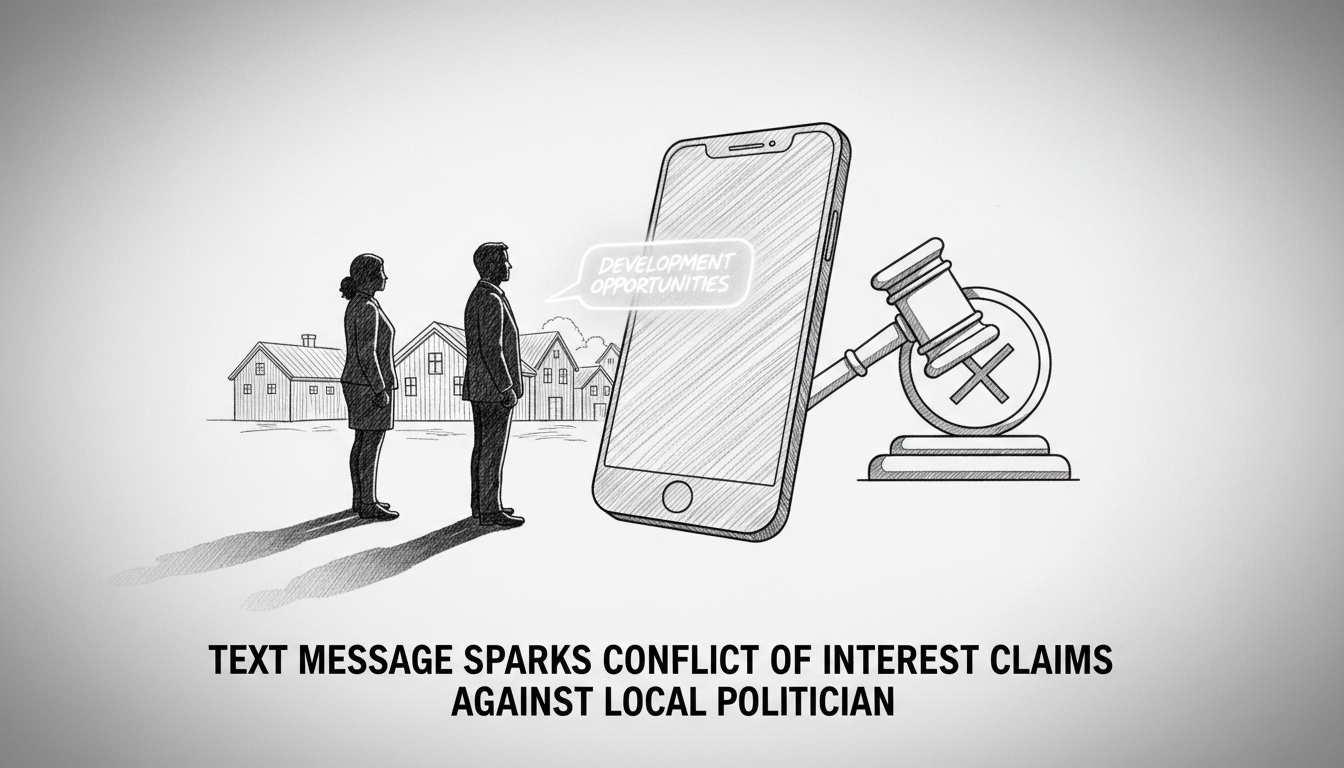
A city council member in Denmark faces conflict of interest allegations over a text message about property development. Erik Bo Andersen sent an SMS expressing interest in building on land currently earmarked for another developer's project.
The controversy centers on a proposed expansion in Helsted, a suburb of Randers. Developer Birch Ejendomme wants to add 111 homes to their existing project. The city council will vote on the expansion later today.
Legal experts say Andersen should not participate in the vote. The politician previously texted the landowner stating he would be interested in building there if the current project falls through.
Randers Municipality officials determined Andersen has a conflict of interest. They cited administrative law stating officials cannot participate in decisions where they have personal or financial interests.
Constitutional law professor Frederik Waage supported the municipality's assessment. He said, "I understand why the municipality considers him biased. He has shown interest in a specific property."
Andersen strongly disagrees with the conflict of interest claim. He told reporters, "Some people want to paint me as a greedy dog trying to undermine everything."
The politician argues his interest remains hypothetical. He said, "I'm a project developer. That's my main job. I look at land everywhere. But this is all conditional on others abandoning their agreement."
Andersen previously voted against the expansion at an October committee meeting. He claims he opposes changing the municipal plan, not the entire project.
When asked if others might perceive his vote as self-serving, Andersen responded, "Everything is hypothetical. There are no guarantees here."
The council will make its final decision Tuesday evening. Andersen expects his colleagues will declare him biased and exclude him from the political discussion.
He plans to appeal any conflict of interest ruling to the national appeals board. The politician downplayed the situation, saying, "It's not the end of the world."
This case highlights the delicate balance local politicians face when their professional work overlaps with public duties. Even hypothetical business interests can create perception problems that undermine public trust.