
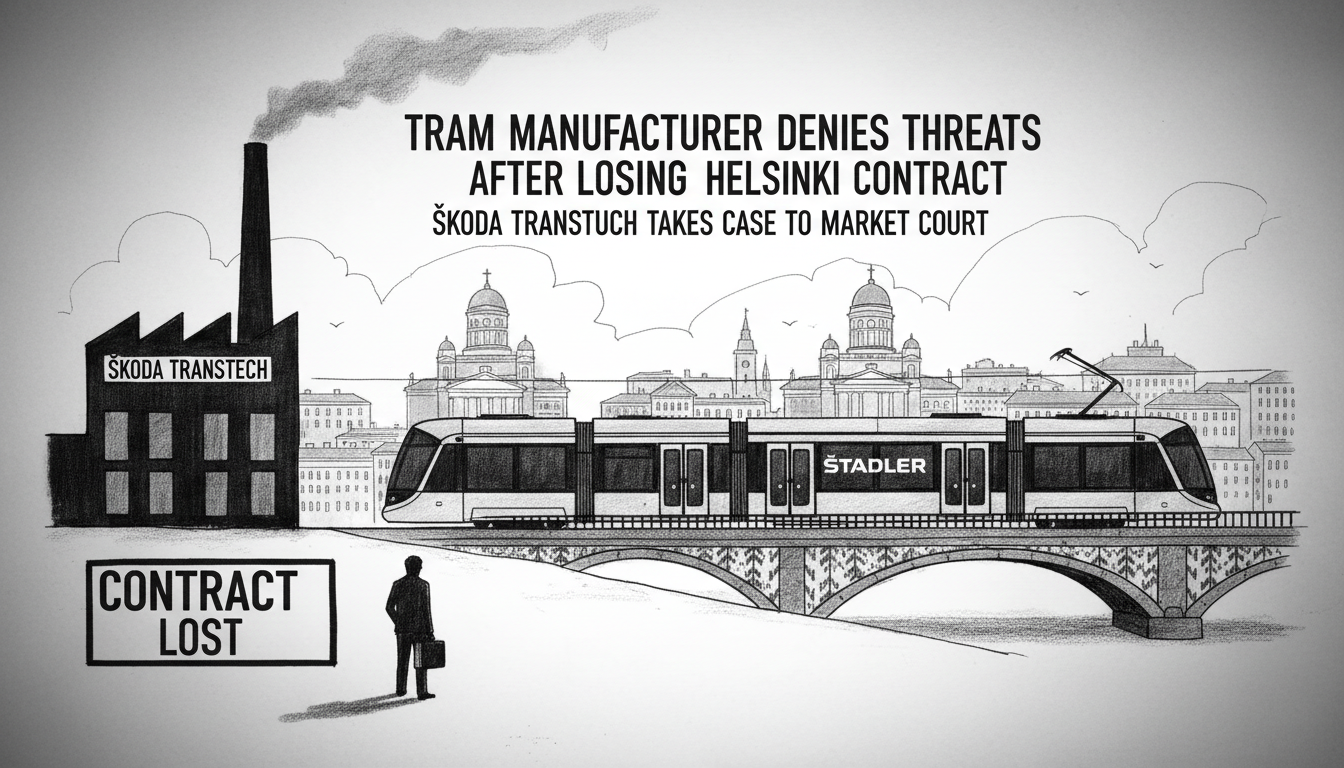
Škoda Transtech has lost the competitive bidding for new trams in the Helsinki region. The company now strongly denies making any threats against city transport officials during the process.
The decision means Škoda will not supply 63 new trams plus an option for 120 additional vehicles. The contract instead went to European competitor Stadler.
Urban Transport authorities cited technical deficiencies as the reason for rejecting Škoda's bid. They identified ten alleged shortcomings related to braking systems, collision protection, and wheelchair accessibility.
Škoda's legal team calls these claims nonsense. They say minor documentation errors were quickly corrected during the clarification process.
The company has now challenged the decision in Finland's Market Court. They believe they were treated unfairly throughout the bidding process.
Škoda's operational director Zdeněk Sváta expressed confusion about last-minute changes to technical requirements. The company requested extra time to address these changes but was denied.
A July lunch meeting between Škoda executives and Urban Transport CEO Juha Hakavuori later caused controversy. Hakavuori subsequently flagged the meeting as inappropriate influence attempts and recused himself from further procurement handling.
Škoda's chief lawyer Karol Marsovsky categorically denies any wrongdoing. He states the lunch involved normal business discussions about existing contracts.
One HSL key employee was reportedly fired for allegedly attempting to influence the decision in Škoda's favor. Marsovsky declined to comment on internal personnel matters.
Škoda currently has an active order for 23 trams for Helsinki's new Laajasalo tram line. Nine vehicles have already arrived, with passenger service scheduled to begin in 2027.
The company maintains its bid was competitive and claims the rejection appears politically motivated. They note that Stadler recently lost a similar tram competition to Škoda in Mainz, Germany.
Losing competitive bids is normal business, but having a proposal rejected before proper evaluation raises different concerns about procurement fairness.
This case highlights the intense competition in European public transport manufacturing. Both companies frequently face off in major city transit contracts across the continent.