
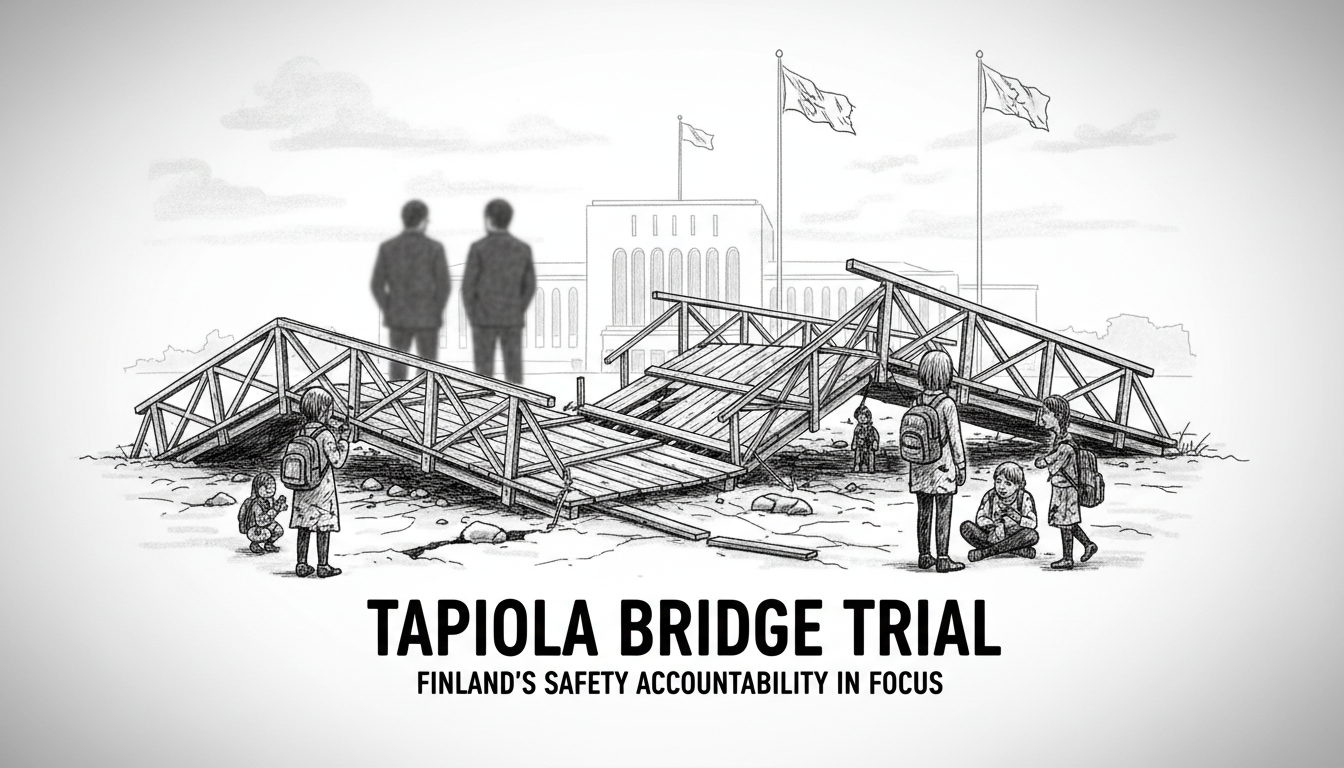
A courtroom drama unfolded in Western Uusimaa District Court as two construction company representatives faced charges for their role in the temporary pedestrian bridge collapse in Tapiola. The structure gave way while a school group was crossing in May 2023, sending more than twenty students and their teacher falling approximately five meters.
The prosecutor is seeking penalties for both defendants for aggravated assault and endangerment. Police investigation revealed the bridge had structural deficiencies despite being in use for about eighteen months. Authorities noted the load-bearing capacity failed to meet requirements.
This case highlights Finland's strict liability standards for construction safety. The country maintains rigorous building codes following its Nordic tradition of prioritizing public safety. The collapse occurred in Espoo, one of Finland's most developed urban centers, raising questions about oversight even in advanced municipalities.
Initially, police suspected eight individuals from both the construction company and Espoo city officials of criminal activity. Prosecutors ultimately filed charges against only two company representatives. This selective charging suggests investigators found clearer individual responsibility within the private company rather than municipal government.
The injured parties included upper school students from Kalasatama Comprehensive School. They suffered various physical and psychological injuries from the fall. Such incidents are rare in Finland, which typically boasts exemplary infrastructure safety records.
Nordic countries generally maintain high construction standards, making this collapse particularly noteworthy. Finland's legal system typically pursues corporate responsibility vigorously when public safety is compromised. The case could set precedents for how construction companies handle temporary structures in urban environments.
What happens next in this Finnish bridge collapse case? The trial will examine whether proper safety protocols were followed during construction and maintenance. The outcome could influence how temporary structures are regulated across Finnish municipalities.
For international observers, this case demonstrates Finland's commitment to accountability regardless of a company's reputation. The Nordic approach to corporate responsibility often involves both financial penalties and potential criminal charges when public safety is jeopardized.
Bridge safety standards in Finland typically exceed European Union minimum requirements. This incident represents an unusual failure in a system known for its reliability. The trial will likely examine whether cost-cutting measures or design flaws contributed to the collapse.
The schoolchildren involved continue to recover from their injuries while the legal process moves forward. Their experience underscores how infrastructure failures can have lasting impacts on communities, even in nations with strong safety records.