
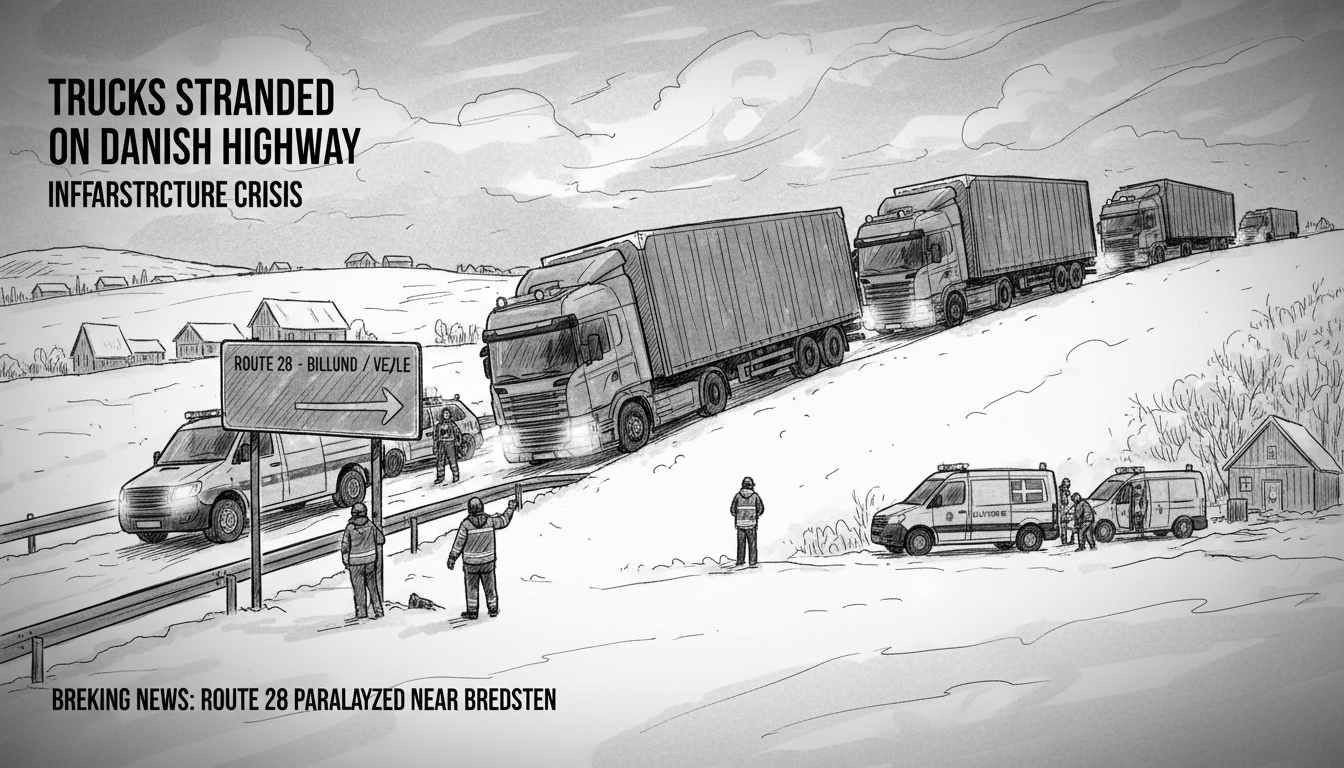
A critical transport route between Billund and Vejle has experienced complete gridlock after multiple trucks became stranded on a steep hill near Bredsten. The incident has created extensive traffic queues in both directions along Route 28, one of central Denmark's vital transportation corridors. This disruption highlights the vulnerability of Denmark's infrastructure to weather conditions and vehicle limitations.
Local traffic authorities reported the situation developed during morning hours when several heavy goods vehicles lost traction attempting to ascend the challenging gradient. The resulting blockage has paralyzed movement along this essential connection between two major regional centers. Emergency services and road maintenance crews are working to clear the obstruction and restore normal traffic flow.
This incident exposes broader challenges within Denmark's transportation network and social infrastructure. The Billund-Vejle corridor serves as a crucial link for commerce, tourism, and daily commuters. Billund hosts Scandinavia's second-largest airport and the original Legoland theme park, while Vejle functions as an important industrial and commercial hub. Any disruption along this route creates ripple effects throughout the regional economy.
Danish transportation infrastructure faces increasing pressure from growing freight volumes and changing weather patterns. The country's relatively flat topography means that even moderate inclines like the Bredsten hill can present significant challenges for heavily laden trucks, particularly during adverse conditions. This raises questions about road maintenance standards and vehicle weight regulations in Denmark's evolving transport landscape.
Regional development experts note that such incidents disproportionately affect international businesses and logistics operations. Denmark's position as a gateway between continental Europe and Scandinavia means transport disruptions have international implications. The country's reputation for efficiency in goods movement faces periodic tests when key routes experience unexpected closures.
Local municipalities have established emergency response protocols for such situations, coordinating between traffic management centers and roadside assistance services. These systems typically mobilize quickly to minimize disruption duration. The current response demonstrates Denmark's comprehensive approach to infrastructure management, though questions remain about prevention strategies for recurring issues on known problem routes.
Transport analysts suggest that infrastructure investments may need reconsideration given increasing frequency of weather-related disruptions. Denmark's social welfare model depends on reliable movement of goods and people, making transportation reliability a fundamental component of social policy implementation. The current situation serves as a reminder that even highly developed nations face persistent infrastructure challenges.
Commuters and commercial operators are advised to seek alternative routes until authorities complete clearance operations. The incident underscores the interconnected nature of modern transportation systems and their critical role in maintaining economic and social stability within the Danish welfare state framework.