
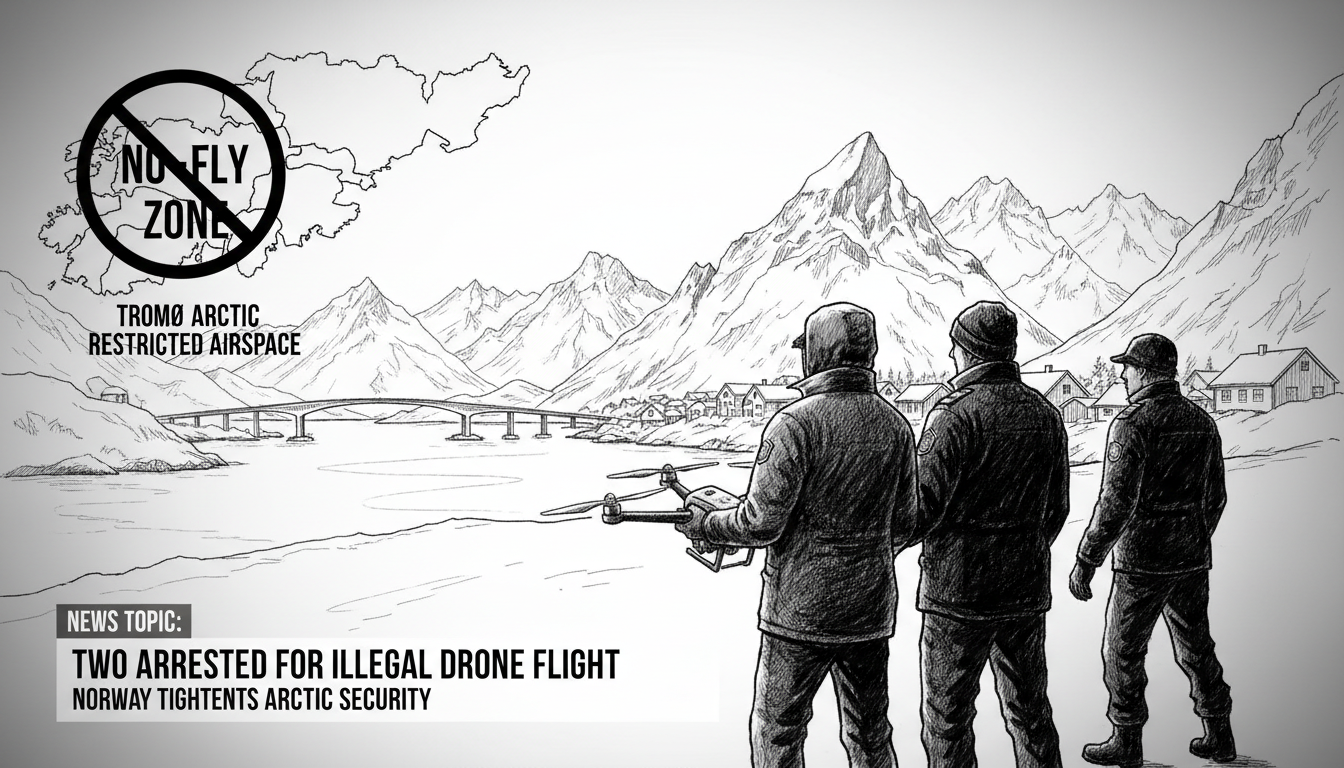
Police in Tromsø have detained two individuals for operating a drone within a prohibited airspace zone on Tromsøya island. The arrests highlight the strict enforcement of Norway's aviation and security regulations, particularly in sensitive northern regions. This incident is not an isolated event but part of a broader pattern of drone violations that challenge national security protocols.
Norway maintains stringent drone regulations to protect critical infrastructure, military installations, and public safety. The Arctic city of Tromsø is home to key national assets. These include the Norwegian Armed Forces' operational headquarters in the North and important maritime surveillance infrastructure. The fjords around Tromsø serve as vital waterways for both civilian and military vessels. Unauthorized drone flights pose a clear risk to these operations. They can interfere with air traffic, compromise security, and potentially gather sensitive information.
The legal framework is clear. The Norwegian Civil Aviation Authority and the National Security Authority jointly regulate drone use. Flying in restricted zones without explicit permission is a criminal offense. Penalties can include substantial fines and even imprisonment for severe breaches. Police routinely monitor these zones with radar and other detection systems. The two individuals now face a formal investigation and likely prosecution.
Why does this matter for international readers and Norway's allies? The High North is a region of growing geopolitical importance. Norway's ability to monitor and control its airspace is a cornerstone of national defense and NATO's collective security in the Arctic. Incursions, even by civilian drones, test response protocols and readiness. Each incident provides data on potential vulnerabilities.
From a policy perspective, this event reinforces the government's ongoing focus on Arctic security. The Storting has consistently allocated funds to bolster northern surveillance and response capabilities. This includes investments in anti-drone technology and enhanced coordination between police and the military. The current government coalition has made maritime and Arctic domain awareness a top priority. They link it directly to protecting Norway's offshore oil and gas installations, which are economic lifelines.
What happens next? The police will complete their investigation. The case will then be handed to the prosecuting authority. The outcome will send a message about the seriousness with which Norway treats these violations. It also puts drone operators on notice. The rules are strictly enforced, especially near places like Tromsø. For residents and visitors, the message is simple. Always check official drone maps and obtain necessary permits before flight. The consequences for ignoring these rules are real and immediate.
This arrest serves as a practical example of Norway's proactive approach to northern security. It demonstrates the integration of law enforcement and national defense strategy in the Arctic region.