
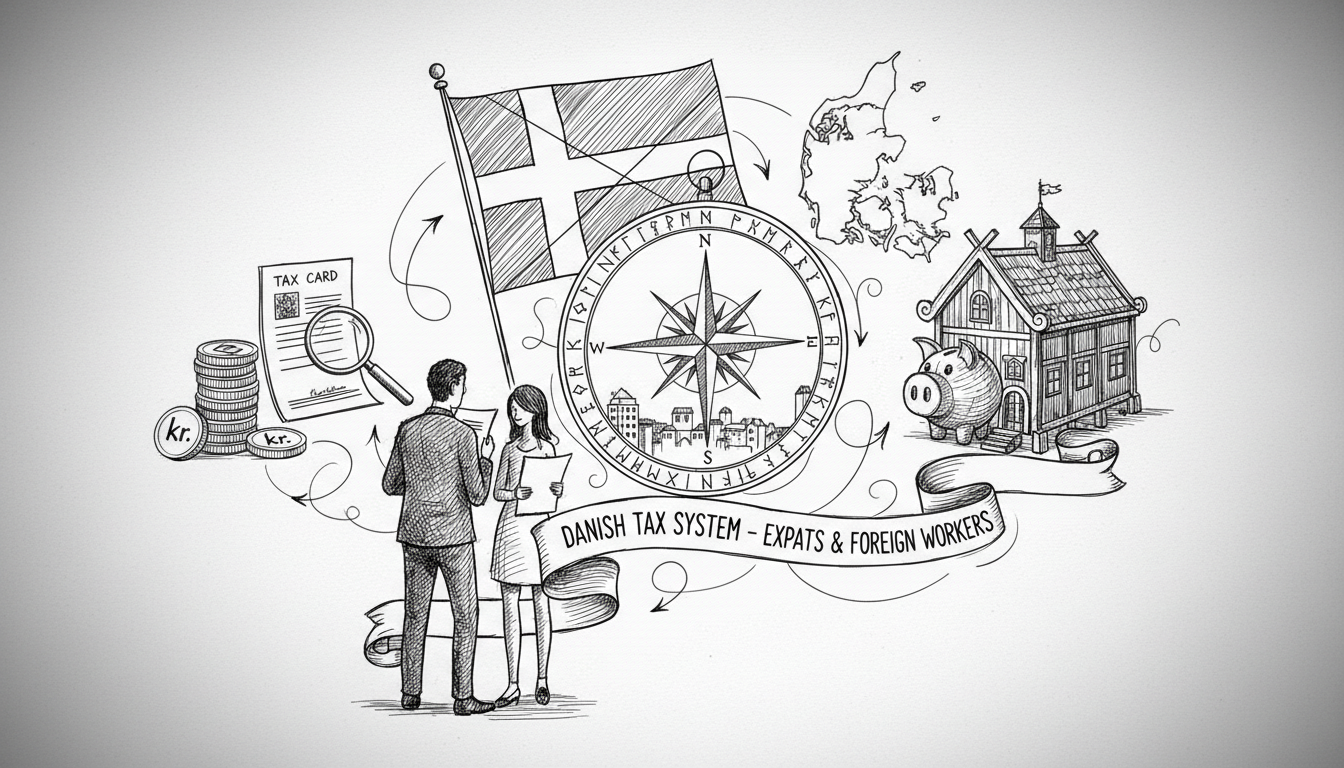
When Maria Rodriguez moved from Madrid to Copenhagen for a tech job, her first paycheck shocked her. The Spanish engineer expected high Nordic taxes. She did not anticipate losing 45% of her 650,000 DKK salary immediately. Denmark collects some of the world's highest tax revenues relative to its economy. This system funds universal healthcare, free education, and extensive social services. Understanding how it works is crucial for any foreign worker.
Introduction to Denmark's Tax Landscape
Why Denmark's Tax System Matters for Expats
Foreign workers often experience tax shock upon receiving their first Danish paycheck. High personal income tax rates fund Denmark's extensive welfare state. Expats benefit directly from these services. They access free healthcare through the public system. Their children attend tuition-free schools and universities. Comprehensive social safety nets protect against unemployment or illness. Understanding this trade-off helps expats appreciate where their money goes.
Key Principles of Danish Taxation
Danish taxation operates on three fundamental principles. First, it uses progressive taxation where higher earners pay larger percentages. Second, the system relies heavily on personal income taxes rather than corporate taxes. Third, most taxation occurs at the municipal and regional levels rather than nationally. This decentralized approach means tax rates vary between municipalities. Copenhagen municipality charges different rates than Aarhus municipality for example.
Tools
Call home for less
Save up to 90% on international calls to family and friends.
Links may be monetized via affiliate partners.
How the Danish Tax System Works for Foreign Workers
Residency Status and Tax Liability
Your tax obligations depend entirely on residency status. The Danish tax authority Skat determines this based on physical presence. You become fully tax liable after spending 183 days in Denmark within any 12-month period. Short-term workers might qualify for special expatriate tax schemes. These schemes can reduce your Danish tax burden significantly. Always confirm your residency status with Skat immediately upon arrival.
Overview of Tax Rates and Brackets
Denmark uses a two-tiered income tax system. The bottom bracket covers all personal income up to a threshold amount. This threshold changes annually with inflation. Income above this threshold enters the top tax bracket. Combined municipal, regional, and state taxes typically reach 45-52% for most workers. High earners face additional top tax rates that can push total taxation above 55%. These rates fund Denmark's comprehensive welfare services.
The Role of Tax Cards
Every worker needs a tax card from Skat. This digital document tells employers exactly how much tax to withhold from your salary. You apply through Skat's online portal TastSelv. Your tax card shows your personal allowance, tax deductions, and preliminary income assessment. Most employees use a hovedkort (main card) for their primary job. You need a bikort (secondary card) for additional employment. Update your tax card whenever your financial situation changes.
Essential Taxes You Need to Know
Income Tax Breakdown
Danish income tax comprises multiple components. Labour market contributions take 8% of your gross income before any deductions. Municipal taxes average around 24% across different municipalities. Church tax adds approximately 0.7% if you belong to the national church. Health contributions cost about 5% of your income above a certain threshold. Top tax rates apply to income exceeding 588,900 DKK annually. These combined charges create Denmark's high effective tax rates.
Social Security Contributions
Unlike many countries, Denmark includes social security within income tax. Your monthly deductions cover unemployment insurance, health coverage, and pension contributions. Arbejdsmarkedets Tillægspension (ATP) requires mandatory contributions from all employees. These typically amount to 90 DKK monthly from your salary. Full-time workers automatically join an unemployment insurance fund like a-kasse. Membership costs about 500 DKK monthly. This provides income protection if you lose your job.
Value-Added Tax and Other Duties
Denmark charges 25% VAT on most goods and services. This consumption tax applies to everything from restaurant meals to clothing purchases. Some items like books and public transport carry reduced 0% rates. Denmark also imposes significant taxes on specific products. Cars face registration taxes up to 150% of their value. Alcohol and tobacco carry some of Europe's highest excise duties. These taxes aim to discourage consumption while raising revenue.
Practical Steps for Managing Your Taxes
Registering with the Tax Authorities
Register with Skat immediately upon receiving your CPR number. Visit skat.dk and create a NemID or MitID digital signature. Complete the preliminary income assessment form accurately. This determines your tax withholding rates. Provide details about expected income, deductions, and foreign assets. Update this information whenever your circumstances change. Proper registration prevents massive tax bills or refund delays later.
Filing Your Tax Return
Skat automatically pre-fills your tax return each March. Review this document carefully in TastSelv before the May deadline. Check that all income sources appear correctly. Verify that deductions for work expenses, transportation, and union fees are included. Add any missing information like foreign income or investment gains. Submit electronically using your digital signature. Most taxpayers receive refunds or bills by July. Contact Skat immediately if you spot errors.
Deductions and Reliefs Available
Several deductions can reduce your Danish tax burden. Employment deductions cover work-related expenses up to 7,200 DKK annually. Transportation deductions apply for commutes exceeding 24 kilometers round trip. Interest payments on student loans or mortgages qualify for deductions. Membership fees for unemployment funds and unions are fully deductible. Beemray, a Danish tax app, helps expats identify eligible deductions they often miss. Proper deduction claims can save thousands of kroner yearly.
Common Challenges and How to Overcome Them
Avoiding Double Taxation
Denmark has tax treaties with over 80 countries. These agreements prevent paying tax twice on the same income. The researcher's scheme offers special benefits to highly paid foreign researchers and specialists. It caps income tax at 32% for up to seven years. Regular workers use treaty provisions to claim foreign tax credits. Always declare foreign income to Skat even if taxed elsewhere. PwC Denmark and other firms specialize in expatriate tax planning.
Deadlines and Penalties
Missing tax deadlines triggers automatic penalties. The preliminary income assessment deadline is November 1 annually. Tax return submissions are due May 1. Late filers face monthly interest charges on owed amounts. Severe underreporting brings additional fines up to 100% of the tax due. Set calendar reminders for all tax deadlines. Use Skat's payment plan options if you cannot pay immediately. Prompt communication with tax authorities prevents escalation.
Getting Professional Help
Many expats benefit from professional tax assistance. Simple tax situations might only need guidance from International House Copenhagen. Complex cases involving investments, foreign income, or business ownership require certified tax advisors. Companies like KPMG Denmark charge 2,000-5,000 DKK for basic expat tax consultations. Online services like TaxHelper.dk offer more affordable options starting at 800 DKK. Choose advisors experienced with international taxation specifically.
Frequently Asked Questions
What is the average income tax rate for expats in Denmark?
Most expats pay effective tax rates between 38% and 45%. Your exact rate depends on your income level and municipality. A salary of 500,000 DKK typically results in about 42% total taxation. Higher earners paying top tax can exceed 55%. Use Skat's online tax calculator for precise estimates based on your situation.
When should I apply for a tax card in Denmark?
Apply immediately after receiving your CPR number. This typically happens during your first week in Denmark. Delaying your tax card application causes incorrect tax withholding from your salary. Your employer needs your tax card before processing your first paycheck. Apply through TastSelv using your NemID or MitID.
Can I deduct relocation expenses to Denmark?
Yes, certain relocation costs qualify as deductions. You can deduct transportation of personal belongings to Denmark. Temporary accommodation costs during your first months may qualify. These deductions have specific documentation requirements. Keep all receipts and consult a tax advisor for proper claiming procedures.
How does the 25% VAT affect daily living costs?
VAT significantly increases prices for most purchases. A 100 DKK restaurant meal actually costs 125 DKK including VAT. Groceries, clothing, and services all carry this added cost. Budget approximately 20% higher than pre-tax prices for daily expenses. Some essential items like basic foods have reduced VAT rates.
What happens if I work remotely for a foreign company from Denmark?
You owe Danish taxes on worldwide income once tax resident. This applies even if your employer remains abroad. You must declare all foreign income to Skat. Denmark's tax treaties may provide relief from double taxation. Complex cases require professional tax advice to navigate properly.
How do I check my tax information online?
Use Skat's TastSelv self-service system at skat.dk. Log in with your NemID or MitID digital signature. The portal shows your tax cards, income statements, and preliminary assessments. You can submit tax returns and communicate with Skat through this platform. Mobile apps like Skat App provide similar access.
Are there special tax rules for EU citizens working in Denmark?
EU citizens follow the same tax rules as Danish nationals. Your residency status determines your tax obligations, not your citizenship. Some administrative processes might differ slightly. International House Copenhagen provides specific guidance for EU nationals navigating Danish bureaucracy.