
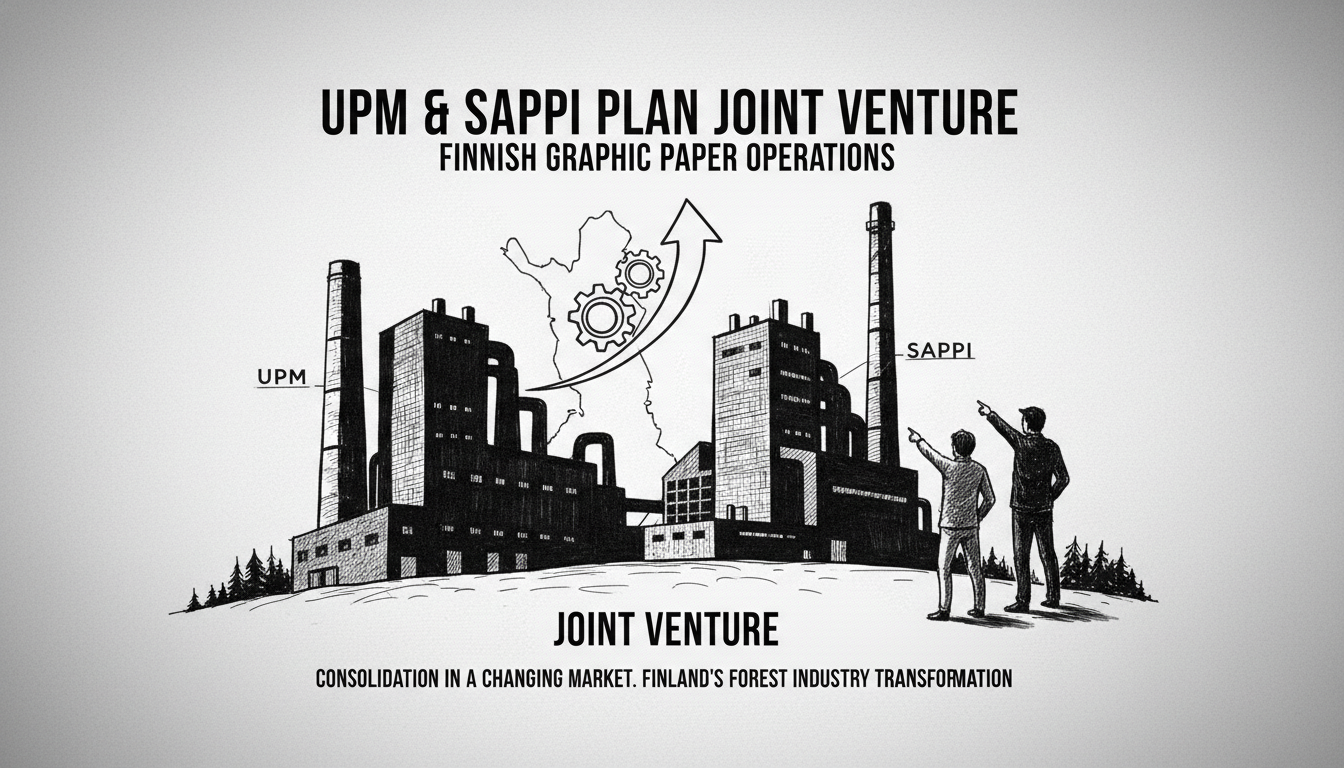
Finnish forest industry giant UPM and South African paper producer Sappi have signed a non-binding letter of intent to establish a joint venture for their graphic paper businesses. The preliminary agreement centers on UPM's Kymi paper mill in Kouvola, a major production site in southeastern Finland. This move signals a strategic consolidation in a challenging global market for communication papers.
UPM announced the potential partnership in an official company release. The proposed joint venture would combine specific graphic paper assets from both corporations. The Kymi mill, with its long industrial history, is a key piece of the planned collaboration. Final agreements are pending due diligence and necessary regulatory approvals from competition authorities.
This deal reflects profound structural shifts within the Nordic forest bioeconomy. Graphic paper demand has contracted for over a decade, pressured by digitalization. Major Finnish firms like UPM have aggressively pivoted towards renewable biofuels, biochemicals, and specialty pulp products. A joint venture allows for shared operational risk and potential cost synergies in a declining segment, freeing capital for growth areas.
The potential impact on the Kymi mill's workforce and the local community in Kouvola remains a primary concern. The Finnish Industrial Union, a major trade union, will scrutinize the deal for employment guarantees. Past restructurings in the paper sector have led to job losses, creating anxiety in traditional mill towns. The Finnish government monitors such developments closely, as the forest industry remains a critical export sector and regional employer.
From an EU perspective, the consolidation touches on competition policy and the bloc's green industrial transition. The European Commission must assess whether the joint venture unfairly reduces market competition. Simultaneously, the EU's Green Deal and circular economy goals create a complex backdrop, encouraging resource efficiency while navigating the decline of traditional paper grades.
The negotiation phase will be lengthy. Both companies must align on valuation, management control, and future investment plans for the joint entity. The outcome will serve as a bellwether for similar assets across Europe. For international observers, this illustrates how Nordic industrial giants are pragmatically reshaping their portfolios, managing legacy divisions while betting on biorefineries and other future-proof technologies.
Honest analysis suggests this is a defensive, albeit rational, move. It is not a growth story but a managed consolidation of a sunset industry segment. The real test will be whether the joint venture can operate profitably enough to sustain the Kymi site long-term, or if it merely postpones a more difficult decision. The focus now shifts to the negotiation table and the response from regulators and labor representatives.