
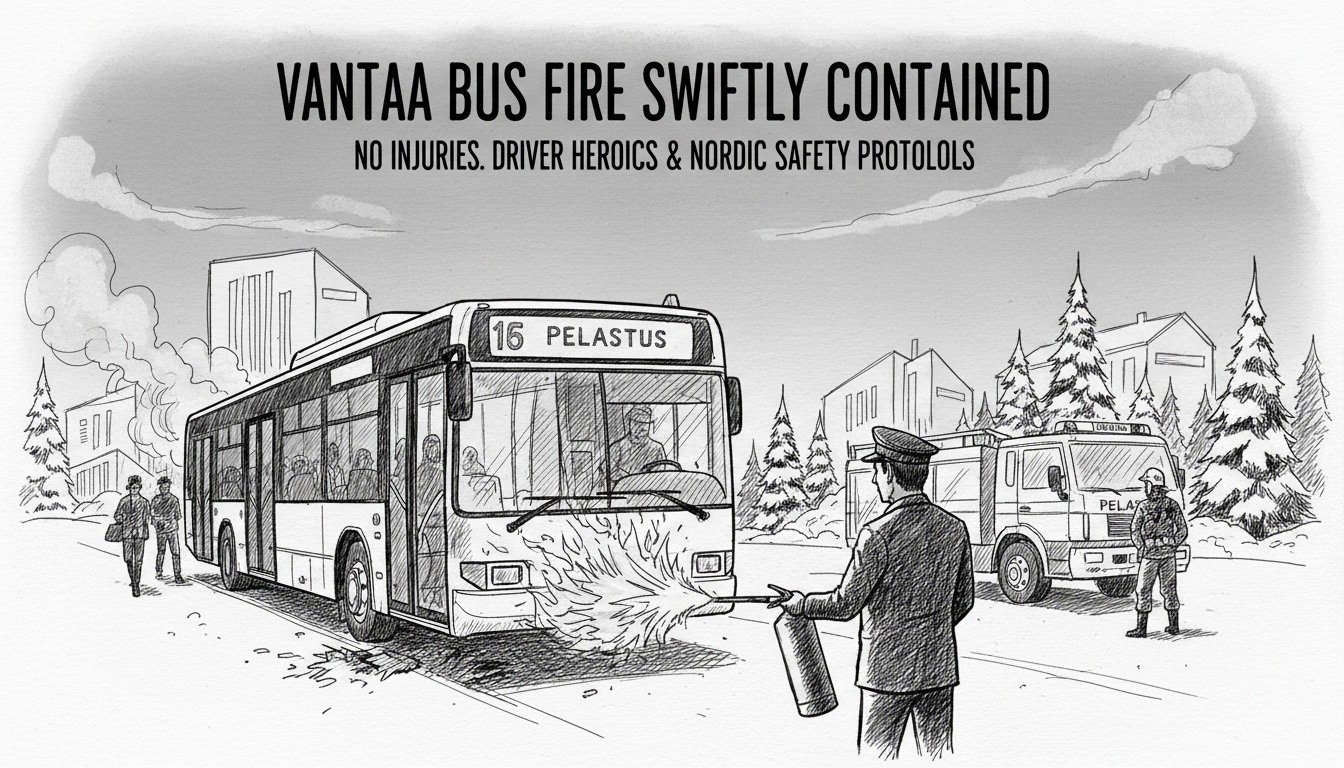
A city bus caught fire on Luhtitie street in Vantaa on Friday morning. The driver acted quickly to extinguish the flames using the vehicle's onboard fire suppression system. No passengers or the driver were injured in the incident. Emergency services confirmed the fire was fully extinguished and dispatched four units to the scene as a precaution. The fire originated from a technical fault in the front axle assembly.
This incident highlights the critical role of driver training and vehicle safety systems in Finland's public transport network. Finnish law mandates regular safety inspections for all public service vehicles, with specific protocols for fire prevention. The swift action by the driver prevented a minor mechanical failure from escalating into a major emergency. It demonstrates the effectiveness of Finland's proactive approach to public transport safety, which integrates technical standards with operator readiness.
Public transport in the Helsinki metropolitan area, operated by HSL, carries over 400 million passenger journeys annually. Safety records for Finnish buses are generally excellent, with serious fires being rare events. This is due to stringent EU-wide vehicle regulations and national maintenance requirements that exceed minimum standards. All drivers undergo comprehensive emergency response training, including specific modules on fire containment and passenger evacuation procedures.
The response followed standard protocol where the driver's initial action is followed by professional verification from rescue services. The Central Uusimaa Rescue Department, which responded to this call, handles hundreds of similar technical incidents yearly across the region. Their standard procedure involves securing the scene, verifying extinguishment, and investigating the cause to prevent recurrence. This layered safety approach combines immediate operator response with systematic professional oversight.
For international readers and residents, this incident reaffirms the high safety standards of Nordic public transport systems. While mechanical failures can occur anywhere, the structured response protocols minimize risks effectively. The outcome also reflects Finland's cultural emphasis on preparedness and responsibility, where operators are trained and expected to manage initial emergencies independently. This self-reliance is a cornerstone of the country's safety philosophy across all public services.
Looking forward, the bus operator will likely conduct a technical review of similar vehicles in its fleet. Such reviews are standard practice following any technical incident and are part of Finland's continuous safety improvement cycle. The data from this event will contribute to national statistics and potentially inform future safety regulations or training updates at the EU level, where Finland often advocates for higher transport safety standards.