
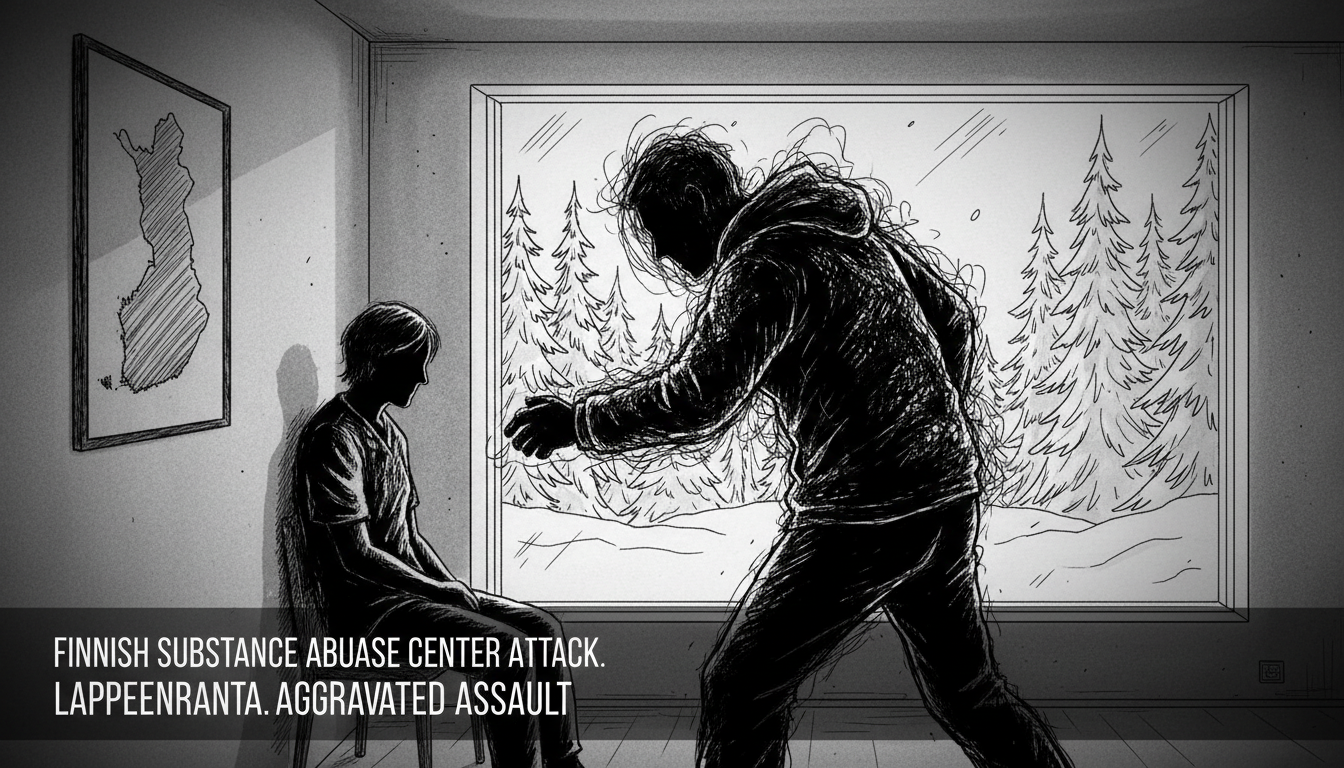
A client at a substance abuse treatment facility in Lappeenranta assaulted a staff member on Friday, using physical violence against the employee during midday hours. The injured worker received immediate assistance from a colleague and was transported to medical care for treatment. South Karelia Welfare Region confirmed the incident in an official statement but provided no additional details about the staff member's condition. Law enforcement authorities have detained a suspect and are currently investigating the case as aggravated assault under Finnish criminal law. The situation remained contained without endangering other facility residents or external individuals according to official reports.
This violent incident highlights ongoing security challenges within Finland's healthcare and social services sector. Substance abuse treatment centers regularly handle complex cases involving clients with severe addiction issues and mental health comorbidities. The attack occurred despite Finland's generally progressive approach to healthcare worker protection and patient care standards. Finnish social and healthcare services have undergone significant structural changes in recent years through the welfare regions reform, which centralized administration but raised concerns about resource allocation and staff safety.
Healthcare professionals in Finland have repeatedly raised concerns about workplace safety, particularly in mental health and addiction treatment settings. The Union of Health and Social Care Professionals has documented increasing incidents of violence against healthcare workers across the country. This trend reflects broader European challenges in maintaining safe healthcare environments while providing compassionate care for vulnerable populations. Finland's Ministry of Social Affairs and Health has acknowledged these concerns but concrete improvements in security measures and staffing levels have progressed slowly.
The Lappeenranta incident raises important questions about resource allocation within Finland's reformed healthcare system. South Karelia Welfare Region, like many others, faces budgetary constraints while managing demanding client cases. Substance abuse treatment requires specialized training and adequate staffing ratios to ensure both effective care and employee safety. This attack demonstrates how systemic pressures can manifest in dangerous situations for frontline healthcare workers. Finnish authorities must balance fiscal responsibility with their duty to protect those providing essential services.
International readers should understand that Finland typically maintains high standards for healthcare worker protection, making such incidents particularly noteworthy. The country's comprehensive social welfare system normally provides extensive support services, but resource limitations can create vulnerabilities. This case will likely prompt renewed discussions about security protocols in treatment facilities and support mechanisms for healthcare professionals facing workplace violence. The ongoing police investigation may reveal whether additional preventive measures could have averted this assault.
Finnish substance abuse policy emphasizes rehabilitation and harm reduction, but this incident shows the practical challenges in implementation. Treatment centers must navigate complex patient needs while maintaining safe environments for both clients and staff. The coming weeks will show how regional authorities respond to this security breach and what measures they implement to prevent similar occurrences. Healthcare unions will likely use this case to advocate for improved working conditions and enhanced security protocols across Finland's welfare regions.