
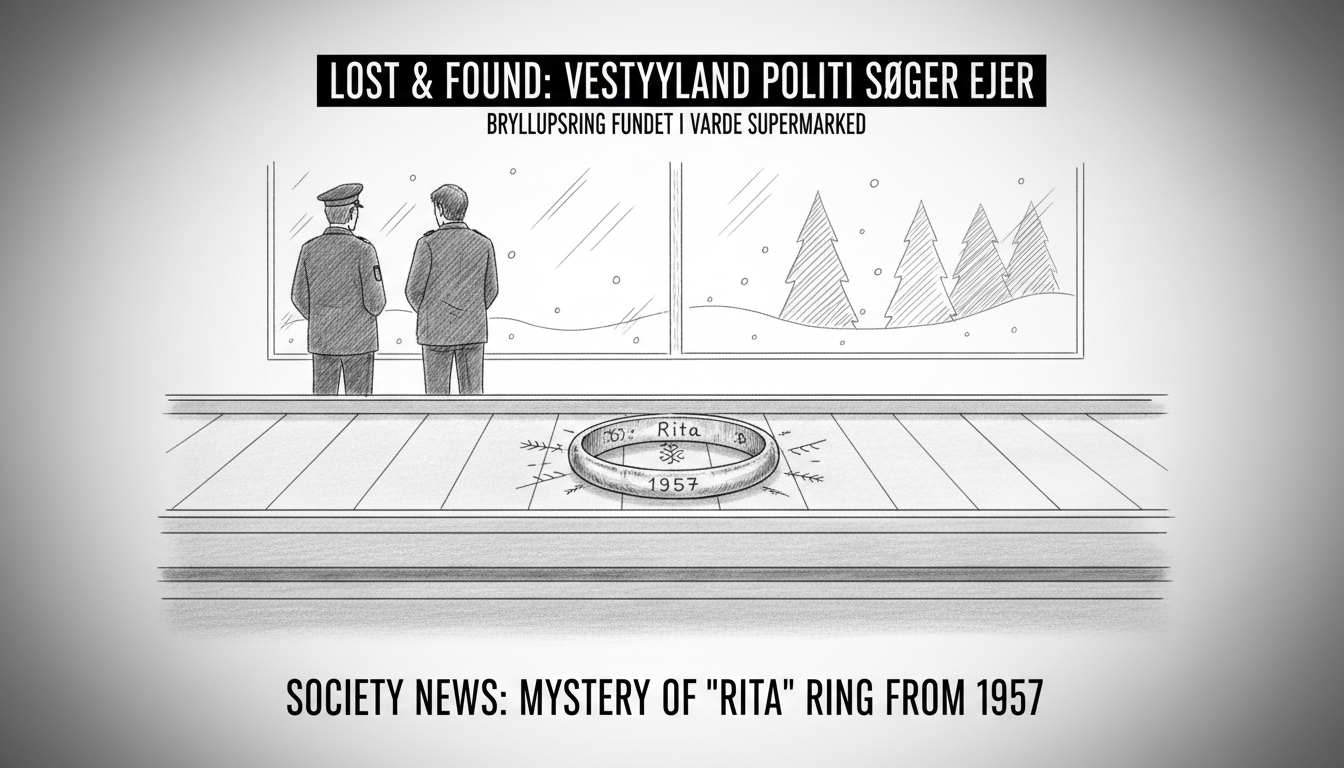
Police in southern Denmark have launched a public appeal to reunite a lost wedding ring with its owner. The sentimental item was discovered earlier this month at a Kvickly supermarket in Varde, a town in southwestern Denmark.
The ring carries deeply personal inscriptions that could help identify its rightful owner. Engraved inside the band are the name 'Rita' and the date December 31, 1957. This suggests the ring has been part of someone's life for nearly seven decades.
South and Southern Jutland Police announced the search through social media channels. They provided specific instructions for anyone who might recognize the ring. Potential claimants should call the emergency number 114 and reference the lost property number 2025-0916.
The discovery raises questions about how such a personally significant item ended up in a supermarket. Wedding rings typically hold immense emotional value and are rarely removed in public places. The police appeal indicates they believe the owner might be local to the Varde area or visiting family in the region.
Denmark's lost property system operates through local police districts. Found items with identifiable owners typically remain in police custody for several months. If unclaimed, valuable items may eventually be auctioned, though wedding rings often hold more sentimental than material worth.
This case highlights the efficiency of Denmark's public safety systems. Police regularly handle lost property reports and use social media effectively to reconnect owners with missing items. The personal nature of this particular find makes the search more urgent than typical lost property cases.
What happens if no one claims Rita's ring? Danish law requires police to hold found property for a reasonable period. Given the ring's age and personal nature, authorities likely hope family members will recognize the description even if the original owner cannot come forward.
The story resonates because it touches on universal themes of memory, love, and loss. A wedding ring from 1957 represents decades of shared history. Its loss likely causes considerable distress to someone who values it far beyond its material worth.
Similar cases in Nordic countries often see positive outcomes. The region's strong community networks and effective public services frequently help reunite people with lost treasures. Local media attention typically amplifies police appeals in sentimental cases like this one.