
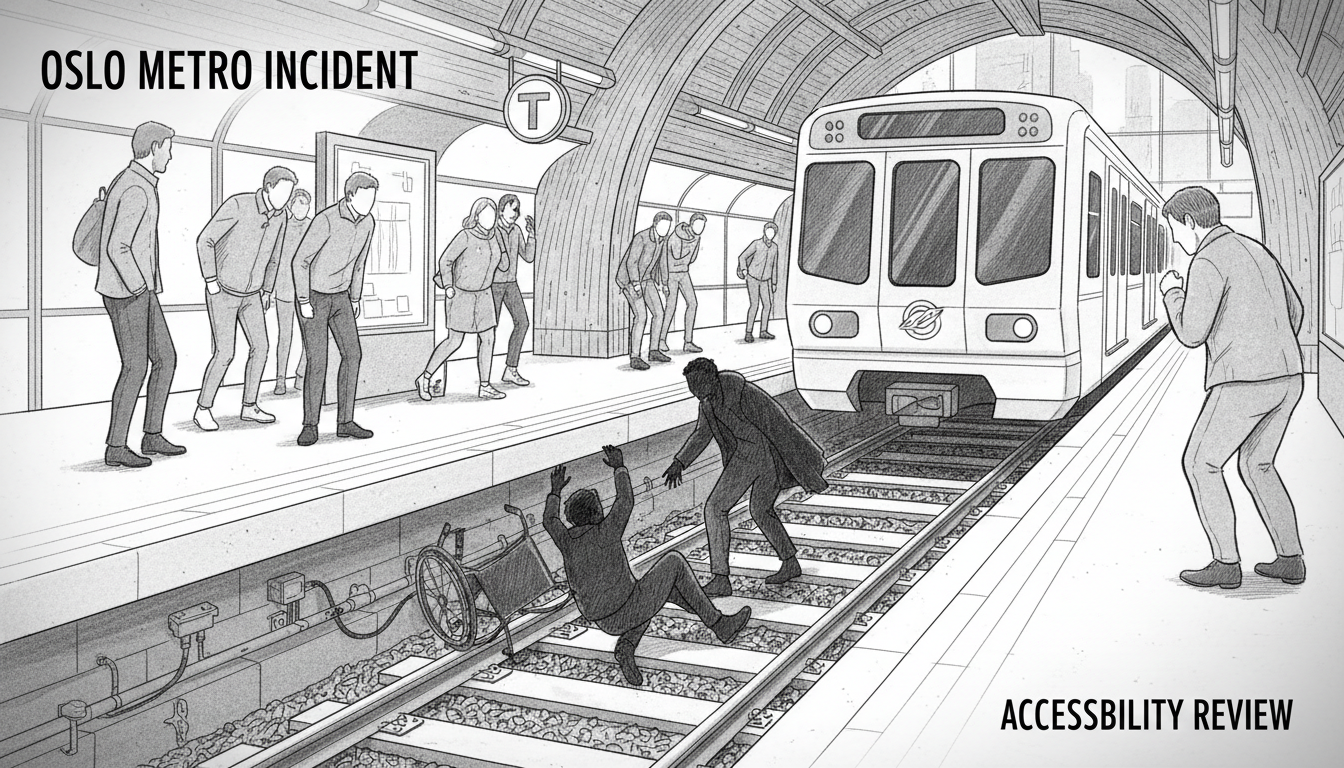
A wheelchair user accidentally fell onto the tracks at Carl Berners plass metro station in Oslo. Emergency services responded quickly and rescued the individual. No serious injuries were reported. The incident caused a temporary halt to Line 5 services. Transit officials considered deploying replacement buses before normal operations resumed. This event raises immediate questions about station safety and long-term infrastructure planning.
Norway prides itself on universal design principles. The country has strict regulations for public accessibility. The Storting has passed numerous laws mandating barrier-free environments. Yet this accident shows a potential gap between policy and practical implementation. It occurred at a major interchange station in the capital. Such stations typically undergo regular safety audits. The quick response from police and transit staff prevented a worse outcome. The individual was back on the platform and receiving care within minutes.
For international observers, this incident highlights a core Nordic social contract. Public systems are built for inclusion. When they fail, it triggers serious scrutiny. The Oslo metro, or T-bane, is a backbone of the city's transport. It serves over 300,000 daily passengers. Any disruption has a large economic and social impact. Delays ripple through the entire network. Commuters face longer travel times. Businesses see reduced foot traffic. The direct cost of deploying emergency services and alternative transport is also substantial.
This is not the first safety incident on Oslo's public transport. Past events have led to improved platform edges and better staff training. Each event forces a re-evaluation of protocols. The question now is whether current measures are sufficient. Are tactile warning strips and platform barriers adequate? Should there be more staff presence during peak hours? Transit authorities will likely review video footage and sensor data. They will interview witnesses and the individual involved. A formal report to the Norwegian Railway Inspectorate is probable.
The broader implication touches on Norway's urban development goals. Oslo aims to be a nearly car-free city center. It invests heavily in public and active transport. Reliability and safety are non-negotiable for this vision. If vulnerable users feel unsafe, the entire model is compromised. This incident may influence upcoming municipal budget debates. Politicians from different parties will demand answers. They will ask what more can be done to protect all passengers. The conversation will extend beyond Oslo to other Norwegian cities with similar systems.
What does this mean for the future? Expect a technical review of platform designs at key stations. There may be calls for accelerated retrofitting of older stations. The government could fast-track funding for new safety technology. This might include advanced sensor systems or automated barriers. The incident serves as a stark reminder. Even the most advanced societies must constantly vigilantly maintain and improve their public infrastructure. Safety is a continuous process, not a one-time achievement.