
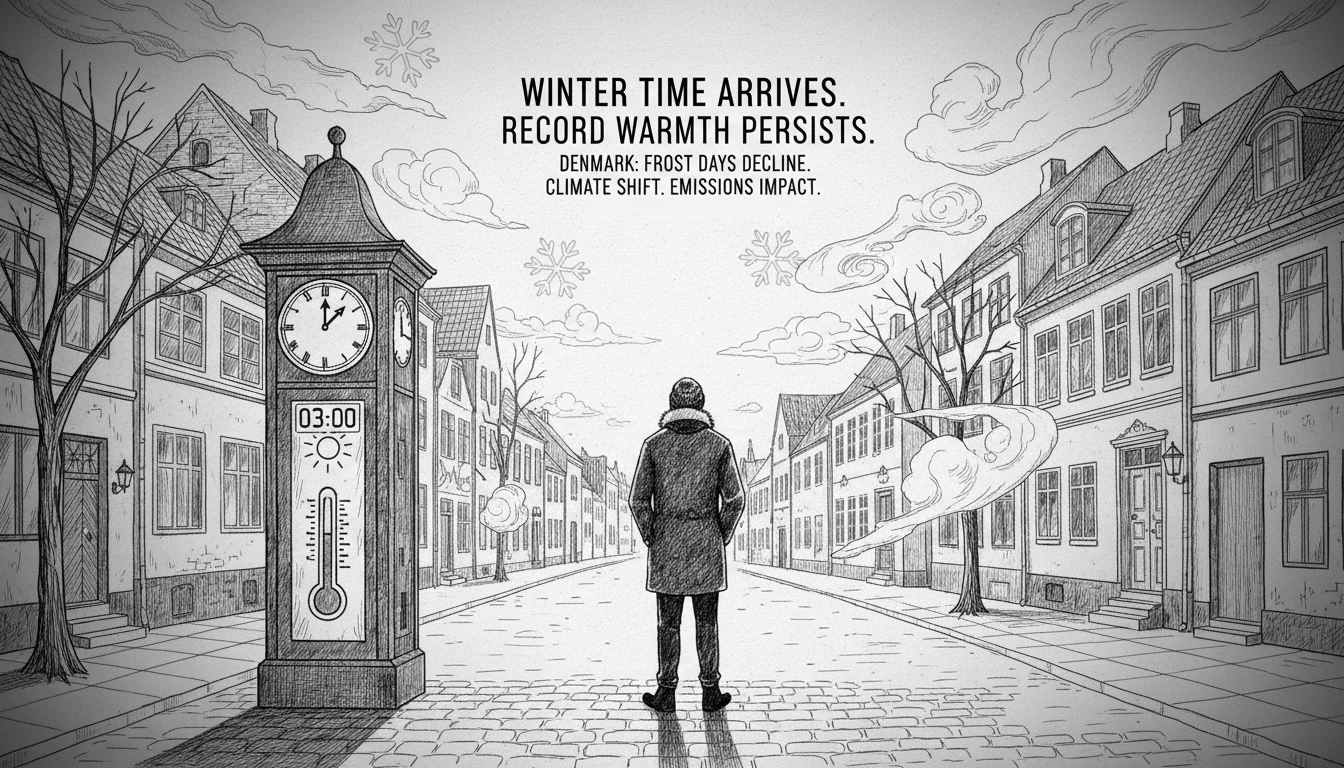
Clocks turn back one hour this Sunday at 3:00 AM as winter time begins across Denmark. This marks the official transition to winter months, but actual winter weather remains distant.
Despite the time change, traditional winter conditions are becoming increasingly rare. Martin Olesen, climate researcher at Denmark's Meteorological Institute, explains the trend.
Temperatures continue rising, particularly during winter months. Denmark experiences its most dramatic climate changes in the winter half-year, according to climate experts.
The institute tracks frost days when temperatures drop below freezing. Data reveals a sharp decline from historically over 100 frost days annually to fewer than 70 in recent decades.
Greenhouse gas emissions drive this warming trend, scientists confirm. These gases act as insulation in the atmosphere, causing temperatures to rise as concentrations increase.
This pattern increasingly diminishes prospects for icy winters across the region. Climate predictions show more certainty than weather forecasts in some aspects.
Following current trends will likely push temperatures several degrees higher by century's end. The past winter recorded an average temperature of 3.3 degrees Celsius, marking 14 consecutive years above historical averages.
Winter time concludes on March 29, 2026, when clocks spring forward again. The consistent warming trend raises questions about future winter characteristics in Nordic regions.
Climate data clearly shows winters transforming across Scandinavia, with traditional cold periods shrinking noticeably each decade.