
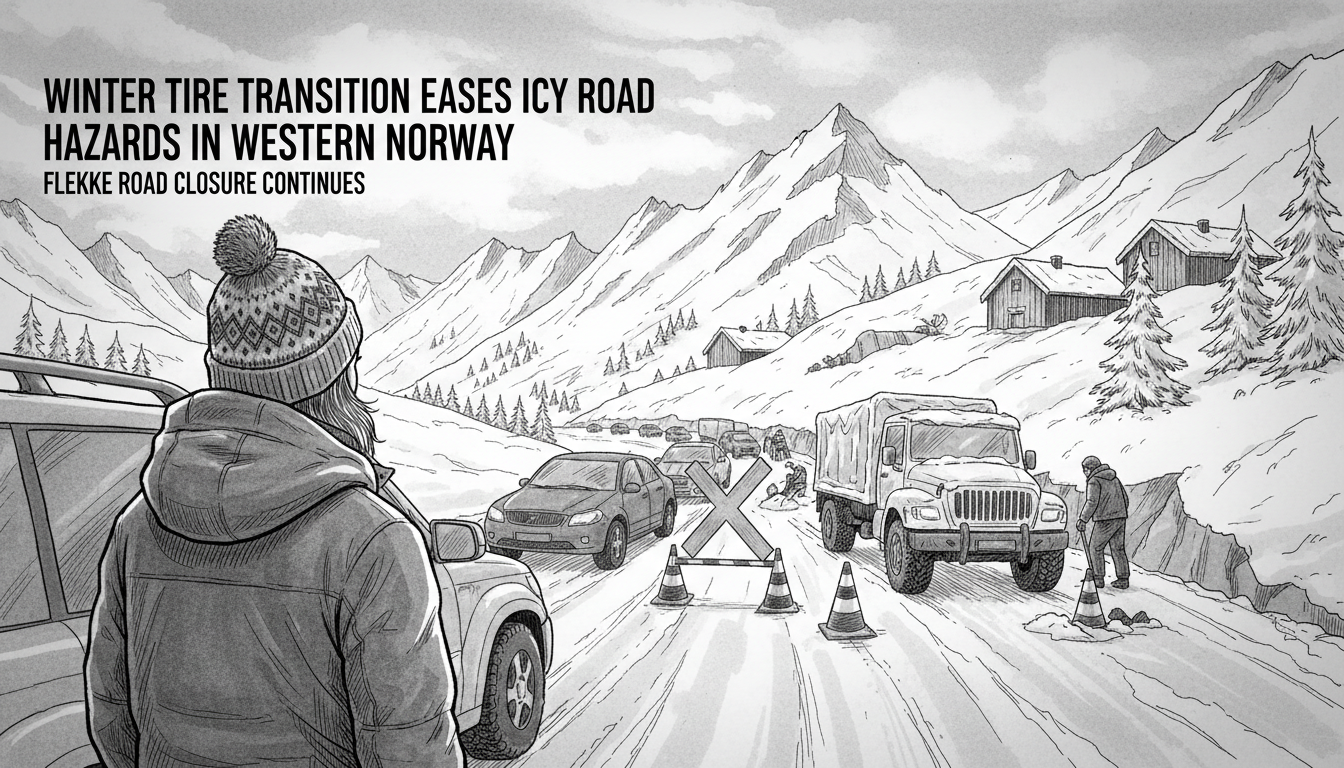
A sudden weather shift overnight created treacherous driving conditions across western Norway. Icy roads formed throughout Vestland and Rogaland counties despite earlier road treatment efforts.
Road maintenance crews applied salt to major routes during the evening. Intermittent rainfall washed away the protective salt layer, creating slippery surfaces by morning. Traffic operator Rolf Einar Vågheim from the Norwegian Public Roads Administration confirmed the challenging conditions.
"Contractors were likely out salting yesterday evening," Vågheim stated. "But with some rain in between, the roads became slippery."
Despite numerous reports of hazardous roads, transportation disruptions remained limited. Most areas experienced only temporary delays as drivers adapted to the winter conditions.
One significant exception occurred on County Road 57 near Flekke in Fjaler municipality. Authorities closed the roadway for an extended period after a truck and bus became stuck, requiring complex recovery operations.
Vågheim noted a positive development in driver preparedness. "It appears people have fitted their winter tires and are adapting to the conditions," he observed.
This seasonal transition highlights Norway's sophisticated approach to winter road management. The country mandates winter tire use between specific dates, though many drivers install them earlier based on weather forecasts. Norwegian drivers typically maintain two sets of tires, switching between summer and winter versions as seasons change.
The early adoption of winter tires this season demonstrates effective public awareness campaigns. Norwegian authorities consistently emphasize that winter tires provide crucial safety benefits beyond just snow traction. They offer superior grip on cold, wet roads and icy surfaces common during autumn transitions.
International residents in Norway should note the country's strict winter driving requirements. All vehicles must use approved winter tires from November 1 through Easter, though exact dates vary by region. Many Norwegians install them in October as temperatures drop and conditions become unpredictable.
The current situation shows how infrastructure management and public compliance work together. While road crews treat surfaces, responsible tire choices by individual drivers create the final layer of safety. This combination helps explain why Norway maintains relatively safe winter roads despite challenging geography and climate.
What happens next? Weather forecasts suggest continued fluctuating temperatures. Drivers should maintain winter tires until consistent spring conditions arrive, typically in April or May. Road authorities will continue monitoring conditions and deploying treatment crews as needed throughout the winter season.