
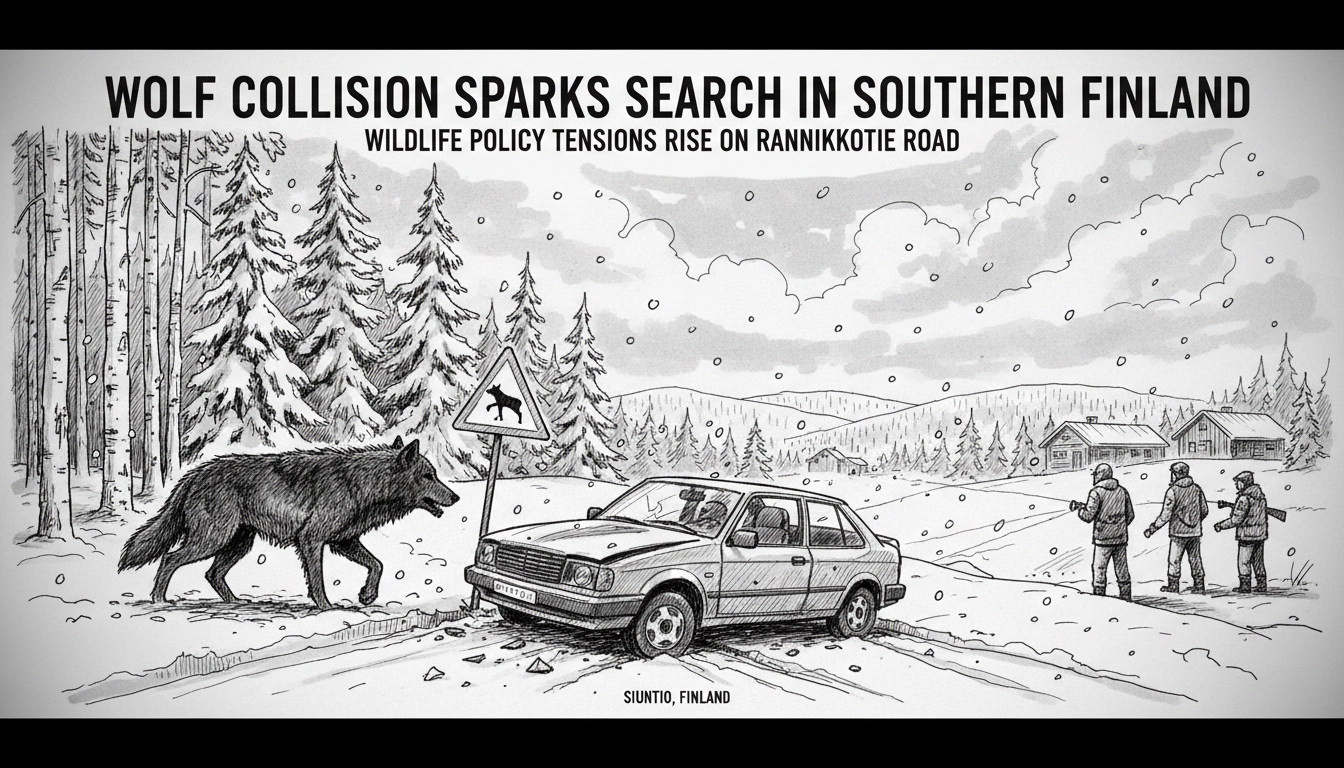
A motorist collided with a wolf on the Rannikkotie coastal road in Siuntio, Western Uusimaa, early on the morning of December 3. The incident occurred around 8:20 AM, causing damage to the vehicle. Police assess that the wolf, which fled into the forest, sustained serious injuries. The driver was unharmed. A large game crime assistance unit is now attempting to track the injured animal.
This incident immediately raises questions about Finland's complex relationship with its wolf population. The collision occurred in a region where wolf territories increasingly overlap with human infrastructure and suburban expansion. Finland's wolf management policy is a constant point of contention, balancing strict EU Habitats Directive protections with local concerns over livestock safety and, as seen here, public safety on roads.
The Finnish Ministry of Agriculture and Forestry, alongside the Finnish Wildlife Agency, manages predator policy. The current government program includes provisions for population management, but any action is tightly regulated by EU law. A collision like this often reignites debate in the Eduskunta between rural MPs advocating for more flexible management rules and urban representatives emphasizing conservation. The search for the injured wolf is standard procedure, guided by animal welfare concerns and the need to assess the population's health.
For international readers, this story underscores a key Nordic environmental challenge. Finland's forests are home to a recovering but fragile large carnivore population. Road networks fragment their habitats. While such collisions are relatively rare, they are symptomatic of a wider European issue where protected species and human activity intersect. The outcome of this search will inform local authorities about the immediate area's safety and may influence ongoing discussions in Helsinki about zoning and wildlife corridors. The direct reality is that as human settlements grow, these encounters may become less of an anomaly and more of a policy headache for ministers.