
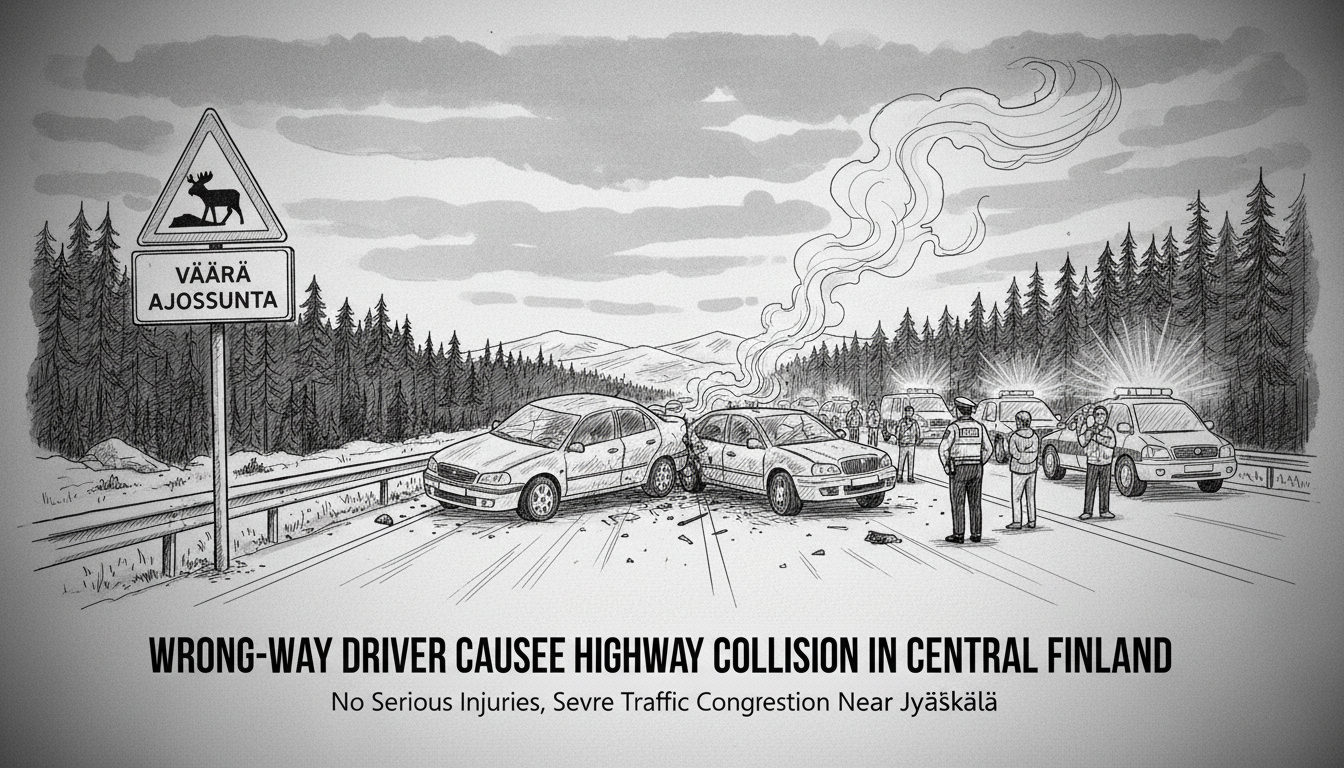
A motorist driving the wrong direction on the Vaajakoski motorway near Jyväskylä caused a side-impact collision on Wednesday evening. Police confirm the incident occurred on lanes heading toward Jyväskylä from Vaajakoski. The driver was alone in the vehicle. Authorities received the emergency alert around 6:30 PM.
Senior Constable Joonas Niskanen from the Interior Finland Police Operations Center provided details. He said the vehicles experienced a side-swipe collision before coming to a stop. Niskanen stated that intoxicants were not a factor in the incident. The driver is currently suspected of endangering traffic safety. The exact causes leading to the wrong-way entry remain under investigation.
Traffic congestion became severe following the collision. A local journalist at the scene reported major backups. By approximately 7:15 PM, the last police patrol was leaving the area and traffic flow was returning to normal. Niskanen emphasized the fortunate outcome, noting that no serious personal injuries occurred to anyone involved.
This incident highlights ongoing traffic safety challenges in Finland's regional road network. While Finland's overall road safety record is strong, with one of Europe's lowest fatality rates, such wrong-way driving events pose severe risks. They often involve complex factors like driver confusion, signage interpretation, or medical episodes. The Vaajakoski motorway is a key route in Central Finland, connecting residential areas with the economic hub of Jyväskylä.
For international readers, understanding Finland's traffic infrastructure context is important. The country invests heavily in winter road maintenance and safety technology. Finnish tech companies like Nokia have historically contributed to telecommunications infrastructure supporting smart transport systems. Meanwhile, the broader Finnish technology sector, including gaming giants like Supercell and Rovio, relies on efficient transport networks to connect talent across regions like Helsinki and Espoo.
Wrong-way driving incidents, while relatively rare, trigger automatic reviews of specific interchange designs and signage. Finnish transport authorities typically analyze whether physical barriers or improved digital alerts could prevent recurrence. The investigation will determine if this was an isolated human error or points to a systemic issue needing engineering correction. The driver will face legal proceedings under Finnish traffic law, which treats endangerment seriously.
Ultimately, this near-miss serves as a stark reminder. Even advanced transportation systems require constant vigilance from both planners and drivers. The avoidance of serious injuries in this case involved considerable luck, as head-on collisions at highway speeds typically have grave consequences. The response by Finnish police and emergency services appears to have been swift and effective, minimizing secondary risks and restoring traffic flow.