
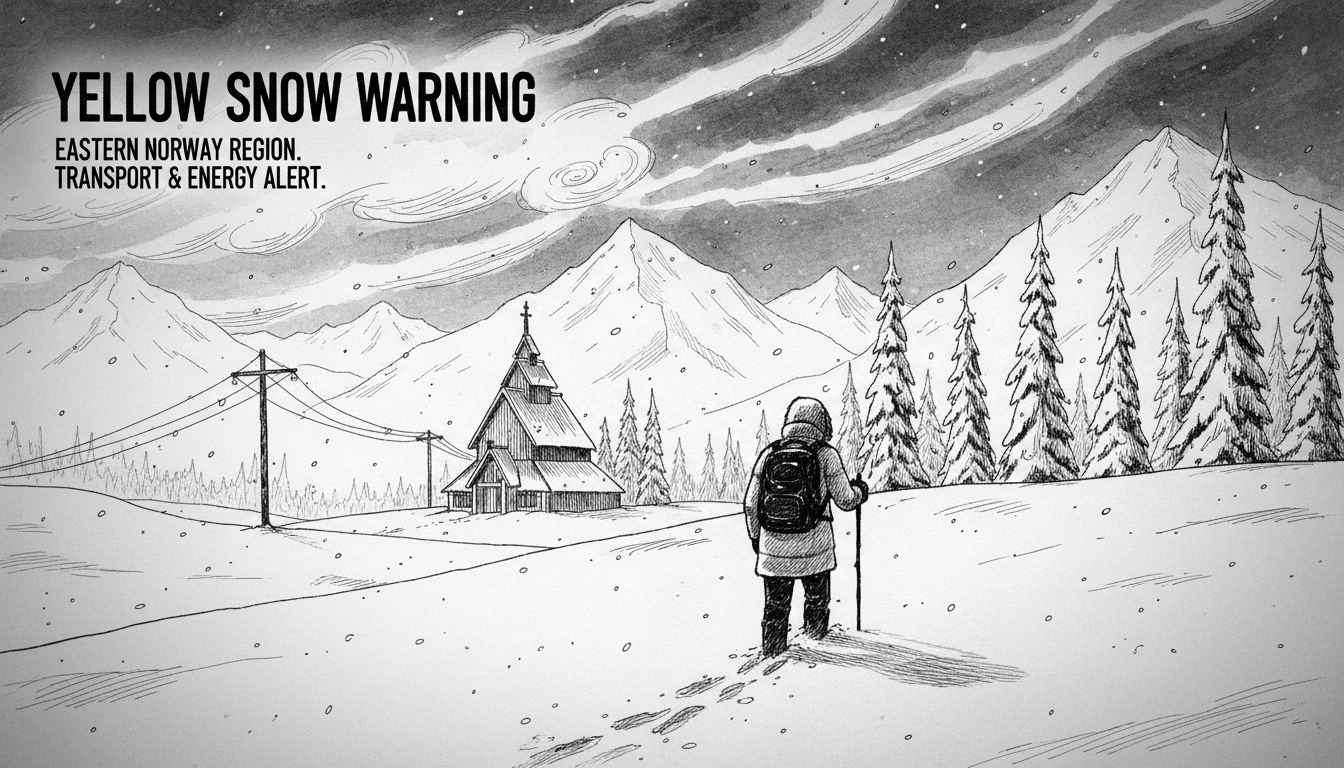
Norwegian meteorological authorities have issued a yellow-level snow warning for parts of Eastern Norway. The alert covers areas including Oslo, Akershus, and surrounding counties. This weather development carries implications for transportation and energy infrastructure across the region.
The warning remains active from early Sunday morning through midnight Monday. Forecasters predict localized snow accumulations of 10-20 centimeters in higher elevation areas. Lower-lying regions will experience periods of sleet and mixed precipitation.
Eastern Norway's transportation network faces immediate challenges from this weather system. Road authorities typically deploy additional resources during such warnings. The E6 highway connecting Oslo to southern regions often experiences delays during heavy snow events. Railway operators commonly adjust schedules when accumulation exceeds 15 centimeters.
Energy consumption patterns typically shift during cold snaps across Norwegian households. Heating demand increases substantially when temperatures drop below seasonal averages. Norway's hydropower-dominated grid manages these fluctuations through reservoir adjustments and cross-border electricity trading.
The yellow warning represents the middle level in Norway's three-tier alert system. It indicates weather conditions that may pose risks to the general public. Green signifies minimal risk, while red denotes extreme danger requiring immediate precautions.
Meteorological officials base these warnings on complex modeling of atmospheric conditions. They consider factors including temperature gradients, moisture content, and wind patterns over the North Sea. The forecasting system incorporates data from weather stations across fjords and mountainous terrain.
Winter preparedness remains a cornerstone of Norwegian public administration. Municipalities maintain extensive snow removal equipment and salt stockpiles. The national road authority coordinates with county administrations to prioritize clearance operations.
Business continuity planning becomes essential during such weather events. Many companies activate remote work protocols when transportation networks face disruption. Schools and public services may adjust operations based on local conditions and safety assessments.
International visitors should monitor official channels for travel advisories. The weather may affect airport operations at Gardermoen and other regional facilities. Travel insurance policies typically cover disruptions caused by official weather warnings.
The Norwegian approach to winter weather management reflects the country's climatic reality. Infrastructure development incorporates resilience against seasonal challenges. This systematic preparation minimizes economic impacts while ensuring public safety during adverse conditions.