
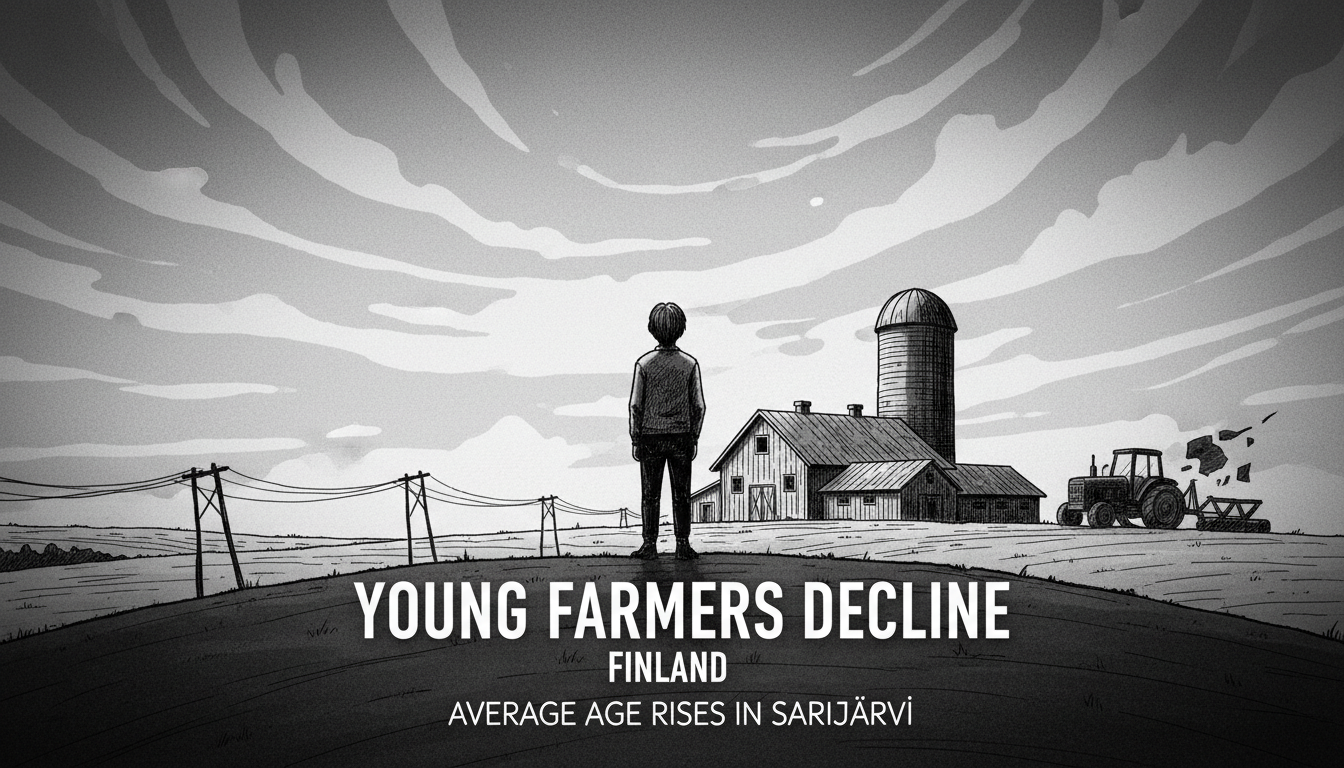
Finland faces a deepening agricultural crisis as young farmers abandon the profession. The rural municipality of Saarijärvi exemplifies this troubling trend with only seven farmers under age 30 currently operating. A decade ago, this same age group included 22 agricultural entrepreneurs.
European agriculture officials express growing concern about rising farmer ages continent-wide. Statistics classify farmers under 40 as young operators. Saarijärvi counts just 23 farmers in this category.
Markku Rimmi compiled age structure data from rural support applicants. He stated the numbers show far too few young farmers entering the profession.
Three Saarijärvi farmers in their late twenties represent the dwindling younger generation. Samuli Huuha, 29, Paavo Leppämäki, 28, and Joel Tarvainen, 30, all describe farming as their calling. These rural natives learned farm work from childhood and value the independence of entrepreneurship.
This demographic shift carries serious implications for Finland's food security and rural communities. As older farmers retire, fewer replacements emerge to maintain agricultural production. The European Union monitors this pattern across member states where farm succession problems threaten local food systems.
Finland's agricultural challenges mirror broader Nordic concerns about rural depopulation. Young people increasingly migrate to urban centers for education and employment opportunities. Those remaining in countryside areas often seek more lucrative careers than farming provides.
Producer pricing remains a central concern for sustaining farm livelihoods. Better compensation would bring peace of mind to struggling agricultural operations. Current economic pressures make farm transitions between generations increasingly difficult throughout the Nordic region.
Regional development experts note that without intervention, rural communities risk losing essential services as populations age and shrink. Schools, healthcare facilities, and local businesses all suffer when young families leave agricultural areas.
The situation in Central Finland reflects a continental pattern demanding policy solutions. European agricultural subsidies increasingly focus on encouraging young farmer entry through startup grants and training programs.
Nordic countries face particular challenges with high operating costs and short growing seasons. These factors compound the difficulty of attracting new generations to agricultural work despite strong cultural ties to the land.