
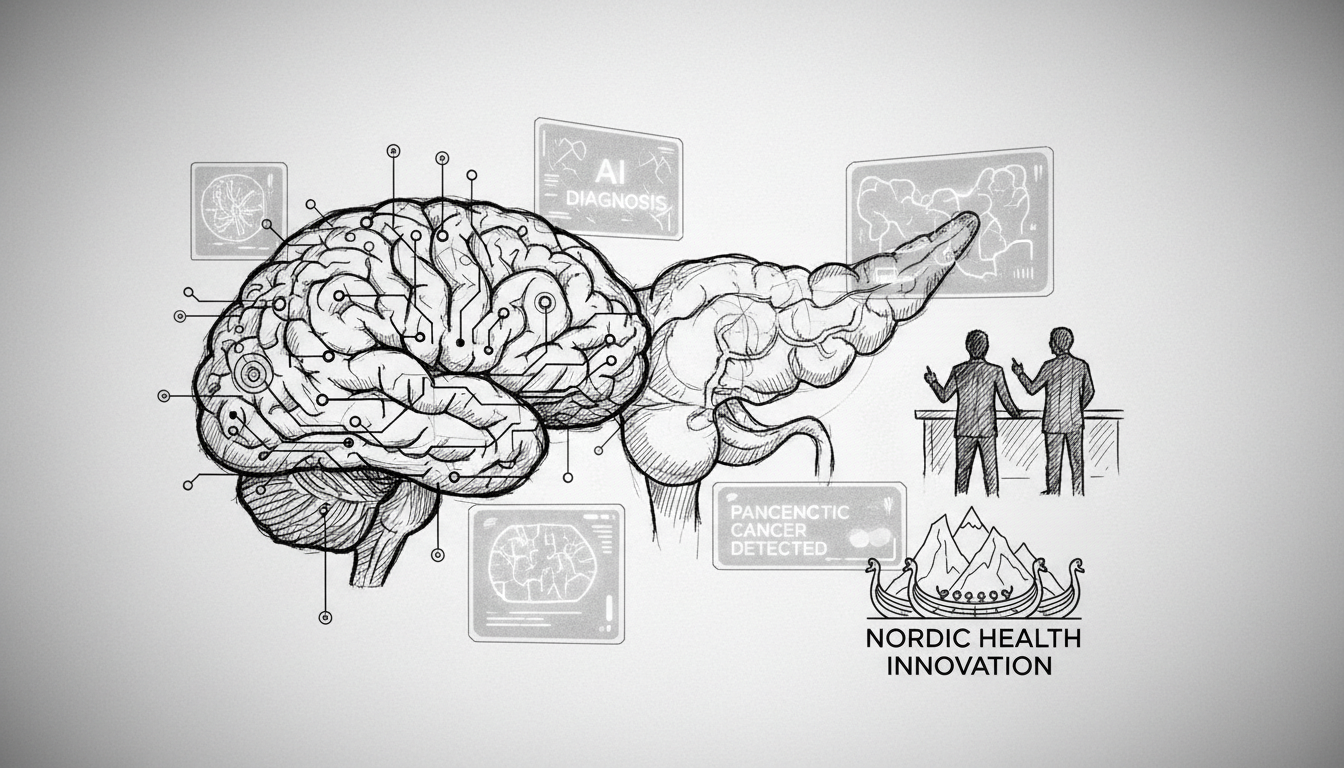
A major international study involving Norwegian researchers demonstrates that artificial intelligence can detect pancreatic cancer as accurately as specialized radiologists. This development could be crucial for improving survival rates for a disease that claims nearly a thousand lives in Norway each year. Pancreatic cancer is notoriously difficult to diagnose early due to vague symptoms, often leading to late-stage detection when treatment options are limited.
The research, which included contributions from pathologists and radiologists at Haukeland University Hospital, tested AI models on CT scans from over 1,100 individuals. The AI's performance in distinguishing cancerous growths from other conditions matched or exceeded that of 68 human radiologists in the study. Professor Anders Molven, a pathology expert involved in the work, stated that finding ways to detect this cancer earlier is absolutely necessary for improving patient survival.
This advancement is part of a broader Nordic technology trend where medical institutions are integrating AI to address resource challenges and improve diagnostic accuracy. Hospitals in Oslo and Bergen are increasingly becoming innovation labs for digital health solutions. The study's methodology was particularly robust because it used patient data from various international sources and different CT machines, testing the AI's generalizability in real-world conditions.
For patients, the use of such AI tools would be invisible. Scans are taken normally, then analyzed by the AI system alongside a radiologist. Division Director Ingfrid S. Haldorsen noted that the technology saves time for specialists without compromising quality. Radiologist Marjolein Liedenbaum added that she looks forward to implementing this and other AI tools in clinical practice, viewing them as useful aids rather than replacements.
The path to clinical implementation in Norway requires further testing and regulatory approval. However, Haukeland University Hospital already uses AI for other tasks, including streamlining medical record writing and interpreting mammograms. The researchers emphasize that with an anticipated future shortage of doctors and an aging population, such tools are needed to use medical resources more optimally.
This study highlights how Norwegian tech startups and research hubs are contributing to global digital transformation in healthcare. The work aligns with Oslo's growing reputation as a Scandinavian tech hub for life sciences. The successful application of AI in complex diagnostics signals a shift toward more data-driven and assistive technologies in Nordic hospitals, aiming to tackle some of healthcare's most persistent challenges.