
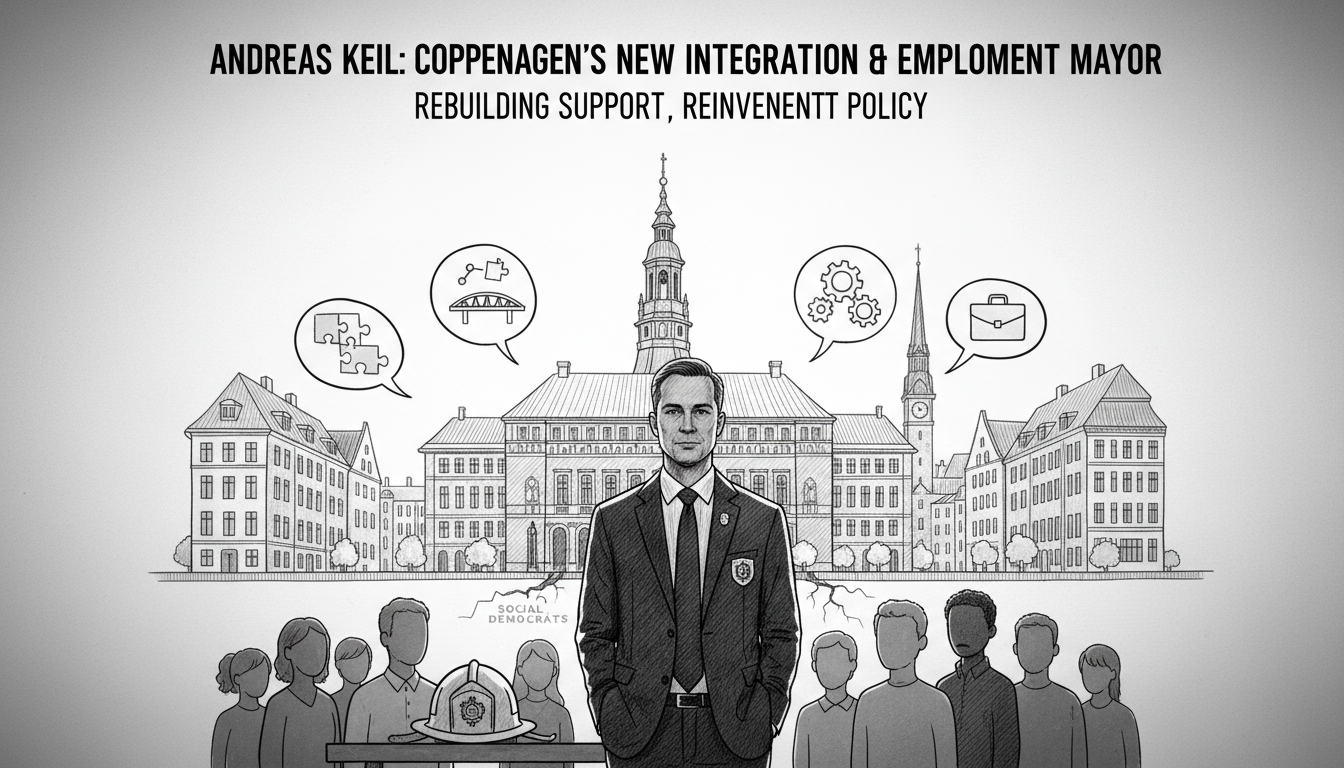
The Social Democrats in Copenhagen have chosen Andreas Keil as their new lead councilor for employment, integration, and business. This decision follows an extraordinary party meeting. Keil, a 46-year-old firefighter and ambulance paramedic, has served on the Copenhagen City Council for over a decade. He secured the position after a two-round internal vote against four other candidates, including Laura Rosenvinge. His appointment comes at a critical juncture for the party, which suffered a historic defeat in the recent municipal election, receiving only 12.7 percent of the vote. This loss meant the Social Democrats, who have held the mayor's office in Copenhagen for decades, were not even invited to coalition talks. The mayor's office will now go to Sisse Marie Welling from the Socialist People's Party.
Keil's background is not in traditional politics but in crisis management. He has worked over twenty years in emergency services and as a union representative. In a statement, he said he is accustomed to handling crises and believes his skills in building unity can help steer the party back on course. He declined to comment on the former lead candidate, Pernille Rosenkrantz-Theil, who left politics after it became clear she would not become mayor. Her campaign had promised free daycare and a threat to go into opposition if she failed.
This shift represents a deeper story about Danish society news and the challenges of Copenhagen integration. The Social Democrats' poor result signals voter dissatisfaction with their approach in the capital, a city with complex demographic and social dynamics. As the new employment and integration mayor, Keil will directly influence Denmark social policy at the municipal level. His role involves overseeing initiatives that connect newcomers to the labor market and manage the city's diverse communities. This is a core function of the Danish welfare system, which relies on high employment and social cohesion.
The task ahead is formidable. Copenhagen faces the same integration challenges as many European capitals, but within the specific framework of Denmark immigration policy. Recent statistics show varying outcomes for non-Western immigrants and their descendants in education and employment compared to the native population. Keil's success may depend on his ability to craft policies that are both effective and politically palatable, balancing the Social Democrats' traditional working-class base with the city's progressive electorate. His practical, non-ideological background could be an asset, or it could leave him navigating a political landscape he is new to. The coming months will test whether a crisis manager from the rescue services can mend a party in crisis and address the city's pressing social issues.