
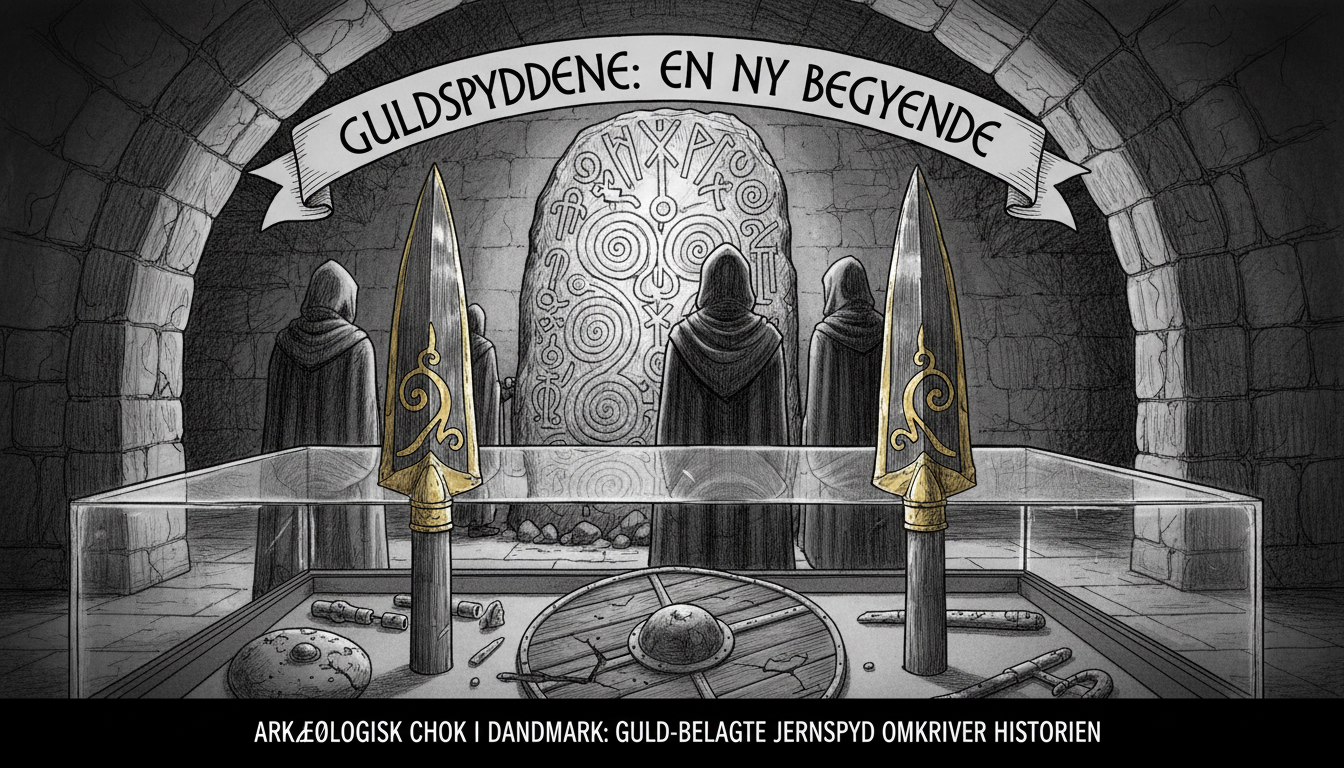
A routine archaeological dig in a Danish field has unearthed a discovery so unexpected it made the lead researcher panic and rebury the object. Lone Claudi-Hansen and her team of student volunteers were excavating a known Bronze Age site near Boeslunde, west of Copenhagen, when she suddenly held a gold-plated iron spear tip. The immediate shock led her to place it back in the soil. The find defies established history, as iron was not believed to be in use in Denmark for another several hundred years. This discovery forces a major rethink of ancient trade, technology, and social structures in the Nordic Bronze Age.
The team later found a second, nearly identical spear tip the same day. Laboratory analysis dates the iron to approximately 2,800 years old. This makes the gold plating the earliest known gold find in Denmark. Claudi-Hansen described the objects as a cornerstone piece of a historical puzzle. The spears are set for display at Museum Vestsjælland. Their uniqueness extends beyond Denmark, with no direct parallels found across Northern Europe. Similar-sized iron spears from the period exist in Greece and Central Europe, but none are adorned with gold.
The excavation initially aimed to solve a different mystery. For decades, the same field has yielded ten gold oath rings and nearly 2,200 gold spirals, with no clear explanation for their concentration. The recent dig provided the answer. The team uncovered the remains of a sacred spring from the Bronze Age. This links the vast collection of gold artifacts to religious offerings, explaining their deliberate deposition at the site. This aspect offers a rare window into the spiritual life and ritual practices of ancient Danish society.
Claudi-Hansen, a museum inspector, presented a compelling theory. The evidence suggests a local dynasty of considerable wealth with far-reaching international connections. This powerful family likely accumulated riches through extensive trade networks and later sacrificed them as religious offerings. The find speaks volumes about the region's prosperity and the complex belief systems of the time. It paints a picture of a sophisticated, globally connected community in what is now rural Zealand long before the Viking Age.
From a broader perspective, this discovery challenges the linear narrative of technological progression in Scandinavia. It suggests that elite groups had access to exotic materials like iron centuries before their widespread adoption. This has implications for understanding social hierarchy and the flow of goods in prehistoric Europe. For Danish society, it reinforces the deep, tangible history embedded in the landscape, a history that continues to surprise and inform national identity. The find near Skælskør transforms a local field into a site of international archaeological significance.