
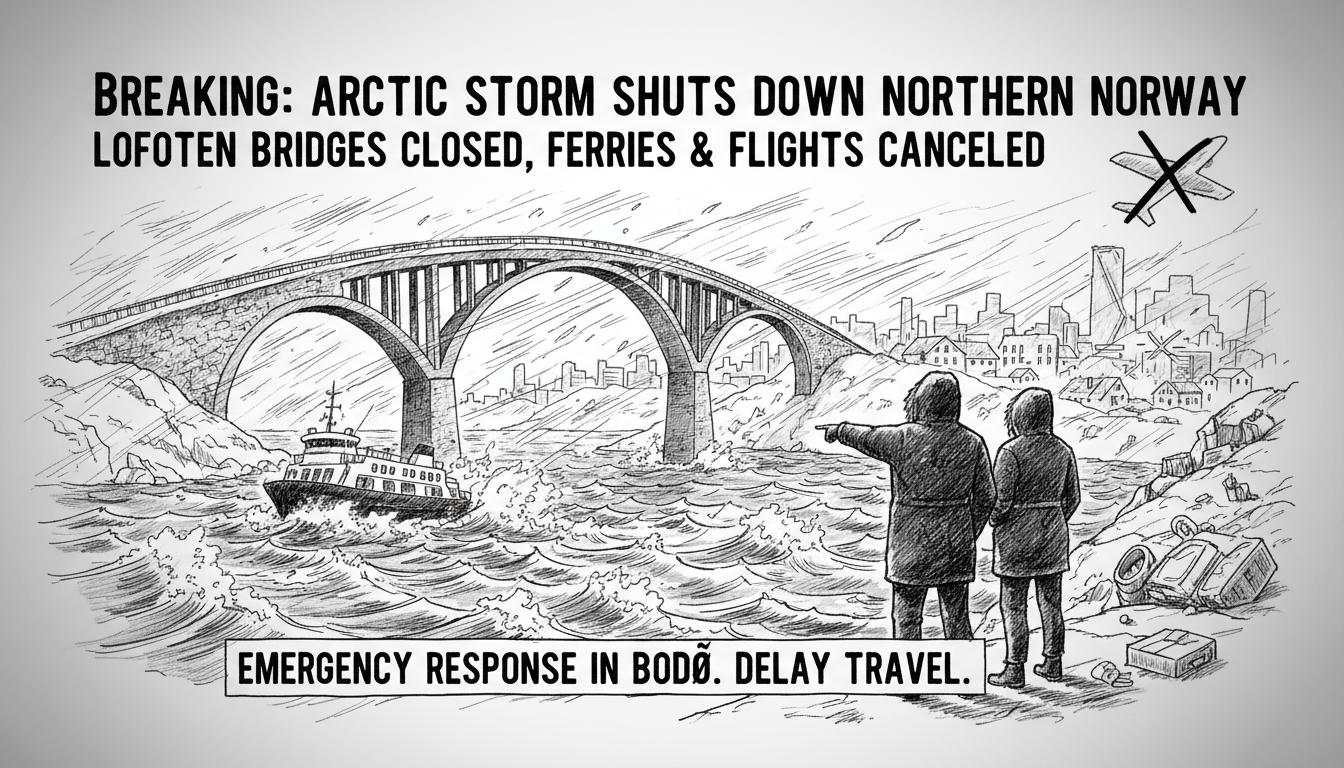
A powerful Arctic storm system has paralyzed transportation across Northern Norway, forcing bridge closures and widespread travel cancellations. The meteorological institute issued yellow-level warnings for strong winds across Nordland and Troms counties. Both northbound and southbound coastal ferry routes have canceled stops throughout the Lofoten archipelago.
Gimsøy Bridge and Kåkern Bridge in Lofoten closed automatically when wind measurements exceeded safety thresholds. These iconic structures feature automatic closure systems that activate during extreme weather conditions common in this vulnerable Arctic region. The storm's intensity reached peak levels at Røst, where wind gusts measured 31.5 meters per second at the local airport.
Transport authorities urged residents to reconsider travel plans during the most intense wind periods. Road traffic centers specifically advised delaying journeys until conditions improve. The situation demonstrates the vulnerability of Norway's northern infrastructure to Arctic weather patterns, particularly as climate change increases storm frequency and intensity.
Coastal ferry services faced massive disruptions. MS Nordlys canceled port calls at Stamsund, Svolvær and Stokmarknes on its northbound route. MS Nordnorge followed similar protocols, skipping scheduled stops at Svolvær and Stamsund. Both vessels plan to resume normal operations tomorrow. The Bodø-Moskenes ferry delayed its 16:30 departure until 20:00 due to heavy winds and rough seas in Vestfjorden.
Local ferry connections between Melbu and Fiskebøl suspended operations from the 18:30 departure onward. The national road administration confirmed the complete shutdown of this vital transportation link. These suspensions highlight the operational challenges facing Norway's coastal transport network during severe weather events.
Aviation suffered equally significant impacts. Widerøe canceled flights WF812 and WF813 between Bodø and Leknes due to dangerous crosswinds. A company spokesperson explained their regional aircraft can withstand considerable weather, but hurricane-force gusts exceed operational limits. Flight WF835 from Tromsø to Bodø via Svolvær first delayed then converted to a direct route, stranding Svolvær passengers.
The airline committed to adding extra flights tomorrow to accommodate affected travelers. Bus services also curtailed operations, with Lofotekspressen routes terminating at Leknes and all service halting after 16:00. Emergency services responded to storm damage at a Bodø hotel where high winds dislodged a window, requiring police assistance to secure the area.
Northern Norway's infrastructure faces increasing pressure from extreme weather events. The region's unique geography, featuring dramatic fjords and exposed coastal communities, creates particular vulnerability to Arctic storm systems. Transportation planners continue grappling with balancing accessibility and safety in Europe's northernmost populated regions.
This storm event underscores the operational realities facing Norway's northern territories. While modern infrastructure includes sophisticated safety systems like automatic bridge closures, the fundamental power of Arctic weather continues to dictate transportation possibilities across this strategically important region.