
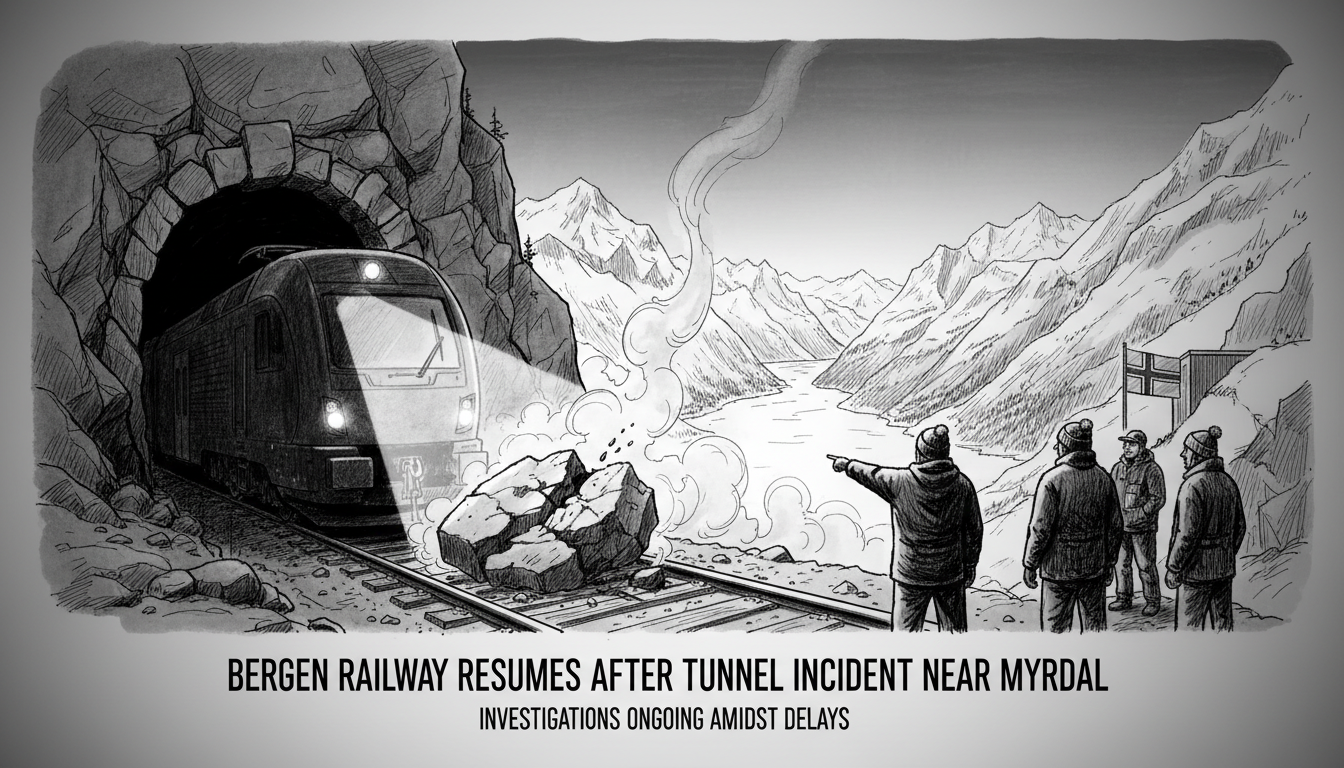
The Bergen Railway has resumed operations following a multi-hour closure between Mjølfjell and Myrdal stations. The disruption occurred when an Oslo-Bergen train struck a rock on the tracks inside a tunnel near Myrdal at approximately 5:30 PM Thursday. Infrastructure manager Bane Nor confirmed the incident and subsequent restoration of service through official statements.
Railway officials reported the train became immobilized after encountering the rock obstruction within the tunnel system. Maintenance crews worked for several hours to clear the track and conduct safety inspections. Bane Nor initially alerted passengers about the ongoing investigation at 6:19 PM, then updated travelers at 9:14 PM confirming restored service with continued delays and potential cancellations.
This incident highlights the vulnerability of Norway's critical transportation infrastructure to geological hazards. The Bergen Railway represents one of Northern Europe's most important transit corridors, connecting Norway's capital with its second-largest city. The mountainous terrain through which the railway passes presents constant maintenance challenges, particularly in tunnels and along steep fjord-side sections.
Norwegian railway infrastructure faces regular pressure from rockfalls and weather-related incidents. The country's dramatic topography requires continuous monitoring and maintenance of rail corridors. This latest disruption demonstrates how quickly essential transport links can be compromised by natural events, potentially impacting both passenger travel and freight movement.
International observers should note that Norway maintains one of Europe's most extensive railway networks relative to population density. The country invests substantially in transportation infrastructure despite challenging geography. Recent government budgets have allocated increased funding for railway maintenance and landslide prevention measures.
The temporary closure affected one of Scandinavia's most scenic rail routes, which passes through Hardangervidda mountain plateau. This railway section features numerous tunnels and bridges engineered to navigate Norway's complex landscape. Regular passengers include both commuters and tourists traveling between Oslo and Bergen.
Railway officials continue to investigate the precise cause of the rock displacement onto the tracks. Similar incidents have occurred previously along mountainous sections of Norwegian railways, particularly during seasonal transitions when freeze-thaw cycles can destabilize rock formations. Infrastructure managers typically conduct regular geological surveys to identify potential hazard areas.
Transportation analysts note that such disruptions, while inconvenient, reflect the ongoing challenge of maintaining infrastructure in extreme environments. Norway's commitment to railway safety remains evident in the rapid response and transparent communication during this incident. Travelers should anticipate possible residual delays as normal service patterns reestablish.