
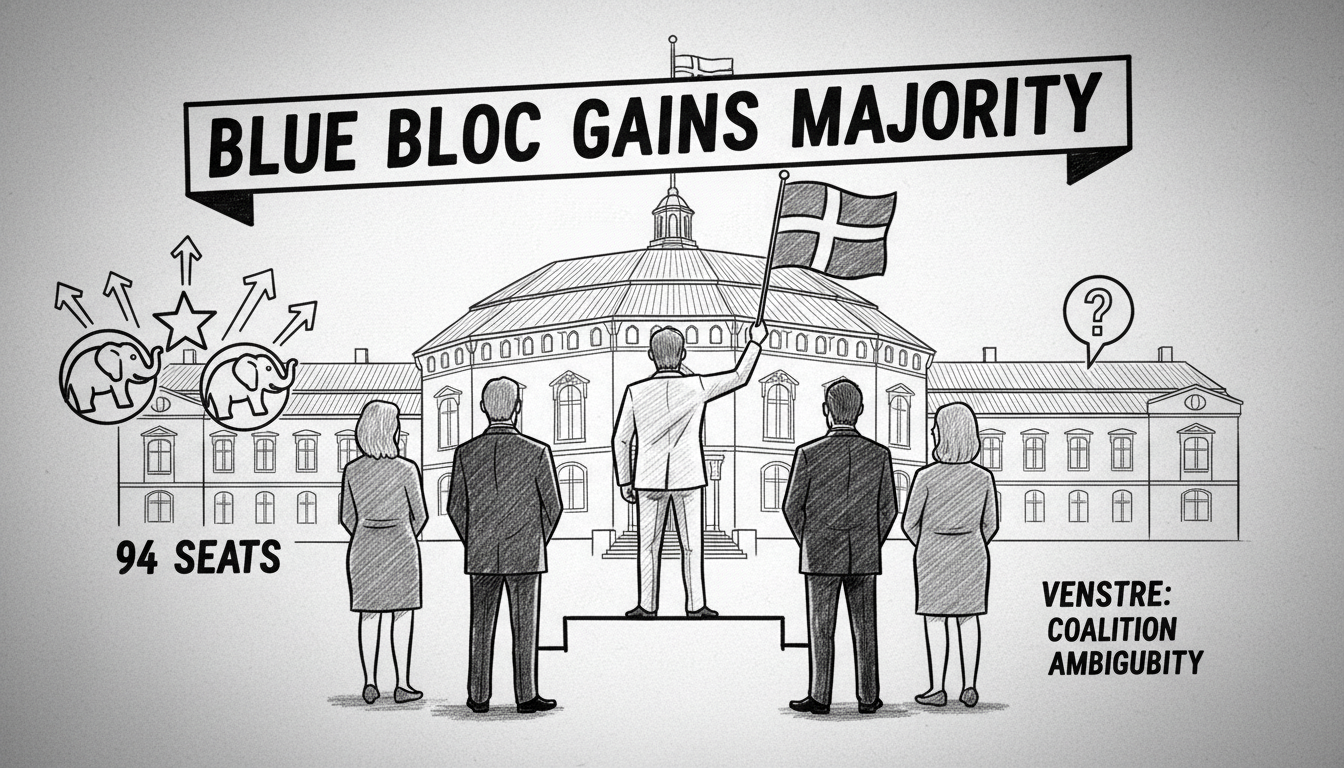
A new political survey reveals shifting dynamics within Danish politics as center-right parties collectively secure majority support for the first time in over three years. The Epinion poll shows Venstre, Conservatives, Liberal Alliance, Danish Democrats, and Danish People's Party together commanding 94 parliamentary seats, creating optimism about potential government formation among right-leaning parties.
Liberal Alliance's political spokesperson expressed clear enthusiasm about the development. We have worked hard to create a distinct blue alternative with our allies on the right wing. This requires voter support in the next election, and things appear moving in the right direction. Our mood is definitely positive, the spokesperson stated in comments about the polling results.
Danish People's Party group leader Peter Kofod showed even stronger excitement about the blue bloc's majority position. This is fantastic. Danes want a new beginning. A new government. A new prime minister. And new policies. This is what we fight for every single day, Kofod emphasized during his reaction to the survey findings.
The blue bloc's advancement stems primarily from gains by Venstre, Conservatives, and Danish Democrats. Meanwhile, Danish People's Party experienced notable decline compared to previous polling in October, when the party had recorded substantial progress. This fluctuation demonstrates the volatile nature of Danish political preferences and the ongoing realignment occurring within the right-wing spectrum.
Integration policy remains central to Danish political debates, with potential government changes carrying implications for Copenhagen's approach to social cohesion. While most blue parties agree on working toward a purely right-leaning government after the next election, governing party Venstre maintains a more ambiguous position. Party leader Troels Lund Poulsen has expressed hope for a blue government but hasn't committed to preferring this over continuing under current Social Democratic leadership.
Venstre's political spokesperson acknowledged the party's improved standing at 11.5 percent voter support, the best polling result since the general election. Yet he declined to specify the party's government color preference. I will not begin predicting our election platform. We will reveal that when the election is called, the spokesperson noted, maintaining strategic ambiguity.
The survey results carry particular significance for Denmark's welfare system discussions, as different party blocs propose varying approaches to social benefits and public services. Political analysts observe that blue bloc unity remains incomplete despite the numerical majority, with Venstre's final positioning potentially determining whether right-leaning parties can translate polling numbers into actual governance.
Danish immigration policy often serves as a key differentiator between political blocs, making potential government changes particularly relevant for international residents and new citizens. The current SVM government coalition would secure 53 seats according to the poll, while the red parties collectively command 81 seats. The next general election must be held before November next year, setting the stage for continued political maneuvering.
The survey conducted interviews with 2,034 Danish residents aged 18 and above, with 1,716 providing party preferences. The maximum sampling uncertainty for overall results stands at +/- 2.6 percentage points, indicating the fluid nature of current political preferences. As Denmark approaches its next electoral test, these numbers suggest both opportunity and uncertainty for all political factions.