
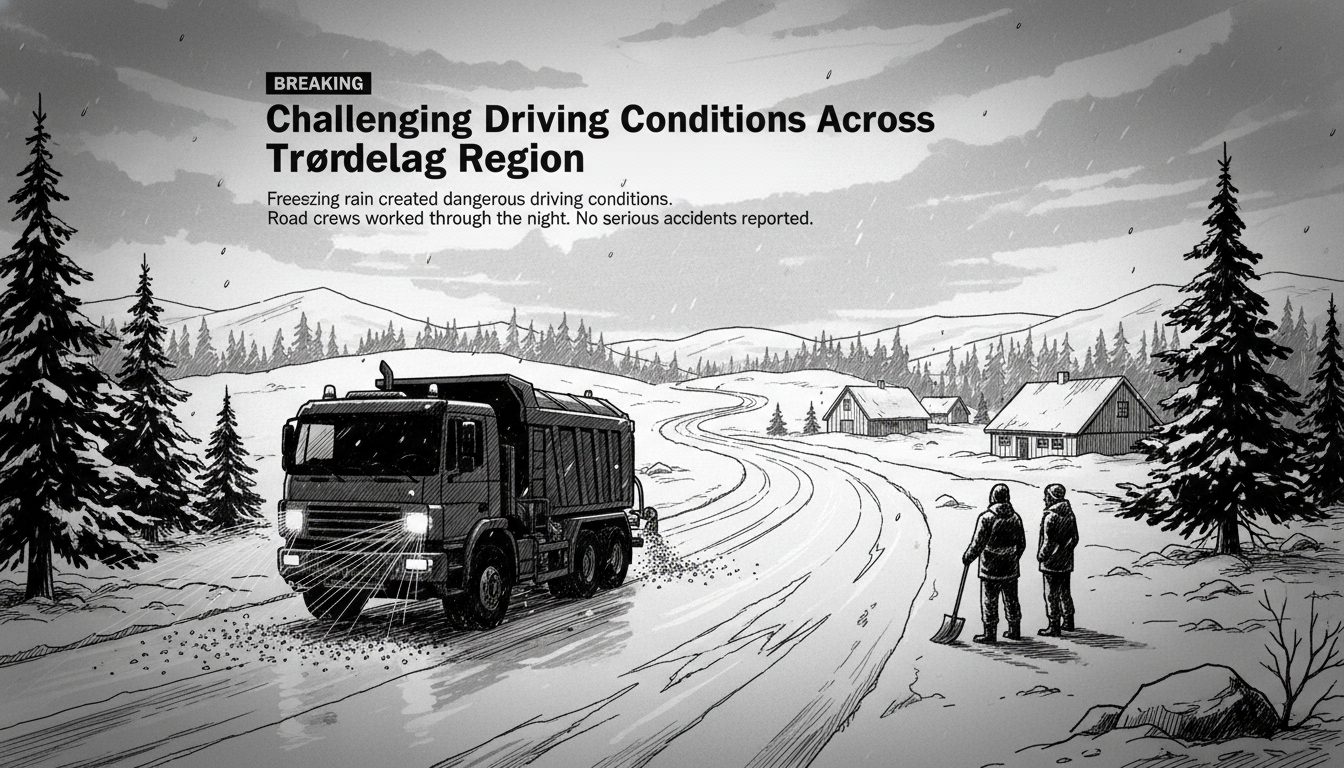
Freezing rain created hazardous driving conditions throughout Trøndelag overnight. Icy roads developed as rain froze immediately upon contact with cold surfaces. Road maintenance crews worked through the night to spread salt and gravel on affected roadways.
A traffic operations coordinator described the situation in a statement. "We're seeing sporadic slippery conditions across multiple locations," the official noted. "Our crews are out treating roads as needed, but salt requires time to become fully effective."
No serious accidents have been reported despite the challenging conditions. The coordinated response from road maintenance teams appears to have prevented major incidents. Road treatment operations continued through the early morning hours.
Winter driving challenges are common in Norway's central regions during transitional seasons. Trøndelag's varied terrain and coastal influences create unpredictable weather patterns. Rapid temperature shifts can turn rain to ice within minutes, catching drivers unprepared.
Norwegian road authorities maintain extensive winter preparedness protocols. These include regular weather monitoring, prepositioned salt and gravel supplies, and 24-hour response teams. The system aims to minimize disruptions despite Norway's frequently challenging winter conditions.
International visitors should note that Norwegian winter driving requires special preparation. Local drivers typically use winter tires from November through April. Many vehicles also feature studded tires for additional ice traction. Foreign drivers often underestimate how quickly conditions can deteriorate.
The current situation highlights Norway's effective infrastructure management. Quick response to changing conditions demonstrates why the country maintains strong road safety records despite harsh winters. Continuous monitoring and immediate treatment help prevent minor issues from becoming major problems.
Drivers in affected areas should expect continued cautionary measures. Road crews will likely maintain presence until temperatures rise above freezing. Morning commuters should allow extra travel time and maintain increased following distances.
Regional transportation departments coordinate closely with meteorological services. This partnership enables proactive responses to developing weather situations. The system represents decades of refined winter road management practices.
Norway's approach to winter road maintenance offers lessons for other cold-climate regions. The combination of advanced forecasting, rapid deployment capabilities, and public awareness campaigns creates comprehensive protection for travelers.