
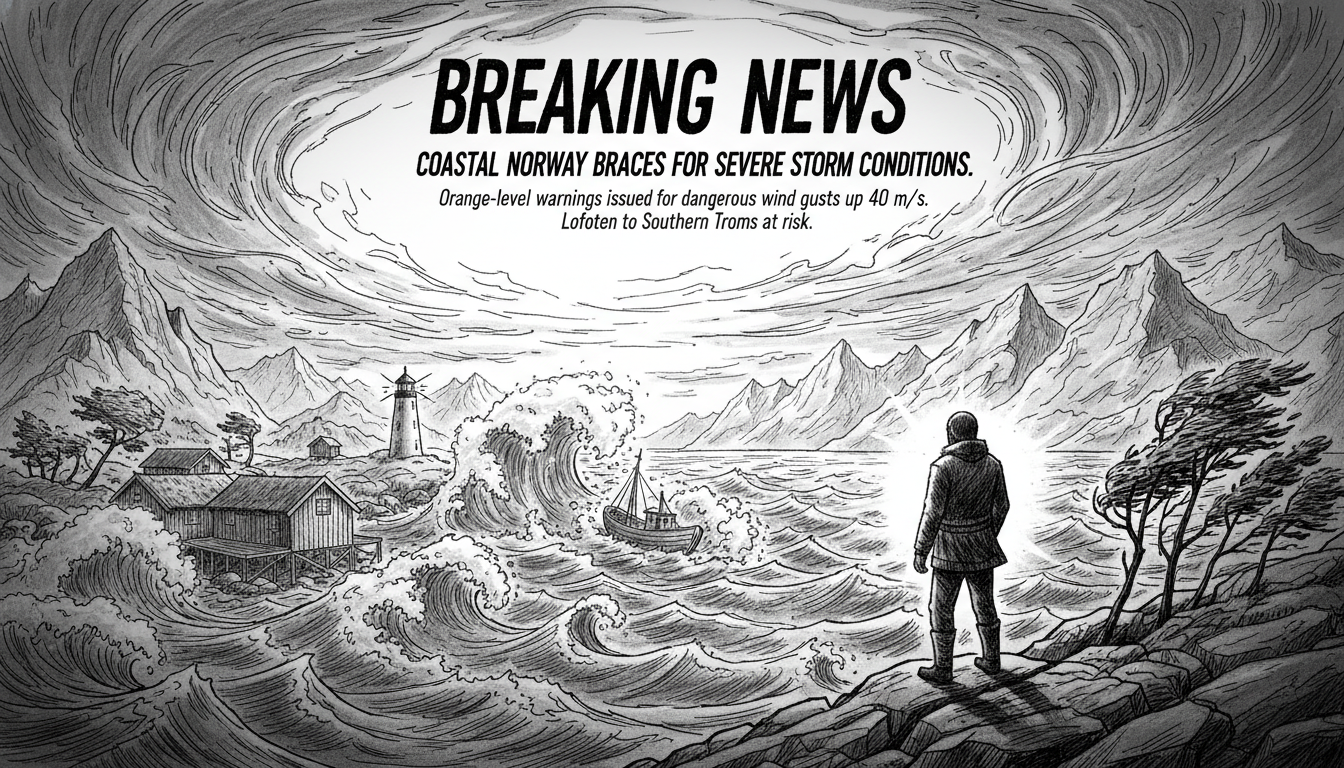
Northern Norway faces dangerous weather conditions as meteorologists warn of potential orange-level storm alerts. Powerful wind gusts between 30 and 40 meters per second are expected from northwest and western directions. The situation carries substantial uncertainty about wind intensity development.
Coastal regions from Lofoten to Salten will experience the strongest winds first. The weather system will then move toward Southern Troms. Meteorologists express particular concern about downslope winds developing on the leeward sides of mountains. These winds can accelerate dramatically when flowing downhill.
The meteorological service anticipates widespread transportation disruptions. Bridge closures, flight delays, and ferry service interruptions are likely across affected regions. Officials note the event will be relatively short-lived despite its intensity.
Norway's coastal infrastructure faces regular weather challenges. The country's mountainous terrain and extensive coastline create unique meteorological conditions. Downslope winds present special dangers to maritime operations and coastal communities.
Energy production monitoring becomes crucial during such weather events. Offshore installations in the Norwegian Sea may need to adjust operations. The petroleum industry maintains strict protocols for extreme weather conditions. Production figures from fields like Snøhvit and Goliat could see temporary adjustments.
Emergency services across northern counties remain on high alert. Local authorities coordinate response plans for potential power outages and infrastructure damage. The Norwegian Coastal Administration monitors shipping traffic patterns.
Weather preparedness represents a constant consideration in Arctic policy planning. Norway invests substantially in meteorological research and early warning systems. These systems protect both coastal populations and economic activities.
The storm's timing affects weekend travel across northern regions. Road authorities advise checking conditions before departure. Aviation services prepare for potential schedule changes.
Meteorological officials continue to refine their forecasts as the system develops. The distinction between yellow and orange warning levels depends on precise wind measurements. Current models suggest the strongest winds will peak during Saturday afternoon.
Northern Norway's residents have extensive experience with severe weather. Building codes and infrastructure designs account for these regular challenges. The region's preparedness likely minimizes potential damage from such events.
Shipping companies reroute vessels when necessary to avoid the most dangerous conditions. The Norwegian Maritime Authority coordinates with commercial operators during weather emergencies. Fishing fleets particularly monitor these developments closely.
Energy markets watch Norwegian production levels during severe weather. Temporary reductions in output can affect European gas supplies. Norway remains Europe's second-largest natural gas supplier after Russia.
The Storting's energy and environment committee tracks such developments. Committee members receive regular briefings about weather impacts on national infrastructure. Parliamentary representatives from northern constituencies maintain particular interest in preparedness measures.
This weather system demonstrates the ongoing challenges of Arctic operations. Norway balances economic development with environmental safety in northern regions. Climate change may increase the frequency of such extreme weather events.
Emergency management officials emphasize basic preparedness steps for residents. Securing outdoor objects and monitoring official channels remains crucial. The public should avoid unnecessary travel during the storm's peak intensity.